


Coursera Free Access Checker
What are you looking to achieve?
Select your primary learning goal to see what you can access for free on Coursera in 2025.
When you first hear that Coursera offers free courses, it sounds too good to be true. You click through, sign up, and suddenly you’re staring at a wall of course options-some labeled "Free," others asking for $49, $79, or even $99. So what’s really free? And if you don’t pay, what do you actually get? The short answer: yes, Coursera still lets you access a lot for free-but not everything. If you’re looking to learn without spending a dime, here’s exactly how it works in 2025.
What Free Means on Coursera
When Coursera says "free," they mean you can audit most courses. That means you can watch all the video lectures, read the readings, and follow along with the course structure. You won’t be locked out of the content. But here’s the catch: you won’t get graded assignments, quizzes with feedback, or a certificate at the end. If you’re learning for fun, to brush up on a skill, or just to see if a topic interests you, auditing is perfect.
For example, you can audit Stanford’s "Machine Learning" course by Andrew Ng. You’ll see every lecture, download the slides, and even try the programming exercises-but without submitting them, you won’t get feedback. No one checks your work. No grade. No proof you finished it. That’s the trade-off.
Which Courses Are Free to Audit?
Almost every course on Coursera can be audited for free. That includes courses from top universities like Yale, MIT, Duke, and the University of London. It also includes courses from companies like Google, IBM, and Meta. You’ll find free access to beginner programming courses, business fundamentals, data analysis, psychology, and even digital marketing.
Here’s a quick list of popular free-to-audit courses in 2025:
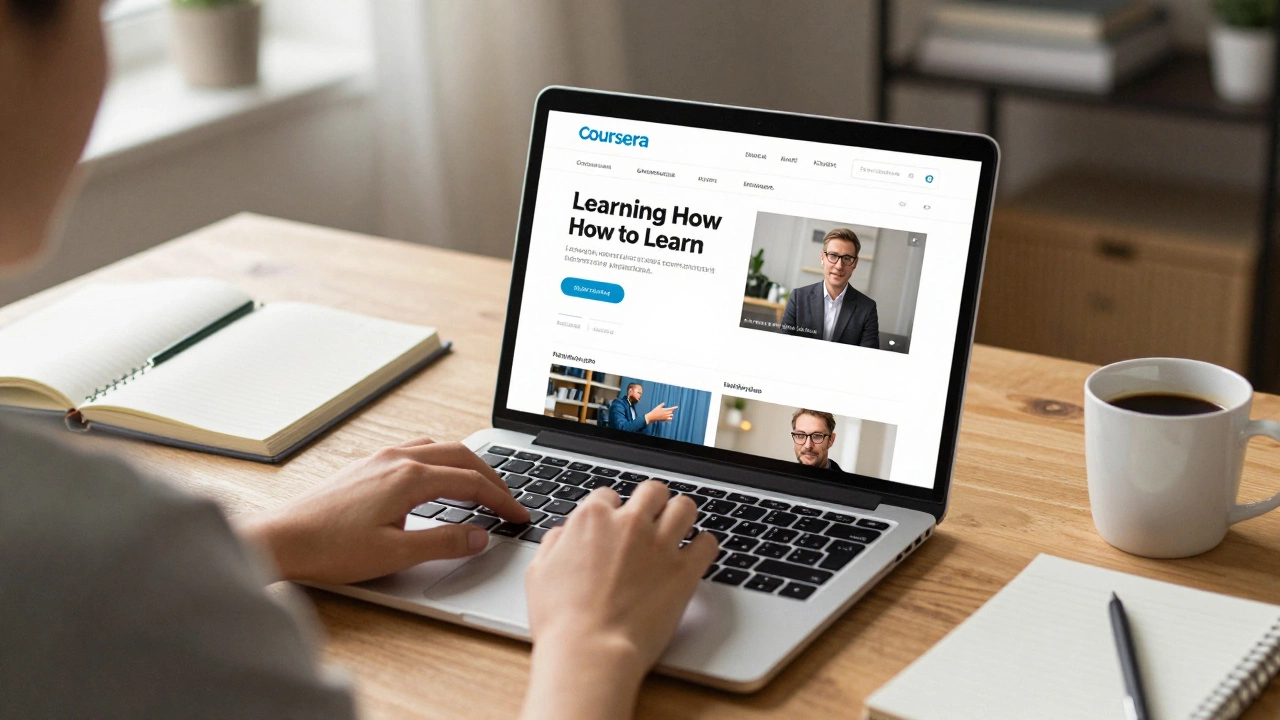
- "Learning How to Learn" by McMaster University and UC San Diego
- "Python for Everybody" by the University of Michigan
- "Introduction to Psychology" by Yale University
- "The Science of Well-Being" by Yale University
- "Google IT Support Professional Certificate" (audit mode)
You’ll notice some of these are part of "Specializations"-a series of courses that lead to a certificate. Even then, you can still audit each individual course in the sequence for free. You just won’t get the full Specialization credential unless you pay.
What You Miss Out On Without Paying
Free access doesn’t include:
- Graded assignments and quizzes with automatic feedback
- Access to peer-reviewed projects or coding challenges
- Downloadable course materials like PDFs or datasets (some are available, but not all)
- A certificate of completion
- Access to career services like resume reviews or job boards
- Live sessions or office hours with instructors
These are the things that make paid courses valuable if you’re using them for your resume, job search, or formal education. A certificate from Coursera is recognized by employers-especially for IT, data, and business roles. Without it, your learning stays private.
How to Audit a Course for Free
It’s simple. Here’s how:
- Go to coursera.org and create a free account.
- Search for the course you want-like "Introduction to Data Science" or "Financial Markets Global."
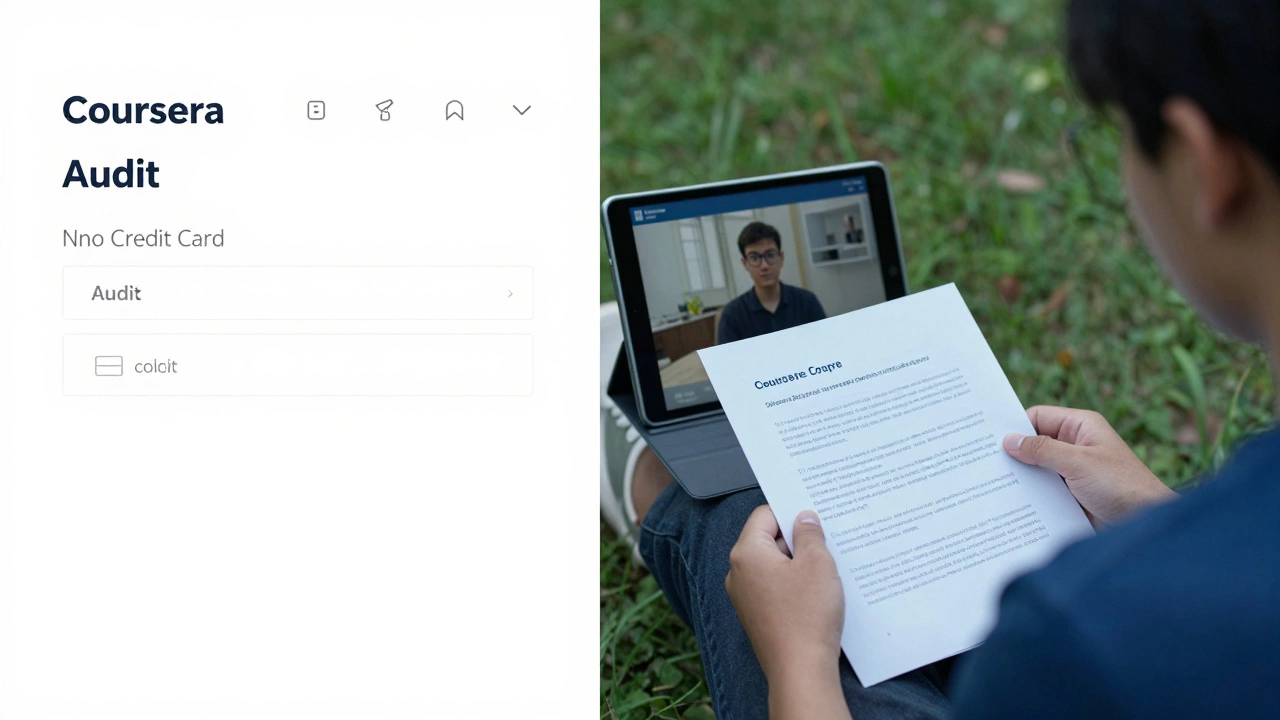
- Click on the course, then look for the "Audit" button. It’s usually right under the "Enroll" button.
- Click "Audit" and you’re in. No credit card needed.
Some courses hide the Audit option behind a small link that says "Learn more about auditing." If you don’t see it, scroll down past the pricing section. Sometimes it’s listed under "Course Overview" or "What you’ll learn."
Pro tip: If you’ve already started a course and paid for it, you can still switch to audit mode. Go to your course dashboard, click "Settings," and choose "Audit this course." You’ll lose your progress on graded work, but you’ll keep access to videos and readings.
Free Trials and Financial Aid
Some courses offer a 7-day free trial. This gives you full access to everything-graded assignments, certificates, and all-without paying upfront. If you cancel before the trial ends, you won’t be charged. But if you forget to cancel, you’ll be billed automatically. Watch your email for reminders.
There’s also financial aid. If you can’t afford a course, you can apply for a scholarship. Coursera asks you to explain why you want to take the course and how it will help you. Most applications are approved within 15 days. You’ll get full access to everything, including the certificate, for free. This isn’t a secret trick-it’s a real program, and thousands use it every year.
Is Coursera Better Than Other Free Platforms?
Compared to YouTube, Khan Academy, or edX, Coursera stands out because of its university partnerships and structured learning paths. You’re not just watching random videos-you’re following a syllabus designed by professors. The pacing is clearer, the assignments are more rigorous, and the certificates carry more weight.
But if you just want to learn something casually, YouTube might be faster. If you want a certificate from a top school without paying, Coursera’s financial aid is one of the best options out there.
edX also lets you audit courses for free, and it’s run by Harvard and MIT. But Coursera has more industry-focused courses-like Google’s IT Certificate or IBM’s Data Science Specialization-that are directly tied to real jobs.

Who Should Use Coursera for Free?
Free auditing works best for:
- Students exploring a field before committing to a degree
- Professionals looking to upskill without a budget
- Retirees learning for fun or mental stimulation
- Parents or caregivers with limited time who want structured learning
- Anyone who doesn’t need a certificate to prove their knowledge
If you’re applying for jobs that require proof of training-like a data analyst role or a project management certification-you’ll eventually need to pay or get financial aid. But if you’re just curious, experimenting, or building a personal knowledge base, free auditing is more than enough.
What’s Changed in 2025?
In 2025, Coursera made a few tweaks. More courses now offer downloadable PDFs and code files even in audit mode. Some platforms have started letting auditors submit assignments for peer review, but it’s still limited. The biggest change? More employers now accept Coursera audit completion as a sign of initiative-even without a certificate.
Companies like Deloitte, PwC, and Accenture now list Coursera learning on internal talent profiles. They don’t care if you paid. They care that you took the time to learn.
Final Verdict: Is It Worth It?
Yes, Coursera is still free-for the right reasons. You can learn almost anything from top institutions without spending a cent. You won’t get a certificate, but you’ll get knowledge. And knowledge? That’s the only thing you can’t take away.
If you’re serious about career growth, apply for financial aid. If you’re just exploring, audit away. There’s no penalty. No hidden fees. No upsells unless you ask for them. In 2025, the world’s best universities are still giving you access to their classrooms-for free.
Can I get a certificate for free on Coursera?
No, you cannot get a certificate for free unless you apply for and receive financial aid. Auditing a course gives you access to all the learning materials, but the certificate is only issued after you complete graded assignments and pay the fee-or get approved for aid. Financial aid applications are reviewed on a case-by-case basis and are often approved for learners who demonstrate need.
Do free Coursera courses expire?
No, once you audit a course, your access doesn’t expire. You can return to the course materials anytime, even years later. However, if the course is updated or removed by the provider, some content might change or disappear. Most courses remain available indefinitely in audit mode.
Can I download videos from free Coursera courses?
Coursera doesn’t officially allow downloading videos for offline viewing in audit mode. However, you can download readings, slides, and sometimes code files. For video access offline, you’d need to subscribe to a paid plan. Some learners use third-party tools to download videos, but that violates Coursera’s terms of service and isn’t recommended.
Are there any completely free Coursera courses with certificates?
Yes, but only through financial aid. Coursera offers need-based scholarships for most paid courses. If approved, you get full access-including certificates-at no cost. There are no "free with certificate" courses available to everyone, but the financial aid program effectively makes it possible for many learners to earn certificates without paying.
Is Coursera better than YouTube for learning?
It depends on your goal. YouTube is great for quick tutorials and casual learning. Coursera is better if you want structure, assignments, deadlines, and a curriculum designed by experts. If you’re learning to code, manage projects, or understand finance, Coursera’s guided path helps you stay consistent. YouTube might be faster, but Coursera builds deeper habits.