
Online Learning Platform Selector
This tool helps you identify which type of online learning platform best matches your goals. Based on your answers, you'll get personalized recommendations from the three main platform types described in the article.
Not all online learning platforms are the same. If you’ve ever signed up for a course and felt lost-maybe because the content was too basic, too scattered, or didn’t help you actually get better-you’re not alone. The problem isn’t you. It’s that there are three very different kinds of platforms out there, and mixing them up can waste your time, money, and motivation.
1. MOOCs: Learn Anything, Anytime
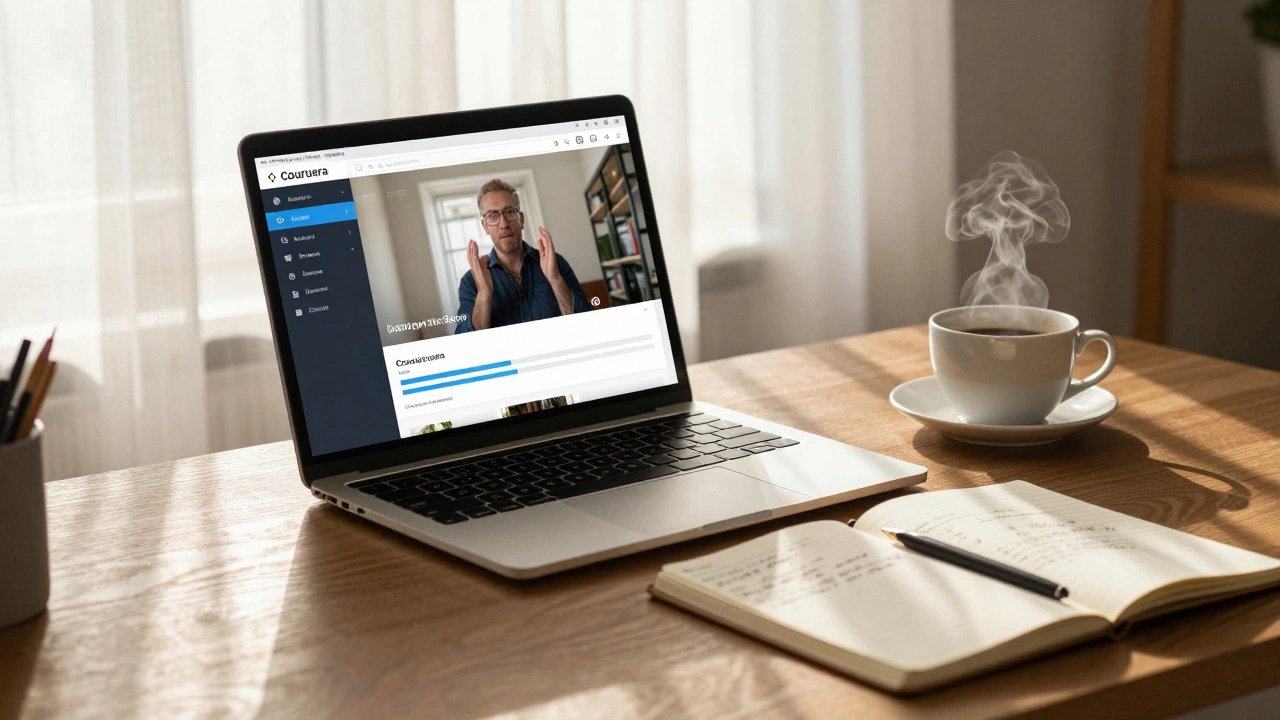
MOOCs stand for Massive Open Online Courses. Think of them as free university lectures you can watch from your couch. Platforms like Coursera, edX, and FutureLearn fall into this category. They partner with top universities-Stanford, MIT, Harvard-to offer full courses on everything from calculus to ancient history.
What makes MOOCs special? They’re designed for scale. Thousands of people take the same course at once. You get video lectures, quizzes, and sometimes peer-graded assignments. Some even offer certificates you can add to your LinkedIn profile. But here’s the catch: if you don’t stay disciplined, you’ll drop out. Studies show less than 10% of people finish a MOOC. That’s not because the material is hard-it’s because there’s no accountability.
Best for: People who want to explore a subject without commitment, professionals looking to upskill on the side, or students testing out a field before going back to school.
2. LMS Platforms: Structured Learning with Control
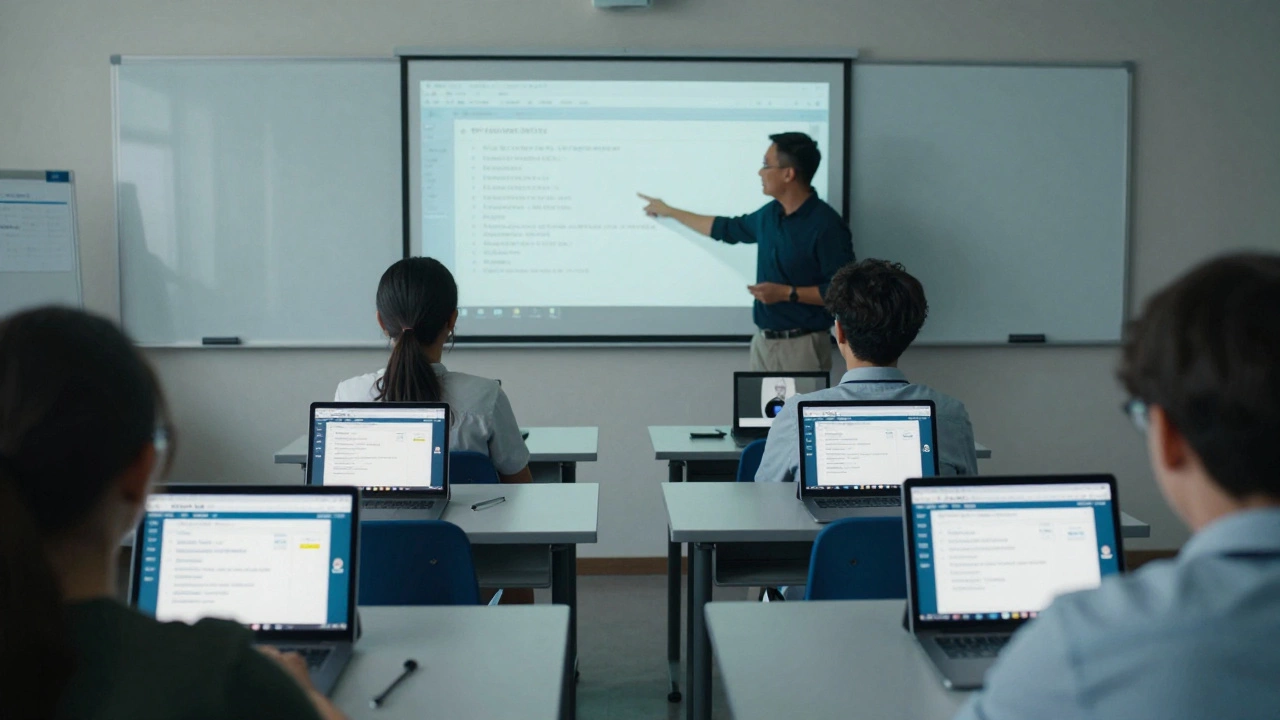
If MOOCs are like public libraries, then Learning Management Systems (LMS) are like private classrooms. Platforms like Moodle, Canvas, and Google Classroom are built for institutions-schools, colleges, training centers-to host and manage their own courses. You won’t find these on public websites. They’re usually locked behind a login provided by your employer, school, or coach.
Here’s how they work: Your teacher uploads lectures, assignments, discussion boards, and due dates. You get reminders. Your progress is tracked. You might even have live Zoom sessions. The structure is tight. There’s no option to skip ahead. If you miss a deadline, your grade drops. That’s the point.
LMS platforms are the backbone of formal online education. In 2025, over 70% of universities in New Zealand and Australia use some form of LMS. They’re not flashy. But if you need structure, feedback, and official credit, this is where you’ll find it.
Best for: Students enrolled in accredited programs, corporate training teams, teachers running hybrid classes, or anyone who needs deadlines to stay on track.
3. Skill-Based Platforms: Learn by Doing
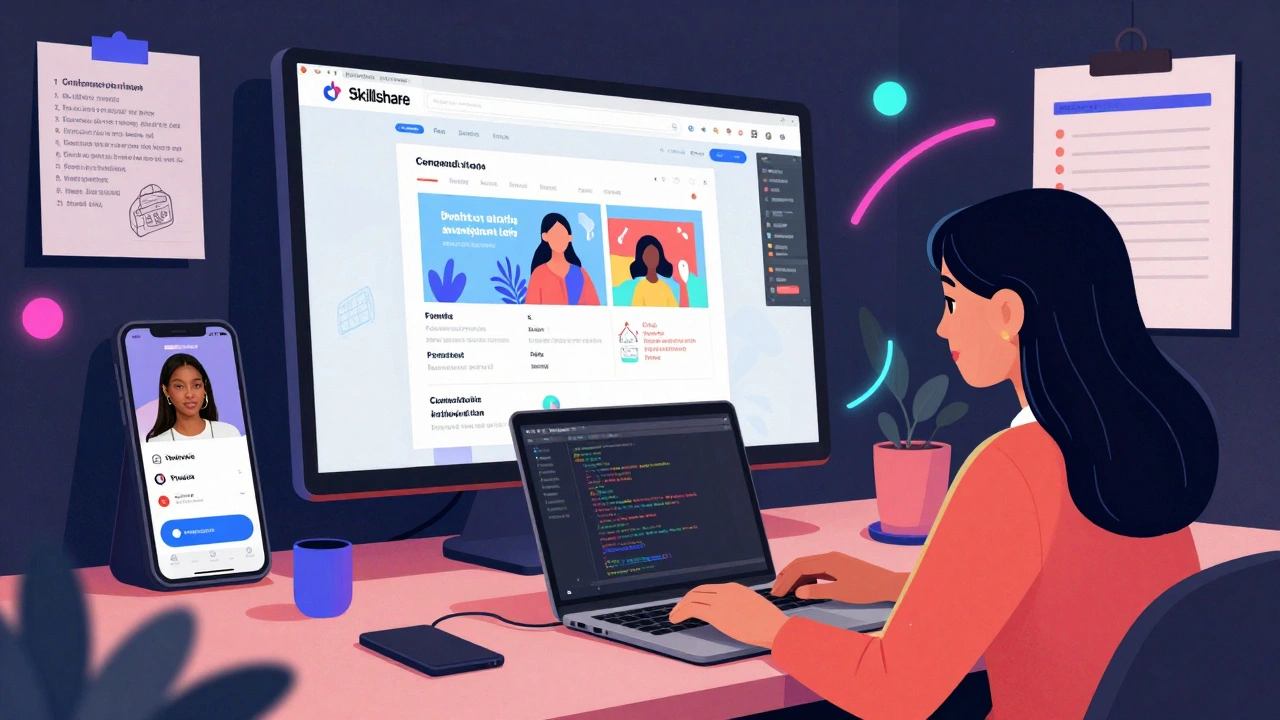
This is where learning turns into doing. Platforms like Udemy, Codecademy, and Skillshare focus on practical skills you can use right away. Want to build a website? Edit a video? Run Facebook ads? These platforms don’t waste time on theory. They give you projects. You code. You design. You publish. Then you get feedback.
Unlike MOOCs, which often feel like watching a lecture, skill-based platforms are interactive. Codecademy doesn’t just explain Python-it lets you write code in the browser and instantly see if it works. Skillshare gives you real assignments: "Make a 30-second TikTok video using only your phone." Udemy instructors are often industry pros-not professors-who tell you what actually matters in the job market.
These platforms are also the most affordable. Most courses cost under $20, especially during sales. You buy one course, not a subscription. And if you don’t like it? You can get a refund within 30 days. That’s why over 20 million people use Udemy every month.
Best for: Freelancers, career switchers, hobbyists, and anyone who wants to build something tangible-not just pass a test.
How to Pick the Right One
Here’s a simple way to decide:
- Want to explore a topic? Go with a MOOC.
- Need grades, deadlines, and official recognition? Use an LMS.
- Looking to build a portfolio or land a job? Choose a skill-based platform.
Some people mix them. For example, you might take a Coursera course on data analysis (MOOC), then use a project from Skillshare to build your portfolio, and finally submit it as part of your university assignment (LMS). That’s smart. But don’t treat them all the same.
Too many learners sign up for a MOOC thinking it’s a bootcamp. Or they join a skill platform expecting a degree. That’s why so many quit after a week. The platform isn’t broken. You just picked the wrong tool for your goal.
What You Should Avoid
Don’t fall for platforms that promise "get rich quick" with a 3-hour course. They’re usually just repackaged YouTube videos with a fancy interface. Check who’s teaching. Are they a certified instructor? Do they have real industry experience? Read reviews-not just the 5-star ones. Look for comments that say, "This helped me get my first client" or "I passed my certification because of this."
Also avoid platforms that charge monthly subscriptions for single courses. If you only need one skill, pay once. You don’t need to be locked in.
Real Example: From Zero to Web Developer
Take Maria, a 28-year-old from Wellington. She wanted to switch from retail to tech. Here’s what she did:
- Started with a free MOOC on HTML and CSS from edX to see if she liked it.
- Switched to Codecademy to build three small websites-her portfolio.
- Enrolled in a local community college’s online web dev program (LMS) to get a certificate.
- Used her portfolio and certificate to land a junior developer role six months later.
She didn’t use one platform. She used all three-each for the right reason.
Final Thought
There’s no "best" online learning platform. There’s only the one that matches your goal. Are you curious? Try a MOOC. Need structure? Use an LMS. Want to get hired? Go skill-based. The right platform won’t just teach you. It’ll help you succeed.
Are MOOCs worth it if they don’t give degrees?
Yes-if your goal is learning, not credentials. MOOCs from top universities give you access to the same material as enrolled students. Many employers recognize Coursera and edX certificates, especially in tech and business fields. They show initiative and self-discipline. But if you need a formal degree, pair a MOOC with an accredited program.
Can I use an LMS as a self-learner?
Not easily. Most LMS platforms require enrollment through an institution-like a school or company. You can’t just sign up on your own. But some, like Moodle, offer public courses. Search for "open Moodle courses"-you’ll find free options from universities that let anyone join. Just expect less support and no certification.
Which platform is best for learning to code?
For beginners, Codecademy and freeCodeCamp are the best starting points because they let you code in real time. Once you’re comfortable, move to Udemy for project-based courses like "Build a Full-Stack App with React and Node." If you want to go deeper, enroll in a university’s LMS-based computer science course for theory and structure.
Do I need to pay for online learning platforms?
No-but you’ll get more value if you do. Free options exist on YouTube, Khan Academy, and open MOOCs. But paid platforms offer better structure, feedback, projects, and certificates. If you’re serious about a career change, spending $20-$50 on a focused course is cheaper than wasting months on free content that doesn’t help you land a job.
Can I combine all three types of platforms?
Absolutely. Many successful learners do. Start with a MOOC to explore, use a skill platform to build real projects, and finish with an LMS course to earn formal recognition. This combo gives you knowledge, proof of skill, and credibility. It’s the most effective path for career growth.
Next Steps
Ask yourself: What do you want to achieve in the next 6 months? If you’re unsure, pick one free MOOC and spend two weeks on it. If you enjoy it, then pick a skill-based course to build something. After that, see if you need formal certification. You don’t need to jump into all three at once. Start small. Pick one. Try it. Then move to the next.