

Internet Platform Decision Matrix
Use this tool to determine which type of internet platform best suits your current objective. Select the option that most closely matches your primary goal for each question.
Build community, brand awareness, and user engagement.
Facilitate transactions between buyers and sellers.
Help users discover content or answers quickly.
Deliver structured courses and track student progress.
Manage workflows, collaboration, and business operations.
I need a dedicated environment with custom branding and no algorithm interference.
I want to leverage an existing giant network for maximum visibility with minimal setup.
Scrolling through Instagram, TikTok, Facebook, or LinkedIn.
Browsing Amazon, eBay, or niche marketplaces.
Typing queries into Google or Bing to find solutions.
Taking courses on Coursera, Udemy, or university LMSs.
Using Slack, Salesforce, or Microsoft Teams daily.
Recommended Strategy
When you type a query about internet infrastructure, you might expect an answer involving fiber optics or server farms. But in the context of daily user interaction and business models, the question "what is the most common type of internet platform?" has a surprisingly specific answer: the Social Network.
While we often think of the web as a collection of websites, it is actually a network of interconnected platforms. Each platform serves a distinct function, from facilitating commerce to enabling collaboration. However, if we measure by active monthly users, global penetration, and economic value, social networking sites dominate the landscape. They are the default entry point for billions of people every day. Understanding this distinction helps clarify why so many businesses, including educational institutions, build their strategies around these digital hubs.
The Hierarchy of Internet Platforms
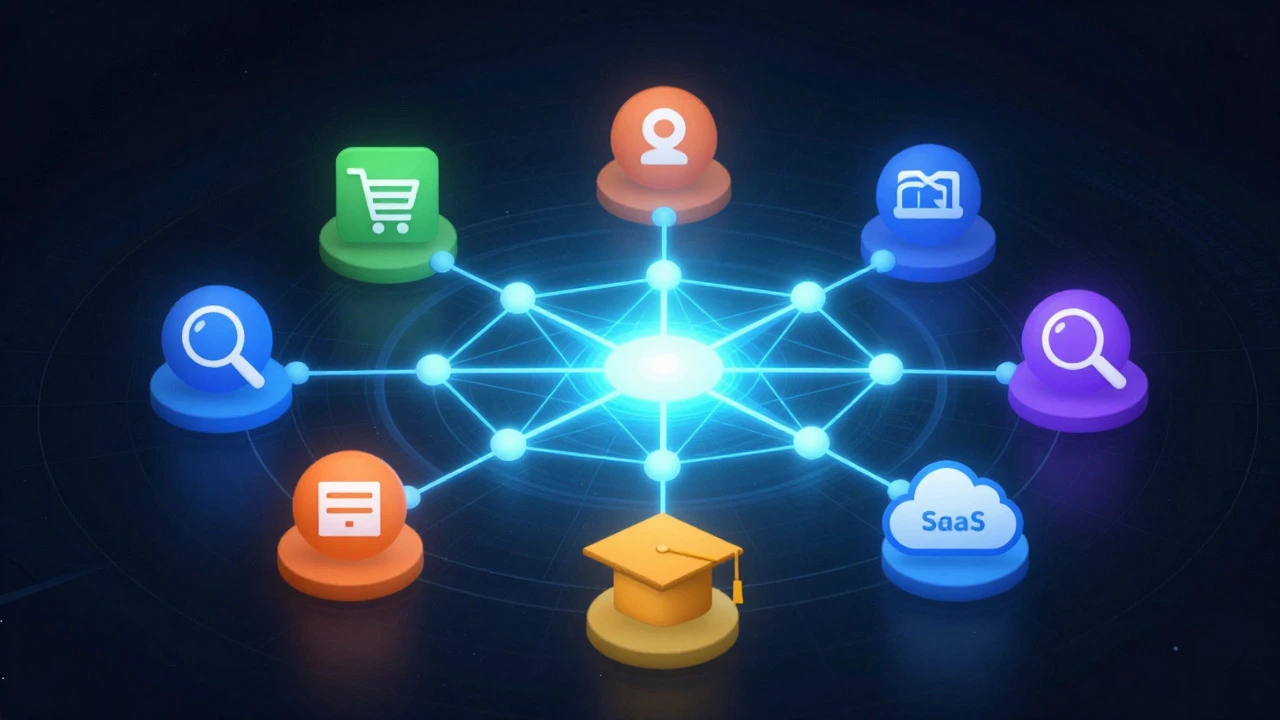
To understand why social networks hold the top spot, we need to look at how platforms are categorized. An internet platform is essentially a digital environment that facilitates interaction between two or more groups. The main types include:
- Social Networking Sites (SNS) are digital spaces designed for users to create profiles, connect with others, and share content.
- E-commerce Marketplaces are platforms that connect buyers and sellers, such as Amazon or eBay.
- Search Engines are tools that index the web to help users find information, like Google.
- SaaS (Software as a Service) is a delivery model where software is accessed via the cloud rather than installed locally.
Among these, Social Networking Sites have achieved a level of ubiquity that others struggle to match. According to data from Statista, over 5 billion people worldwide use social media. In contrast, while e-commerce is growing rapidly, its user base is still smaller because not everyone buys online regularly. Search engines are used frequently, but they are often considered utilities rather than destinations where users spend leisure time.
Why Social Networks Are the Default
The dominance of social platforms comes down to a few key factors. First, they solve a fundamental human need: connection. Unlike a search engine, which you use to get an answer and leave, or an e-commerce site, which you visit when you need to buy something, social networks are places where you live your digital life. You check them in the morning, during breaks, and before bed. This high frequency of engagement makes them the most "common" in terms of daily usage patterns.
Second, the barrier to entry is low. Creating an account on Facebook, Instagram, or TikTok takes less than a minute and requires no technical skill. Compare this to specialized B2B platforms or professional networking sites like LinkedIn, which require a more deliberate intent to join. Because social networks are easy to access and offer immediate social rewards (likes, comments, shares), they attract the broadest possible audience.
Third, the algorithmic feed creates a feedback loop. When you post, the platform shows it to your friends. Their reactions encourage you to stay engaged. This mechanism keeps users returning, solidifying the platform's position as the primary hub of internet activity.
The Rise of E-Learning Platforms
While social networks are the most common overall, e-learning platforms are digital environments specifically designed for delivering educational content and facilitating remote learning. These platforms have seen explosive growth, particularly since 2020. Examples include Coursera, Udemy, and Khan Academy.
E-learning platforms differ from social networks in their primary goal. While SNS focuses on community and entertainment, e-learning platforms focus on knowledge transfer and skill acquisition. However, there is a significant overlap. Many e-learning platforms now incorporate social features, such as discussion forums, peer reviews, and live classes, to boost engagement. This hybrid approach acknowledges that learning is a social process.
For students and professionals, understanding the difference is crucial. If you are looking for the most common platform to reach a mass audience for marketing, social networks are your best bet. But if you are looking to deliver structured courses, certify skills, or manage student progress, an e-learning platform is the specialized tool you need. The latter offers features like Learning Management Systems (LMS), progress tracking, and automated grading, which generic social platforms lack.
Comparing Platform Types
To visualize the differences, let's compare the major platform types based on user intent, primary feature, and typical user behavior.
| Platform Type | Primary User Intent | Key Feature | Example |
|---|---|---|---|
| Social Networking Site | Connection & Entertainment | Algorithmic Feed | Facebook, Instagram |
| E-commerce Marketplace | Purchase Goods | Product Catalog & Cart | Amazon, Shopify |
| Search Engine | Information Retrieval | Indexing & Ranking | Google, Bing |
| E-Learning Platform | Skill Acquisition | Course Modules & LMS | Coursera, Udemy |
| SaaS Application | Business Productivity | Cloud-Based Tools | Slack, Salesforce |
This table highlights that while all these platforms exist on the internet, they serve different jobs-to-be-done. The "most common" label depends on whether you are measuring by total unique users (Social) or by specific utility (Search/E-commerce). For general public usage, Social remains king.
Implications for Educators and Businesses
If you are an educator or a business owner, knowing which platform is most common helps you allocate resources effectively. Since social networks have the highest reach, they are ideal for brand awareness and lead generation. You can use Facebook Ads or Instagram influencers to drive traffic to your e-learning platform.
However, don't confuse reach with retention. Once a user lands on your e-learning platform, the experience must be self-contained. Relying solely on social media for course delivery is risky due to algorithm changes and lack of control over user data. A dedicated e-learning platform ensures that your curriculum stays organized, your students' progress is tracked, and your brand identity remains consistent.
Moreover, the line between these platforms is blurring. Many modern e-learning platforms now have their own social feeds where students can interact. Conversely, social platforms like LinkedIn are becoming mini-e-learning hubs with certified courses. This convergence means that the "most common" platform might soon be a hybrid entity that combines the connectivity of social networks with the structure of educational tools.

How to Choose the Right Platform for Your Needs
So, how do you decide which platform to focus on? Here is a simple decision framework:
- Define Your Goal: Do you want to entertain and connect (Social)? Sell products (E-commerce)? Teach skills (E-learning)? Or manage internal workflows (SaaS)?
- Analyze Your Audience: Where does your target audience already spend time? If you are targeting Gen Z, social video platforms like TikTok may be more effective than traditional email marketing.
- Consider Control: Do you need full control over the user experience? If yes, build or use a dedicated platform (like an LMS). If you just need visibility, leverage existing giants (like Facebook).
- Evaluate Cost: Building a custom platform is expensive. Using existing platforms is cheaper but comes with fees and dependency risks.
For most educational institutions, a multi-channel approach works best. Use social networks for marketing and community building, and a dedicated e-learning platform for actual instruction. This leverages the strengths of both world-leading platform types.
The Future of Platform Dominance
As technology evolves, the definition of a "platform" continues to shift. The rise of Web3 and decentralized applications suggests a future where users might own their data and move between platforms more easily. However, for the foreseeable future, centralized social networks will likely remain the most common entry point to the internet for the average user.
Meanwhile, e-learning platforms will continue to grow in sophistication, integrating AI tutors, virtual reality classrooms, and micro-credentialing. The competition isn't really between social networks and e-learning platforms; it's about how well each can integrate the other's best features. The winner will be the platform that feels least like work and most like life.
Is Facebook the most common internet platform?
Yes, Facebook is often cited as the most visited social networking site globally, making it one of the most common individual platforms. However, as a category, "Social Networking Sites" collectively hold the top spot for user engagement across the entire internet.
Are e-learning platforms a type of social network?
Not exactly. E-learning platforms are primarily educational tools. However, they increasingly include social features like forums and chat rooms to enhance learning. They are better classified as vertical-specific platforms rather than general social networks.
Which platform is best for selling online courses?
A dedicated e-learning platform like Teachable, Kajabi, or Udemy is best for selling courses because they handle payments, hosting, and student management. You can use social media to market these courses, but the transaction and delivery should happen on the e-learning platform.
What is the difference between a website and a platform?
A website is typically a static collection of pages owned by one entity. A platform is a dynamic environment that enables interaction between multiple parties (e.g., users and creators, buyers and sellers). Platforms usually have apps, accounts, and real-time features.
How has the pandemic affected platform usage?
The pandemic accelerated the adoption of e-learning platforms and video conferencing tools. It also increased social media usage as people stayed home. This shift highlighted the importance of digital infrastructure for both education and social connection.