

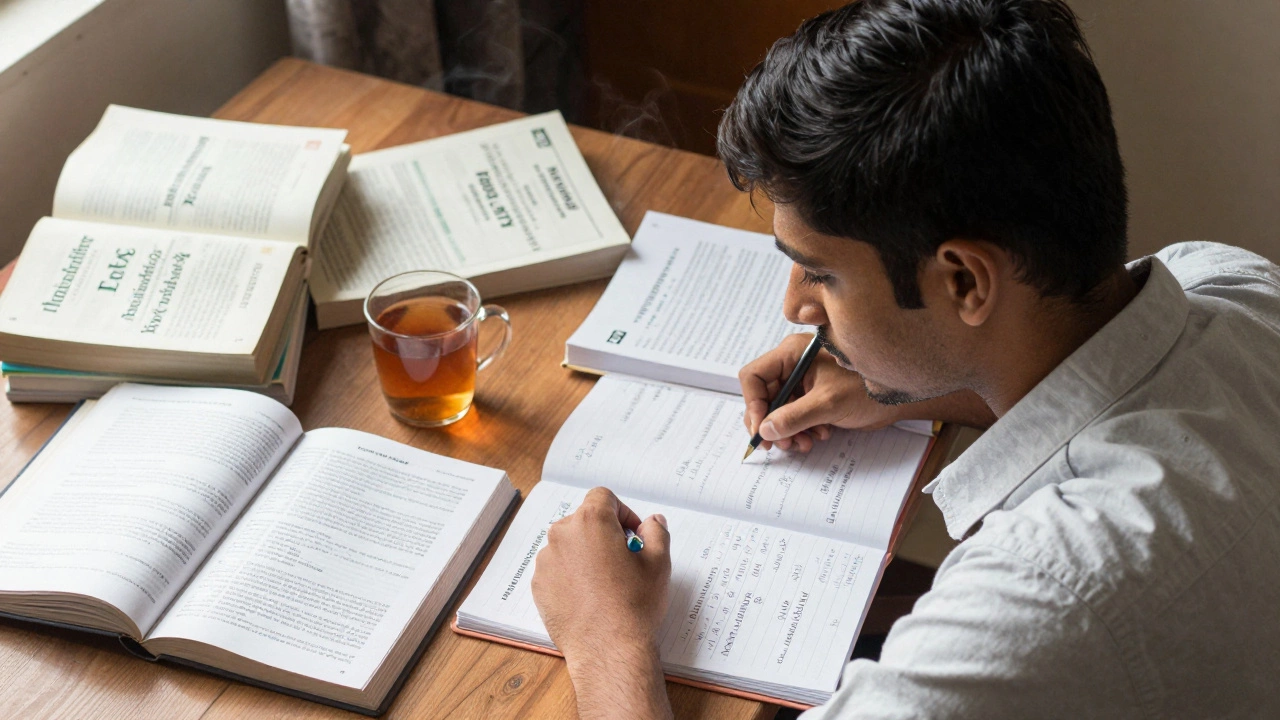
Government Exam Book Finder
Find Your Perfect Book Recommendation
Select your exam type, subject area, and knowledge level to get personalized book recommendations.
Preparing for government jobs isn’t just about studying harder-it’s about studying smarter. With hundreds of thousands applying for each opening, the right book can make the difference between a pass and a fail. But with so many options out there, which ones actually deliver results? There’s no single ‘best’ book for everyone, but there are clear winners based on the exam, the subject, and how you learn.
Understand the Exam First
Before you buy a single book, you need to know which government job you’re targeting. The books for UPSC Civil Services are completely different from those for SSC CGL, RRB NTPC, or state-level police exams. Each has its own syllabus, pattern, and difficulty level.
For example, UPSC demands deep analytical thinking and current affairs mastery. SSC CGL focuses on speed, accuracy, and basic reasoning. RRB exams test technical knowledge in specific trades. If you pick the wrong book, you’ll waste months.
Top Books for UPSC Civil Services (IAS/IPS/IFS)
If you’re aiming for the Union Public Service Commission exams, these are the books that consistently show up in toppers’ lists:
- India’s Struggle for Independence by Bipan Chandra - This isn’t just history. It’s the clearest, most engaging narrative of modern India’s freedom movement. No other book explains the role of mass movements, British economic policies, and regional resistance like this one.
- Indian Polity by M. Laxmikanth - Over 90% of UPSC aspirants use this. It’s detailed, well-organized, and updated every year. The chapters on Parliament, Judiciary, and Local Governments are gold.
- Indian Economy by Ramesh Singh - Covers everything from planning commissions to GST with real data. Better than NCERTs for depth, but start with NCERTs first if you’re new to economics.
- Environment by Shankar IAS - The go-to for Environment and Ecology. It’s packed with diagrams, case studies, and recent policy updates like the National Clean Air Programme.
- Current Affairs from Vision IAS Monthly Magazine - Not a traditional book, but essential. It compiles national and international events with analysis. Toppers say they read this twice before Prelims.
Don’t ignore NCERTs. Books from Class 6 to Class 12 in History, Geography, Polity, and Economics are the foundation. Many candidates skip them, thinking they’re too basic. That’s a mistake. UPSC questions often come straight from NCERT lines.
Best Books for SSC CGL, CHSL, and MTS
These exams are high-volume, time-sensitive, and focused on quantitative ability and reasoning. Speed matters more than depth.
- Quantitative Aptitude by R.S. Aggarwal - The classic. Covers 30+ chapters with solved examples. If you master this, you’ll handle 80% of the math section.
- English Language by SP Bakshi - For grammar, vocabulary, and comprehension. The error-spotting and sentence improvement sections are especially useful.
- General Intelligence & Reasoning by R.S. Aggarwal - Logical puzzles, syllogisms, coding-decoding. Practice this daily. It’s the section where you can gain 15+ marks quickly.
- Lucent’s General Knowledge
Lucent’s GK is the most trusted source for static GK-history, geography, science, awards, books, and constitutional articles. It’s updated annually and fits in your bag. Many candidates use it as their primary GK source.
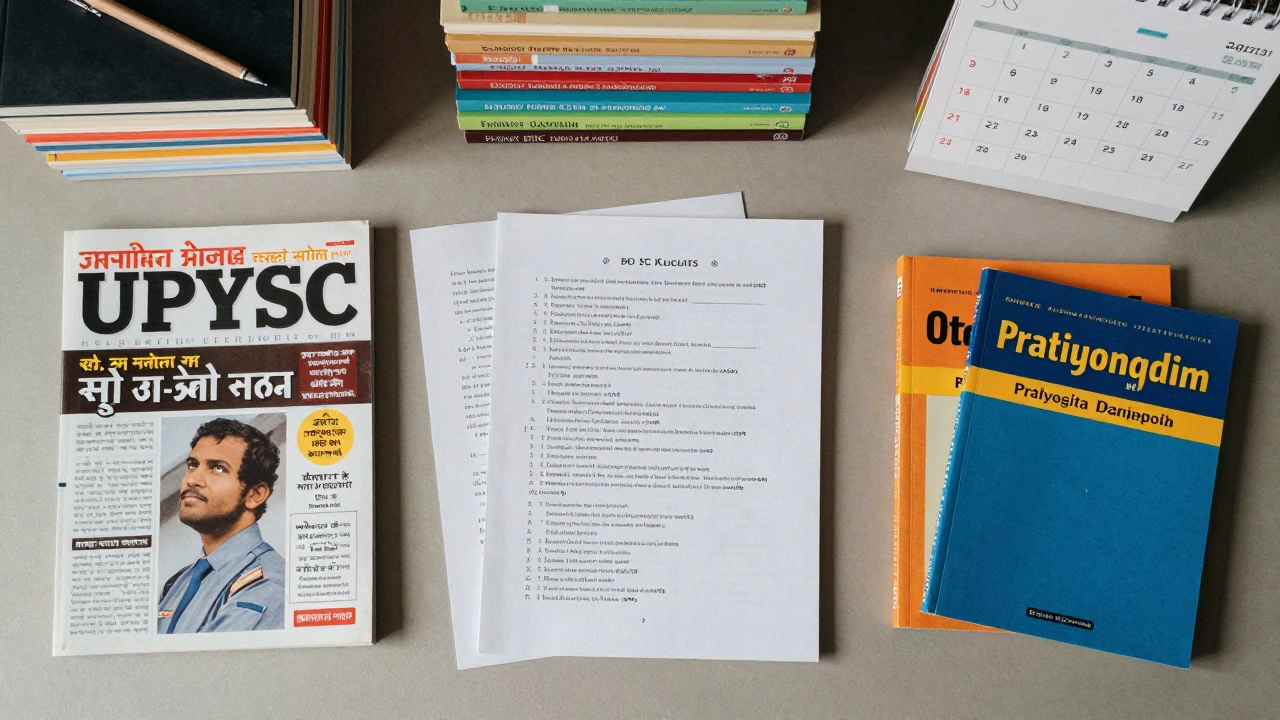
Books for State-Level Exams (State PSCs, Police, Forest Services)
State exams often mix national syllabus with local content. For example, if you’re preparing for UPPSC or BPSC, you need state-specific history, culture, and current affairs.
- State-specific handbooks from Arihant or Disha Publications - These are tailored for each state. They include local festivals, rivers, dams, and political leaders.
- Pratiyogita Darpan (monthly magazine) - Offers state-wise current affairs summaries. Useful for both UPSC and state exams.
- Objective General Knowledge by Disha Experts - Good for quick revision. Contains 10,000+ MCQs with explanations.
What About Digital Resources?
Books still win, but they’re no longer the only tool. Many toppers combine books with YouTube channels like Study IQ or Unacademy for current affairs. But don’t replace books with videos. Books give structure. Videos give context.
Use apps like BYJU’S Exam Prep or Gradeup for daily quizzes and mock tests. But always return to your core books for theory. You can’t memorize 500 pages of polity from a 10-minute video.

Common Mistakes to Avoid
- Buying too many books - 5 focused books are better than 20 half-read ones.
- Ignoring previous years’ papers - The pattern repeats. Solve at least the last 5 years. You’ll see the same types of questions.
- Reading without revising - Use flashcards or summary notes. Revisit topics every 2 weeks.
- Only reading English books if you’re not fluent - If Hindi or your regional language is stronger, use bilingual resources. Many state exams have Hindi/vernacular options.
How to Build Your Book List
Here’s a simple formula:
- Start with NCERTs (Class 6-12) for basics.
- Add one core book per subject (e.g., Laxmikanth for Polity).
- Use one GK book (Lucent or Arihant).
- Get one practice book for math/reasoning (R.S. Aggarwal).
- Subscribe to one current affairs source (Vision IAS or Pratiyogita Darpan).
That’s it. Five resources. No more. Stick to them. Revise them. Master them.
Final Tip: It’s Not About the Book, It’s About the Routine
The best book in the world won’t help if you don’t read it daily. One hour a day, consistently, beats five hours once a week. Set a schedule. Track your progress. Mark what you’ve read. Revisit what you missed.
Government job preparation is a marathon, not a sprint. The right books are your compass. But your discipline is the engine.
Which book is best for UPSC Prelims?
For UPSC Prelims, combine NCERTs (Class 6-12) with Indian Polity by M. Laxmikanth, India’s Struggle for Independence by Bipan Chandra, and Lucent’s General Knowledge. Use Vision IAS Monthly Current Affairs for updates. Practice with at least 5 years of previous papers.
Are old editions of books still useful for government exams?
For static subjects like History, Geography, and Polity, older editions are fine. But for current affairs, Economy, and Environment, you need the latest edition. Always check if the book has been updated in the last 1-2 years. Outdated data can cost you marks.
Can I prepare for government exams using only free resources?
Yes, but it’s harder. Free YouTube channels and government websites (like PIB, NCERT, and NIOS) are valuable. But paid books offer structure, curated content, and practice questions designed for exam patterns. If you’re on a tight budget, start with NCERTs and free PDFs, then invest in one core book like Laxmikanth or R.S. Aggarwal.
How many books should I read for SSC CGL?
Three to four are enough: R.S. Aggarwal for Quant and Reasoning, SP Bakshi for English, and Lucent’s GK. Add a previous years’ question bank for practice. Don’t collect books-master them.
Is it better to read one book cover to cover or switch between books?
Stick to one primary book per subject. Switching too often creates confusion. Once you finish a book, revise it. Then use a second book only if you need deeper insight or different explanations. For example, read Laxmikanth first, then use DD Basu if you want more legal detail.
Remember: There’s no magic book. There’s only consistent effort, smart choices, and the discipline to stick with what works.