




Free European Education Cost Calculator
Calculate Your European Study Costs
Estimate your total expenses for studying in Europe. Remember: Free tuition doesn't mean free education!
Your Estimated Annual Costs
Based on your inputs, you'll need approximately per year to cover living expenses.
Note: This does not include visa costs or international travel
Important Tips for Your Application
Remember: Many European universities require you to prove financial resources before issuing visas.
Every year, thousands of American students wonder if they can get a college degree in Europe without paying a cent in tuition. The answer isn’t a simple yes or no-it’s more like, yes, but. You can study for free in many European countries, but there are rules, limits, and hidden costs that most people don’t talk about.
Which European countries offer free college to Americans?
Not all of Europe is free. The big names that come up are Germany, Norway, Finland, Sweden, and Austria. These countries don’t charge tuition fees for international students at public universities-yes, even Americans. But here’s the catch: it only applies to programs taught in the local language, usually German, Norwegian, or Swedish.
For example, the University of Oslo in Norway offers over 200 bachelor’s and master’s programs in English. But even though tuition is free, you still need to prove you can afford to live there. Norway requires international students to show around $13,000 USD per year in bank statements. That’s not tuition-it’s a living cost requirement. And you can’t just send a screenshot of your PayPal balance. You need official bank letters.
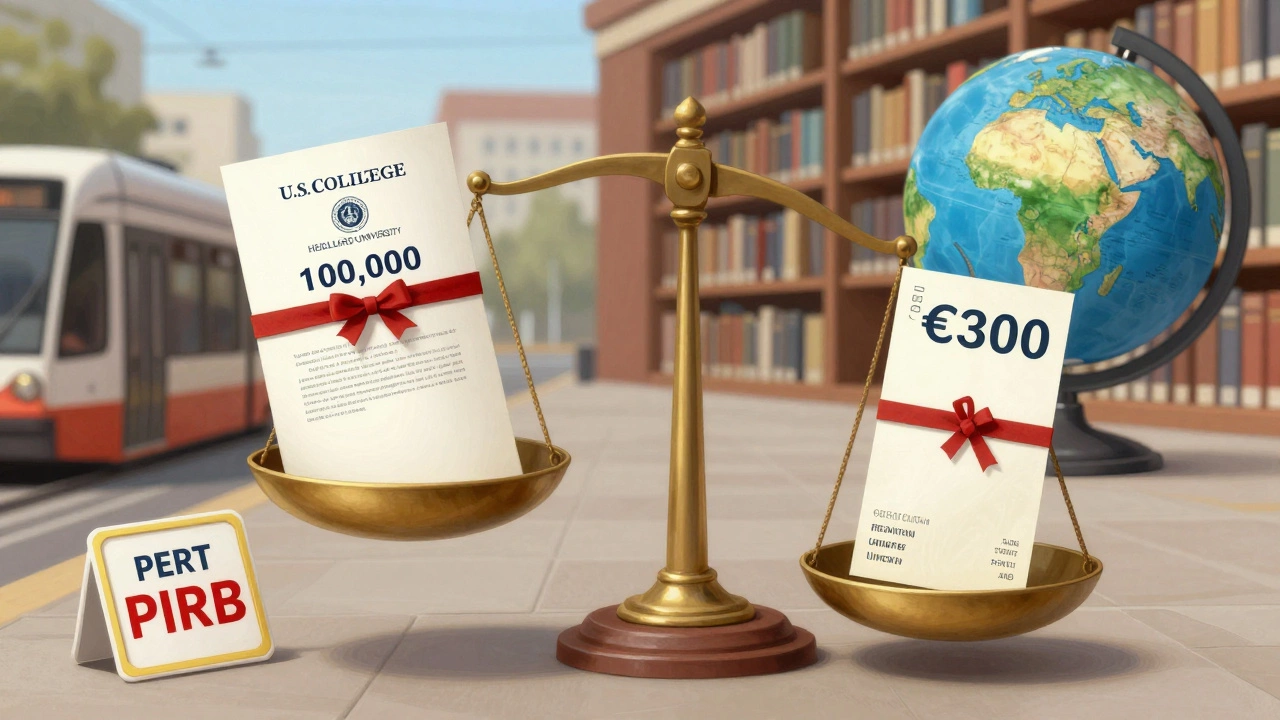
Germany is the most popular choice. Public universities like Humboldt University in Berlin or the University of Munich don’t charge tuition for undergraduates, no matter where you’re from. You’ll pay around €300 per semester for administrative fees, which covers things like public transit passes and student union access. That’s less than $400 a year.
What about English-taught programs?
If you don’t speak German, Norwegian, or Swedish, your options shrink. But they’re not gone. Many universities now offer degrees in English, especially at the master’s level. In Germany, most master’s programs are in English-and still tuition-free. But bachelor’s degrees in English? Those are rarer.
Sweden used to be free for everyone, but in 2011, they started charging non-EU students. Now, Americans pay between €8,000 and €14,000 per year. Finland follows a similar model. So if you’re looking for free tuition in English, your best bets are still Germany and Norway, but only if you’re okay with a few language barriers.
What’s the real cost of studying for free?
Free tuition sounds amazing until you realize you still need to pay for rent, food, health insurance, books, and transportation. In cities like Berlin or Oslo, rent alone can cost $800-$1,200 per month. That’s $10,000-$15,000 a year just to live.
Health insurance is mandatory. In Germany, you’ll need public health insurance, which costs about €110 per month. In Norway, you’ll need to enroll in the Norwegian national health system, which costs around $700 per year for non-residents. You can’t skip this. Without it, you won’t get a student visa.
And don’t forget about visa requirements. The Schengen student visa isn’t automatic. You need to prove you have enough money to survive, a letter of acceptance from a university, and sometimes proof of language skills-even if your program is in English. Many students get turned down because they think “free tuition” means “no financial proof needed.” It doesn’t.

Can you work while studying?
Yes. Most European countries let international students work part-time. In Germany, you can work 120 full days or 240 half-days per year. That’s about 20 hours a week during term time. In Norway, you can work full-time without restrictions once you have your residence permit.
Many students take jobs as tutors, research assistants, or in cafes. The pay is decent-€12-€15 per hour in Germany, around $25 per hour in Norway. If you work 15 hours a week at €14/hour, that’s $2,700 a year. It won’t cover everything, but it helps.
Some students even manage to pay for rent and food with part-time work. But it’s not easy. You’re still juggling classes, language learning, and bureaucracy. Most students who work full-time to pay for school end up taking longer to graduate.
How does the application process work?
Applying to a European university is nothing like applying to a U.S. college. There’s no Common App. You apply directly to each university. Deadlines are usually in January or March for fall admission. You need your high school transcript (translated and notarized), proof of English proficiency (TOEFL or IELTS), a personal statement, and sometimes a portfolio or entrance exam.
Germany uses a platform called Uni-Assist for most public universities. It’s a centralized service that checks your documents and forwards them. It costs €75 per university. Norway uses the Samordna Opptak system for undergraduates. You need to apply months in advance.
And don’t assume your U.S. GPA translates directly. European universities look at your entire academic record, not just your average. They care about your grades in subjects related to your major. If you’re applying for engineering, they’ll look at your math and physics grades more than your art class.
What about financial aid for Americans?
You can still use U.S. federal student loans. FAFSA applies to some European schools that are approved by the U.S. Department of Education. As of 2025, over 400 European institutions are eligible. That includes most public universities in Germany, Austria, and Norway.
You can borrow up to $5,500-$12,500 per year depending on your year in school. That won’t cover all your costs, but it can help with rent or books. You can also apply for private scholarships like the Gilman Scholarship, which gives up to $5,000 for students studying abroad.
Some universities offer their own scholarships too. The DAAD in Germany gives out hundreds of merit-based grants each year. The Erasmus+ program doesn’t cover Americans directly, but some partner institutions have slots for non-EU students.
Is it worth it?
It’s worth it if you’re flexible, patient, and willing to live differently. You won’t have the dorm life, Greek system, or football games you’re used to. You’ll eat at the student cafeteria, take the tram to class, and maybe learn a few phrases in German just to get by.
But you’ll graduate with a degree from a top-ranked university-like the University of Heidelberg or the University of Copenhagen-without $100,000 in debt. You’ll have lived in a different culture, navigated a foreign bureaucracy, and built a global network. Employers notice that.
One American student I spoke with graduated from the University of Vienna with a degree in political science. She paid nothing in tuition. She worked part-time in a bookstore. She saved $80,000 compared to staying in the U.S. She now works for a UN agency in Geneva.
What are the downsides?
Language is the biggest hurdle. Even if your classes are in English, daily life isn’t. Grocery shopping, dealing with landlords, or calling the doctor can be stressful if you don’t speak the language.
Admissions are competitive. German universities don’t have rolling admissions. If you miss the deadline, you wait a year. There’s no “apply early, get in.” It’s all about timing and documentation.
And not every degree is recognized the same way in the U.S. If you’re planning to become a doctor, lawyer, or engineer back home, check if your European degree qualifies you for licensing exams. Some fields require extra steps.
What should you do next?
Start by picking a country and a program. Look at the university’s official website-not a blog or forum. Check the tuition section, visa requirements, and application deadlines. Write down what you need: transcripts, test scores, bank statements, language proof.
Then, calculate your real costs. Add rent, insurance, food, travel, and books. Subtract any scholarships or part-time income you can realistically earn. If the number is still too high, consider starting at a community college in the U.S. and transferring later.
There’s no magic shortcut. But if you’re willing to plan ahead, learn the rules, and live simply, you can get a world-class education without the American price tag.
Can Americans really study for free in Germany?
Yes, Americans can study for free at public universities in Germany. Tuition is waived for all international students, regardless of nationality. You only pay a small semester fee of around €300, which includes a public transit pass. This applies to both bachelor’s and master’s programs, as long as they’re offered by a public institution.
Do I need to speak German to study in Europe for free?
It depends. For bachelor’s degrees, most free programs are taught in German, so you’ll need B2 or C1 level proficiency. But many master’s programs in Germany, Norway, and Finland are taught entirely in English-and still tuition-free. If you’re applying for a master’s in engineering, economics, or computer science, you have good odds of finding an English option without needing to learn the local language.
Is healthcare covered for international students in Europe?
Yes, but you must enroll. In Germany, you pay around €110 per month for public health insurance. In Norway, you pay a flat annual fee of about $700. This is mandatory to get your student visa. U.S. health insurance doesn’t work abroad, so you can’t skip this step.
Can I use FAFSA to pay for school in Europe?
Yes, if the university is on the U.S. Department of Education’s approved list. As of 2025, over 400 European schools qualify, including most public universities in Germany, Austria, and Norway. You can apply for federal loans, but not grants like Pell Grants. Private scholarships are also available through organizations like Gilman and Fund for Education Abroad.
What’s the biggest mistake Americans make when applying?
Thinking “free tuition” means “no money needed.” Most applicants don’t realize they need to prove they can afford to live there-often $10,000-$15,000 per year. Others miss deadlines because they assume it’s like U.S. colleges. European universities have strict, non-negotiable dates. Missing one means waiting a full year.
Are degrees from Europe recognized in the U.S.?
Most are, especially from well-known universities. But some professions-like law, medicine, or architecture-require additional certification in the U.S. Always check with the licensing board in your state before enrolling. A degree from a top European university is respected, but it doesn’t automatically qualify you for a U.S. license.