





NEET Spaced Repetition Schedule Generator
Imagine sitting in the exam hall on May 2026, staring at a question about the Krebs cycle. Your heart races. Do you panic, or does the answer flow out instantly? For millions of students aiming for medical seats in India, the difference between a rank in the top 100 and missing the cutoff often comes down to one thing: how fast and accurately you can retrieve information. The National Eligibility cum Entrance Test (NEET) is not just a test of intelligence; it is a massive data retrieval challenge. You are expected to know everything from the periodic table to human anatomy in a fraction of a second.
The hard truth is that rote memorization-the kind where you read a paragraph ten times hoping it sticks-is dead. It is slow, inefficient, and fails under pressure. If you want the fastest way to memorize NEET material, you need to shift from passive reading to active encoding. This means using cognitive science-backed strategies like spaced repetition, active recall, and visual association. These methods don't just help you remember; they build neural pathways that make retrieval automatic. Let’s break down exactly how to do this for each subject, starting with the beast that defines the exam: Biology.
Biology: The Art of Visual Storytelling
Biology makes up half your score. In NEET, accuracy is king. A single wrong word in a definition can cost you four marks. The fastest way to memorize biology isn't to read the textbook like a novel; it is to turn it into a movie. Our brains are wired to remember images and stories far better than abstract text. When you study the "Human Heart," don't just list the chambers. Visualize the blood flowing through them. Imagine yourself as a red blood cell entering the right atrium, getting pumped to the lungs, and returning oxygen-rich to the left ventricle. This technique, known as the Method of Loci or Memory Palace, links complex facts to spatial locations you already know.
For taxonomy and classification, use mnemonics aggressively. Instead of trying to memorize a list of phylum characteristics, create silly acronyms or rhymes. The weirder the image, the more memorable it is. If you are studying the order of taxonomic ranks, remember "King Philip Came Over For Good Soup" (Kingdom, Phylum, Class, Order, Family, Genus, Species). But go deeper. Create mental flashcards for every diagram in your NCERT books. Close the book and try to draw the nephron or the flower structure from memory. If you get stuck, open the book, correct it, and repeat. This active reconstruction is five times faster than re-reading the page because it forces your brain to work.
- Diagram Drawing: Practice drawing key diagrams (heart, brain, plant cell) without looking. Label them aloud.
- NCERT Line-by-Line: Treat every line in NCERT as a potential question. Highlight keywords and create a mental map of where they appear in the chapter.
- Storytelling: Convert processes like photosynthesis or DNA replication into step-by-step narratives with characters (enzymes, molecules).
Chemistry: Breaking Down the Barrier
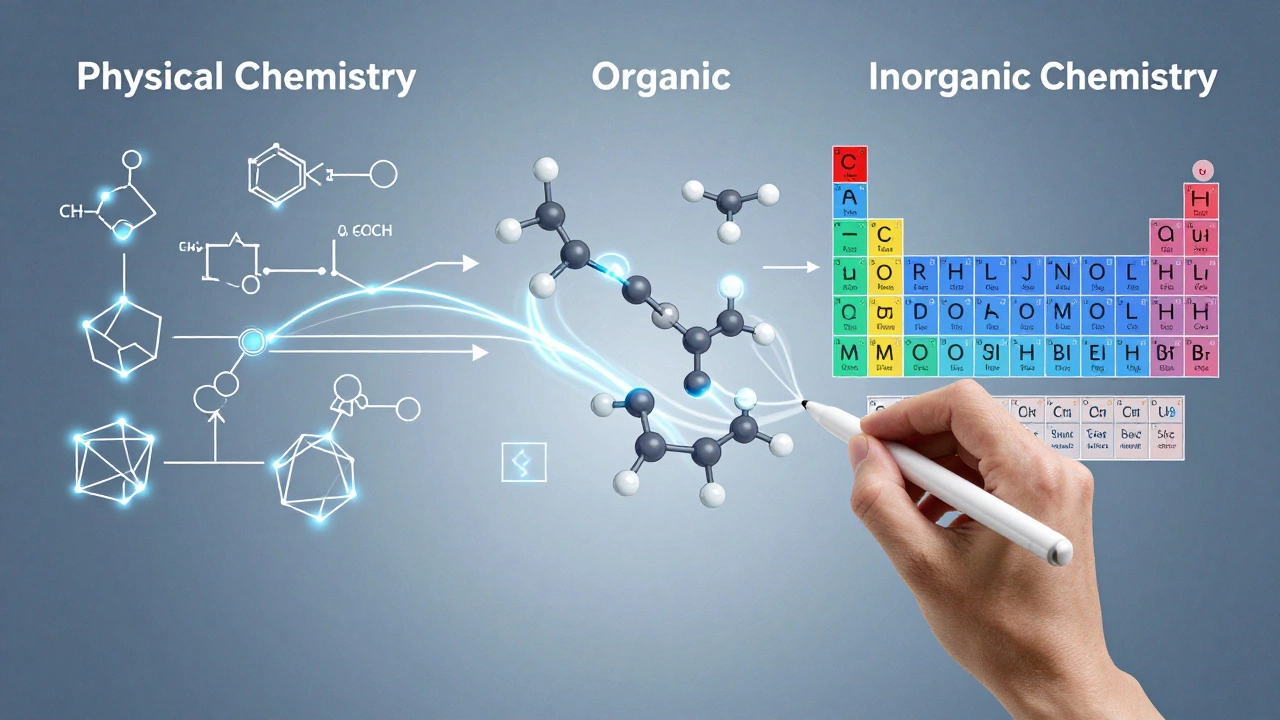
Chemistry is often the divider between good and great scores. It splits into three distinct areas, each requiring a different memory approach. Physical Chemistry is about logic and formulas; Organic Chemistry is about mechanisms and patterns; Inorganic Chemistry is pure memorization. Many students fail because they try to memorize Organic reactions by rote, which is nearly impossible. Instead, understand the electron movement. Why does the nucleophile attack there? Once you understand the "why," you only need to memorize the exceptions. This reduces the load significantly.
Inorganic Chemistry, particularly the p-block and coordination compounds, is where most students lose time. Here, the fastest memorization technique is grouping and comparison. Don't study elements in isolation. Compare Nitrogen and Phosphorus side-by-side. Note their similarities and differences in a table. Use color-coding in your notes: red for acidic oxides, blue for basic ones. This visual cue helps your brain categorize information quickly. For chemical formulas and equations, use spaced repetition apps like Anki. Input the reactants on the front and the products/balanced equation on the back. Review these cards daily. The algorithm will show you the cards you struggle with more often, ensuring you spend time only on what you haven't mastered yet.
| Sub-topic | Primary Strategy | Tool/Technique |
|---|---|---|
| Physical Chemistry | Conceptual Understanding | Derive formulas, practice numericals |
| Organic Chemistry | Mechanism Mapping | Flowcharts, reaction roadmaps |
| Inorganic Chemistry | Pattern Recognition | Comparison tables, Mnemonics |
Physics: Formula Fluency Through Application
Physics is rarely about memorizing definitions. It is about recognizing which formula applies to which scenario. The "memory" here is procedural memory-like riding a bike. You don't think about balancing; you just do it. To achieve this fluency, you must move away from passive problem-solving. When you solve a question, don't just check if the answer is right. Ask yourself: "What was the first clue that told me to use Newton's Second Law?" Identify the trigger words in the question stem. "Frictionless surface" triggers conservation of energy. "Constant acceleration" triggers kinematic equations.
Create a "Formula Sheet" that is not just a list, but a decision tree. Group formulas by topic, but also by application. For example, group all rotational motion formulas together and highlight how they mirror linear motion formulas ($F=ma$ becomes $\tau=I\alpha$). This analogy technique doubles your retention because you are linking new information to old, well-established knowledge. Practice solving problems under timed conditions. Speed builds confidence, and confidence reduces anxiety, which clears the mental fog that blocks memory retrieval during the actual exam.
The Power of Spaced Repetition and Active Recall
You cannot cram NEET in a month. The volume of content is too vast. The secret to speed is actually slowing down initially to ensure deep encoding. This is where Spaced Repetition comes in. Human memory follows a forgetting curve. Without review, you forget 50% of what you learned within 24 hours. Spaced repetition interrupts this curve by reviewing material at increasing intervals: 1 day, 3 days, 1 week, 1 month. By the time you review a topic after a month, your brain has strengthened the neural connection, making the memory long-term and durable.
Combine this with Active Recall. This is the opposite of highlighting. Highlighting gives you a false sense of competence because you recognize the text. Active Recall forces you to retrieve the information without cues. After reading a chapter, close the book and write down everything you remember. Then, check what you missed. Repeat this process. It feels difficult and frustrating at first, but that difficulty is the sign of learning happening. Studies show that active recall improves retention by up to 50% compared to passive re-reading. Make this your daily habit. Spend 30 minutes every morning recalling yesterday's topics before starting new ones.

Building a Sustainable Revision Schedule
Even the best techniques fail without a system. You need a schedule that balances new learning with revision. A common mistake is studying new topics until the last minute and then panicking about revision. Instead, allocate 70% of your time to new concepts and 30% to revision. As the exam date approaches, flip this ratio. In the final two months, 80% of your time should be spent revising and taking mock tests.
Use the Pomodoro Technique to maintain focus. Study for 25 minutes, take a 5-minute break. After four cycles, take a longer break. This prevents burnout and keeps your brain fresh. During breaks, move your body. Exercise increases blood flow to the hippocampus, the part of the brain responsible for memory formation. Sleep is non-negotiable. During sleep, your brain consolidates memories, moving them from short-term to long-term storage. Pulling all-nighters destroys this process. Aim for 7-8 hours of quality sleep. If you are tired, your brain cannot encode new information efficiently, making your study time wasted.
Common Pitfalls to Avoid
Avoid multitasking. Checking your phone while studying fragments your attention and prevents deep encoding. Put your phone in another room. Avoid passive video lectures without note-taking. Watching a lecture is easy; it feels like work, but it is often entertainment. Pause every few minutes and summarize what you heard in your own words. Avoid ignoring weak areas. It is tempting to stick to strong subjects, but NEET rewards balance. Dedicate specific time slots to your weakest topics early in your preparation. Finally, don't neglect mock tests. They simulate the pressure of the exam and help you identify gaps in your memory that you didn't know existed.
How many hours a day should I study for NEET?
Quality matters more than quantity. Most successful students study 8-10 hours a day, including breaks. However, effective focused study time is usually around 6-7 hours. Ensure you include time for revision, mock tests, and rest. Studying 14 hours with low focus is less effective than 8 hours of intense, active recall sessions.
Is it possible to crack NEET in 6 months?
It is challenging but possible if you have a strong foundation in Class 11 and 12 physics, chemistry, and biology. You would need to dedicate 10-12 hours daily, focusing strictly on high-yield topics and NCERT texts. Prioritize active recall and spaced repetition to cover the syllabus quickly. However, starting earlier is always recommended for a safer margin.
Which app is best for spaced repetition in NEET prep?
Anki is the most popular and flexible tool for spaced repetition. It allows you to create custom flashcards with images, text, and even audio. Other options include Quizlet, though Anki's algorithm is generally considered superior for long-term retention. Many NEET-specific apps now integrate spaced repetition features directly into their question banks.
Should I rely only on NCERT for Biology?
Yes, for NEET, NCERT is the bible for Biology. Approximately 90-95% of Biology questions are directly or indirectly derived from NCERT lines and diagrams. While reference books can help with conceptual clarity, your primary memorization source must be NCERT. Read it multiple times, line by line, and memorize the exact wording used in the text.
How do I handle stress during preparation?
Stress impairs memory retrieval. Incorporate mindfulness practices, such as meditation or deep breathing exercises, into your daily routine. Maintain a balanced diet and regular exercise. Talk to friends or family about your concerns. Remember that NEET is a marathon, not a sprint. Consistency over intensity will reduce anxiety and improve performance.