


Free college courses sound too good to be true. You sign up, watch lectures, do assignments, and walk away with a certificate-no tuition, no debt. But here’s the real question: does any of it actually help you get a job, move up in your career, or learn something useful?
The answer isn’t yes or no. It’s context.
What free college courses really are (and aren’t)
When people say "free college courses," they usually mean Massive Open Online Courses, or MOOCs. Platforms like Coursera, edX, FutureLearn, and MIT OpenCourseWare offer thousands of classes from top universities. You can take Introduction to Psychology from Yale, Calculus from MIT, or Digital Marketing from the University of Illinois-all for $0.
But here’s the catch: free usually means free to audit. That means you get access to lectures, readings, and sometimes quizzes. But you don’t get graded feedback, instructor interaction, or a verified certificate unless you pay. And even then, the certificate doesn’t always carry the same weight as a degree.
Think of it like borrowing a textbook from the library. You can read it, learn from it, even take notes. But you won’t get a diploma for it.
Who benefits the most from free courses?
Not everyone. Free courses work best for people who already have some structure in their lives.
- Someone working full-time who wants to learn Python to switch into data analysis
- A stay-at-home parent exploring graphic design before starting a side hustle
- A high school graduate testing out computer science before committing to a degree
- A retiree curious about ancient history or climate science
These people aren’t looking for a credential. They’re looking for skills. And free courses deliver that-when they’re used right.
But if you’re unemployed, desperate for a job, and think a free certificate will get you hired? You’re setting yourself up for disappointment. Employers don’t look at a list of free courses the same way they look at a degree, internship, or portfolio.
What free courses can’t do for you
Let’s be blunt: free courses won’t get you a promotion if your company requires a bachelor’s degree. They won’t qualify you for a visa. They won’t replace a resume with real-world experience.
Here’s what’s missing:
- Feedback on your work
- Networking with peers or instructors
- Access to career services or job boards
- Proof of completion that employers recognize
Take Google’s free IT Support Certificate on Coursera. It’s one of the most popular free programs. Over 100,000 people have completed it. But here’s the data: only about 30% of those who finished it landed a job in IT within six months. The rest used it as a stepping stone-learning basics, then building real projects on GitHub, volunteering, or taking paid internships.
The certificate alone? Not enough.
What free courses can do-when you use them right
Here’s the flip side. Free courses are powerful when used as a tool, not a goal.
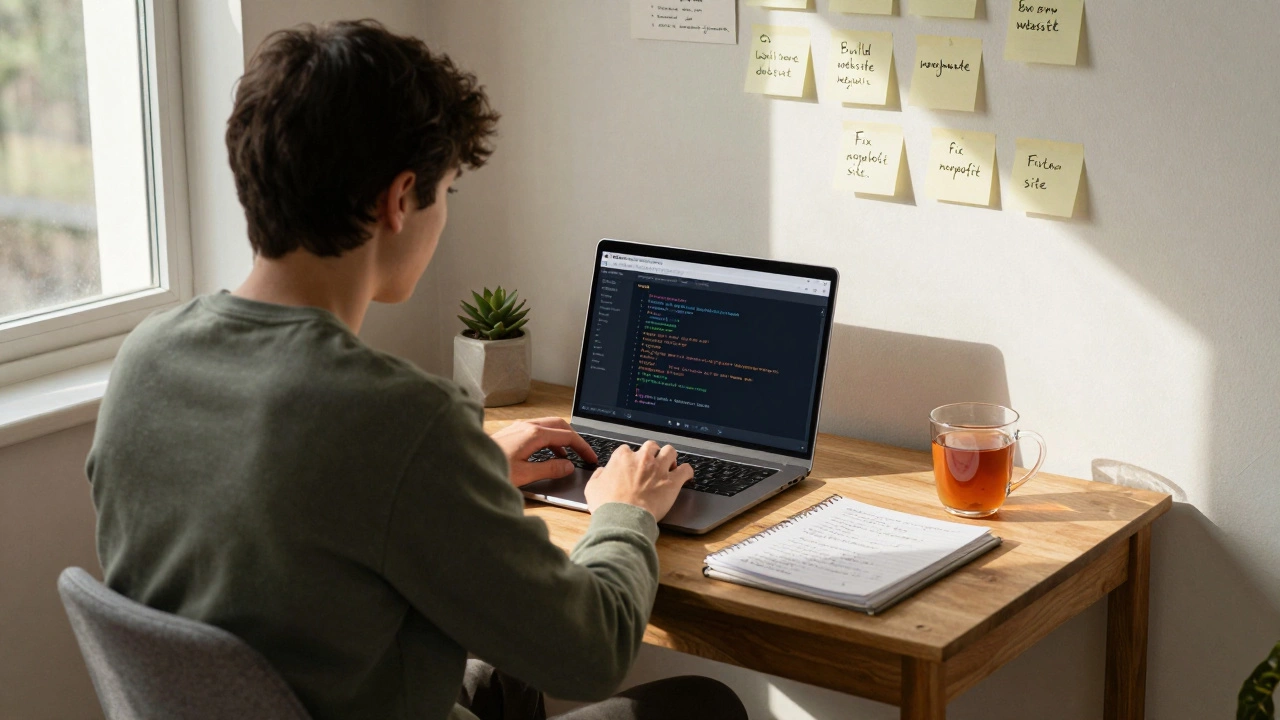
Let’s say you want to become a web developer. You take a free HTML and CSS course from Harvard’s CS50. You don’t stop there. You build a personal website. You fix a nonprofit’s broken site for free. You post your code on GitHub. You start contributing to open-source projects. Now you have a portfolio. That’s what gets you hired-not the certificate.
Or you’re in retail and want to move into management. You take a free course on leadership from the University of London. You apply what you learn to lead your team’s weekly meeting. You track how team productivity changes. You write a short case study. Now you have a story to tell in your next performance review.
Free courses are like gym memberships. Owning one doesn’t make you fit. Working out every day does.
How to make free courses actually work
If you’re serious about using free courses, here’s how to turn them into real value:
- Set a goal-Not "learn something," but "build a website that sells handmade candles" or "understand basic accounting to manage my small business."
- Finish one course-Most people start five and finish zero. Pick one. Stick with it.
- Apply it immediately-Don’t wait until the course ends. Use the skill that same week.
- Create something public-Post your project on LinkedIn, GitHub, or a blog. Show your work.
- Track your progress-Keep a simple log: "Week 1: Learned Python loops. Built a budget calculator. Shared it with 3 friends."
That’s it. No fancy tools. No expensive software. Just action.
Free vs. paid: What’s the real difference?
Many platforms offer both free and paid options. Here’s what you actually get when you pay:
| Feature | Free | Paid ($49-$99) |
|---|---|---|
| Access to lectures | ✓ | ✓ |
| Quizzes and assignments | ✓ | ✓ |
| Graded feedback | ✗ | ✓ |
| Verified certificate | ✗ | ✓ |
| Access to career resources | ✗ | Sometimes |
| Peer discussion forums | ✓ | ✓ |
| Deadline flexibility | Unlimited | Usually limited |
Notice what’s missing? The biggest value isn’t the certificate. It’s the feedback and structure. If you’re self-motivated, free is fine. If you need deadlines and accountability, paying $50 might be worth it.
Real stories from people who made it work
In Auckland, a 42-year-old warehouse supervisor took a free course on supply chain basics from MIT OpenCourseWare. He didn’t get a certificate. But he started using the frameworks to suggest better inventory practices at work. His manager noticed. He was promoted to logistics coordinator six months later.
A single mom in Christchurch took free graphic design courses on YouTube and Coursera. She built a portfolio of logos for local cafes. She started charging $50 per logo. Within a year, she was making $2,000 a month on the side-and quit her admin job.
These people didn’t win a prize. They didn’t get a scholarship. They just did the work.
When free courses aren’t worth it
They’re not worth it if:
- You’re taking them just to say you did
- You expect them to replace a degree or certification
- You never apply what you learn
- You get distracted by the next course before finishing the first
There’s a myth that more courses = more learning. It’s the opposite. One course, done well, beats five half-finished ones.
What to do next
If you’re wondering whether free college courses are worth it, ask yourself this:
- Do I have a clear goal?
- Am I willing to build something real with what I learn?
- Can I stick with one course for 6-8 weeks?
If you answered yes to all three, go ahead. Pick a course. Start today.
If you answered no to any of them, don’t waste your time. First, figure out what you actually want to achieve. Then find the right tool for it.
Free courses aren’t magic. But they’re one of the most powerful tools we have right now for learning without debt. Use them right, and they can change your life. Use them wrong, and they’ll just sit there-like a gym membership you never use.
Are free college courses recognized by employers?
Most employers don’t care about the certificate itself-they care about what you can do. A free course certificate won’t get you past an HR filter if you’re applying for a job that requires a degree. But if you use the course to build a portfolio, solve real problems, or improve your job performance, that’s what gets noticed. Employers value results, not credentials, when they’re hiring for skills.
Can I get a job with only free online courses?
Yes-but not because of the courses. You get hired because you built something. Someone hired a freelance web developer in Wellington who only took free courses. He didn’t have a degree. But he had 12 live websites on GitHub, testimonials from local businesses, and a LinkedIn profile showing his process. The courses gave him the skills. His work got him the job.
Do free courses count toward a degree?
Some universities accept credits from paid MOOCs (like edX’s MicroMasters), but almost never from free audits. If you’re aiming for a degree, look for programs that offer credit pathways. Most free courses are for learning, not accreditation. Don’t assume they’ll transfer.
Are free courses better than YouTube tutorials?
It depends. YouTube is great for quick tips and hacks. Free college courses are better for structured learning-organized modules, assignments, and clear learning outcomes. If you want to go deep on a topic like statistics or programming, a university course gives you a roadmap. YouTube is a toolbox. A course is a blueprint.
How long should I spend on a free course?
Plan for 4-8 hours per week over 6-10 weeks. That’s enough to finish without burning out. Most free courses are designed for 4-6 weeks, but life gets in the way. It’s better to take 10 weeks and finish than to rush through and forget everything. Consistency matters more than speed.
What’s the best free course for beginners?
Start with "Learning How to Learn" on Coursera (free to audit). It’s not about a skill-it’s about how to study effectively. After that, pick a course that matches your goal: Python for beginners if you want tech, Accounting Fundamentals if you want business, or Introduction to Public Speaking if you want confidence. The best course is the one that solves your next problem.
Final thought: Free doesn’t mean easy
Free college courses are a gift-but only if you’re willing to work for them. They’re not shortcuts. They’re tools. And like any tool, they’re only as good as the person using them.
If you’re ready to learn, start today. Pick one course. Finish it. Build something. That’s how real progress happens.