




Exam Success Rate Calculator
Enter Exam Details
Your Results
Enter exam details to see your odds
Your Probability of Success
0.00%
Based on historical data
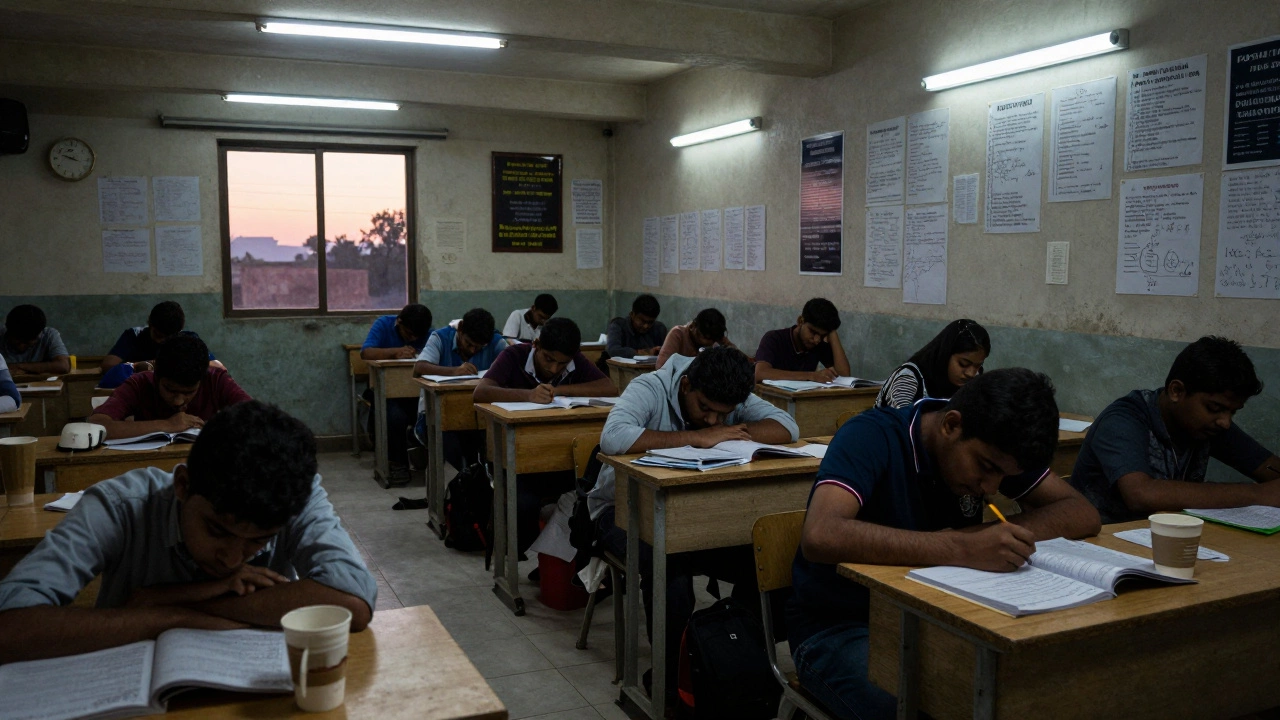
Everyone asks, "What’s the hardest major?" But the real question isn’t about the subject-it’s about the system. In countries like India, China, and even parts of Southeast Asia, the hardest "major" isn’t chosen in college. It’s forced on you before you even get there. It’s the path through exams that decide your future at 17, 18, or 19. And those exams? They don’t just test knowledge. They test endurance, sleep, mental health, and how much you’re willing to sacrifice.
It’s Not the Subject, It’s the Exam
Engineering isn’t hard because calculus is tough. Medicine isn’t brutal because anatomy is complex. The real pressure comes from the competitive exams that gatekeep them. In India, getting into an IIT for engineering means beating over 1.5 million students for 12,000 seats. That’s a 0.8% success rate. For NEET, the medical entrance, it’s 1.8 million candidates fighting for 100,000 seats. You’re not studying to learn-you’re studying to survive a numbers game.
Compare that to the U.S. or Europe. There, you apply to a program, submit grades, maybe take an SAT or MCAT, and get in based on a broader profile. Here? One exam. One day. One score. Get it wrong, and your dream vanishes. No second chances. No appeals. No "maybe next year"-because next year, the competition gets fiercer.
The IIT JEE: Engineering’s Gauntlet
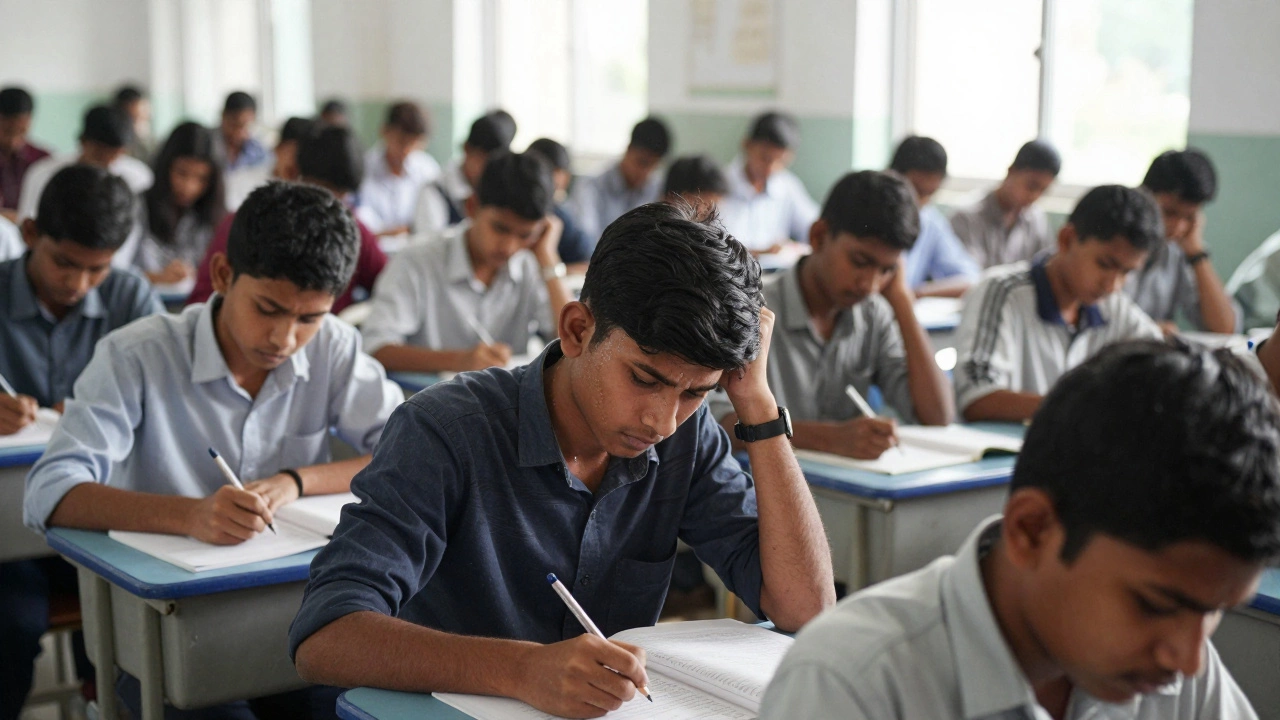
Ask any student who’s taken the IIT JEE and they’ll tell you the same thing: it’s not about being smart. It’s about being consistent. The exam covers physics, chemistry, and math-each at a level far beyond high school. You need to solve 90 questions in three hours. Each question takes less than two minutes. And if you miss one, you lose 4 marks. No partial credit. No "I got the method right."
Students start preparing at 13. Some drop out of school entirely to join coaching centers that run from 6 a.m. to 10 p.m. Six days a week. They memorize 5,000+ formulas. They solve 200+ problems a day. Many don’t see their families for months. The dropout rate? Over 70% of those who start don’t finish the prep cycle. And even then, most don’t get in.
Why do they do it? Because an IIT degree still means a job with a starting salary of ₹15-25 lakhs per year. That’s more than most Indian parents make in five years. So the pressure isn’t just personal-it’s familial. It’s cultural. It’s economic.
NEET: The Medical Maze
NEET is the medical entrance exam that replaced 17 different state-level tests. Sounds like progress? It’s not. Now, instead of 17 separate battles, you face one massive, nationwide war. The syllabus? 140+ chapters from biology, chemistry, and physics. The time? 3 hours and 20 minutes. The stakes? Your future as a doctor.
Here’s the kicker: you don’t need to be the smartest. You need to be the most accurate. A single wrong answer in biology can cost you 20 ranks. And with 1.8 million applicants, ranks matter more than scores. One student scored 720 out of 720 and still didn’t get into a top medical college because 12,000 others scored the same.
Coaching centers in cities like Kota have entire buildings dedicated to NEET prep. Students sleep on cots in dorms. They eat meals while reviewing flashcards. Many suffer from anxiety, depression, or burnout. Some don’t recover. And still, parents push them back in the next year. Because in many families, not becoming a doctor isn’t an option-it’s a failure.
UPSC Civil Services: The Long Game
If you think IIT JEE or NEET is hard, wait till you hear about UPSC. This isn’t a single exam. It’s a three-stage marathon that lasts over a year. Prelims. Mains. Interview. Each stage filters out 95% of applicants. Only 800-1,000 people make it out of 1.1 million who apply.
The syllabus? Everything. History, geography, economics, polity, ethics, current affairs, international relations, agriculture, science, technology. You’re expected to know the names of 50+ Indian rivers, the exact budget allocation for rural health in 2023, and the constitutional history of Article 370. And you have to write 9 papers-each 3 hours long-by hand. No laptops. No typing. Just pen, paper, and your brain.
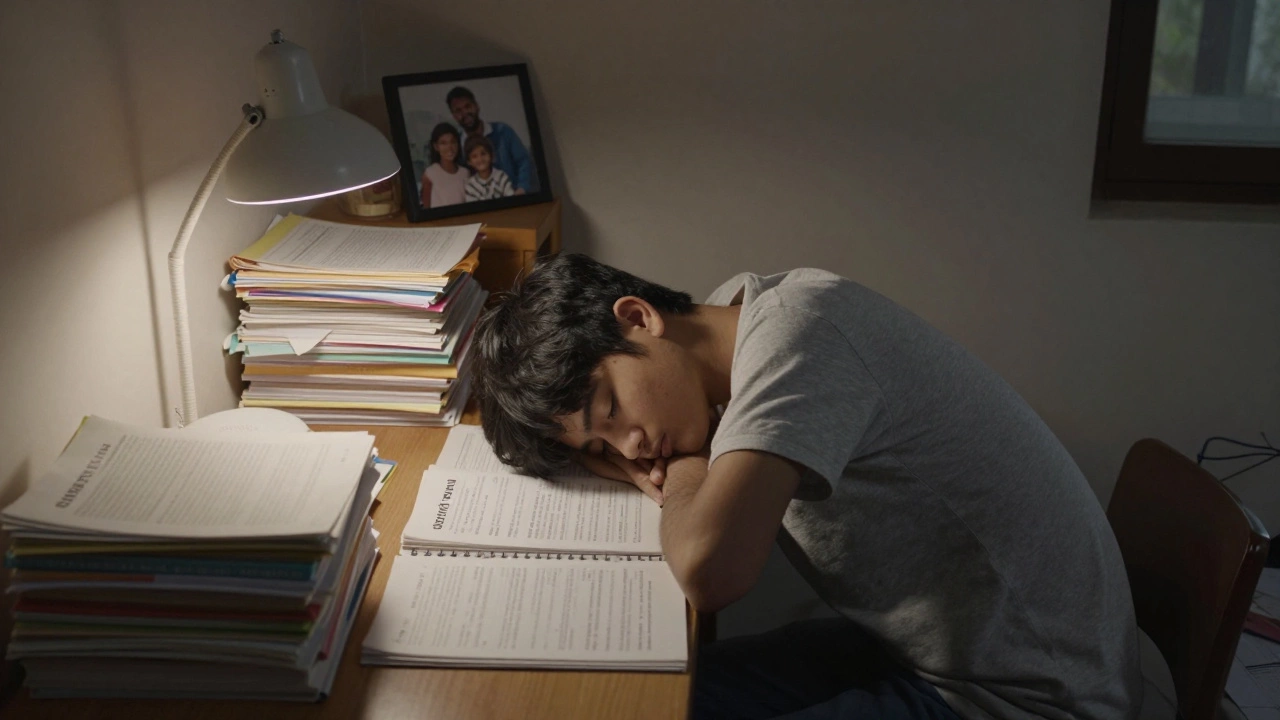
Most aspirants quit after two or three attempts. The average age of someone who clears UPSC? 28. That means they’ve spent 5-7 years studying full-time, often without income. Many work part-time jobs, live with parents, or take loans. They sacrifice relationships, hobbies, and sometimes their mental health. And still, the success rate is under 0.1%.
Why These Exams Exist
These systems didn’t arise from cruelty. They came from scarcity. There aren’t enough top-tier engineering colleges. Not enough medical seats. Not enough government jobs. So instead of expanding access, the system narrows it. It uses exams as a filter. And the filter doesn’t care if you’re talented-it cares if you’re prepared.
It’s also a reflection of social mobility. For families with no connections, no money, no network, these exams are the only ladder. A boy from a village in Bihar can become an IAS officer. A girl from a slum in Mumbai can become a doctor. That’s powerful. But the cost? It’s paid in sleepless nights, broken relationships, and silent tears.
What No One Tells You
People talk about the "hardest major" like it’s a college degree. But the real battle starts before college. It starts in a coaching center in Kota, a library in Delhi, or a small room in a rural town with no AC and no internet. The hardest major isn’t computer science or medicine. It’s surviving the system that forces you to choose between your health and your future.
And here’s the truth: even if you win, you’re not guaranteed happiness. Many IIT graduates end up in jobs they hate. Many doctors burn out by 30. Many IAS officers lose their passion in bureaucracy. The exam doesn’t end when you clear it. It just changes shape.
Is There Another Way?
Yes. But it’s not easy. Some students are now skipping the traditional path. They’re starting startups. Learning coding online. Getting certified in AI, data science, or digital marketing. They’re building portfolios instead of memorizing formulas. Some are moving abroad-Australia, Canada, Germany-where education is more accessible.
But here’s the catch: those paths don’t come with the same social status. In many communities, being a software engineer from a private college isn’t seen as "success." Only IIT, AIIMS, or IAS are. Until that changes, the pressure won’t go away.
Final Thought
The hardest major isn’t a field of study. It’s the system that turns education into a battle royale. It’s the pressure to be perfect. The fear of failure. The silence of families who don’t know how to say, "It’s okay if you don’t make it."
Maybe the real question isn’t "What’s the hardest major?" It’s: "Why do we let exams decide who gets to dream?"
Is IIT JEE harder than NEET?
It depends on your strengths. IIT JEE is heavier on math and problem-solving under time pressure. NEET is about memorizing vast biology content and avoiding careless mistakes. Both have similar success rates-under 1%. But IIT JEE is often seen as harder because the questions are more abstract and require deeper conceptual thinking. NEET’s challenge is volume and precision.
Why is UPSC considered the toughest exam in India?
UPSC is the toughest because it’s not just one exam-it’s a three-stage process that lasts over a year. The syllabus covers everything from ancient history to quantum physics. You have to write long, well-structured answers by hand. The success rate is under 0.1%. Most candidates take 3-5 attempts. Unlike other exams, there’s no coaching that can guarantee results. It tests knowledge, writing ability, emotional resilience, and current affairs awareness-all at once.
Can you clear these exams without coaching?
Yes, but it’s rare. Around 10-15% of IIT JEE and NEET qualifiers are self-studied. For UPSC, it’s closer to 20%. These are usually students with strong discipline, access to quality study materials, and family support. Most coaching centers provide structure, test series, and peer pressure-things that keep you on track. Without them, you need to be your own coach, counselor, and motivator.
What happens if you fail these exams?
Many students repeat the exam. Some take a gap year. Others switch to private colleges, go abroad, or enter alternative careers like IT, content creation, or entrepreneurship. But stigma remains. In many families, failing these exams feels like failure as a person. That’s the real cost-not the exam itself, but the social weight attached to it.
Are these exams fair?
They’re standardized, but not equitable. Students from urban areas with access to coaching, tutors, and study materials have a massive advantage. Rural students often lack internet, books, or even quiet places to study. While the exams test knowledge equally, the preparation isn’t. That’s why many call them merit-based but not opportunity-based.
What to Do If You’re in the Middle of This
If you’re studying for one of these exams right now, here’s what no one tells you: your worth isn’t tied to your rank. You’re not a number. You’re not a score. You’re a person trying to build a life in a system that doesn’t always see you as one.
Take breaks. Sleep. Talk to someone-even if it’s just a friend who doesn’t understand. Eat real food. Walk outside. Watch a movie. Don’t let the exam become your entire identity.
If you fail, it doesn’t mean you’re not smart. It means the system didn’t fit you. And that’s okay. There are paths outside the exam. They’re not as shiny. But they’re yours.