



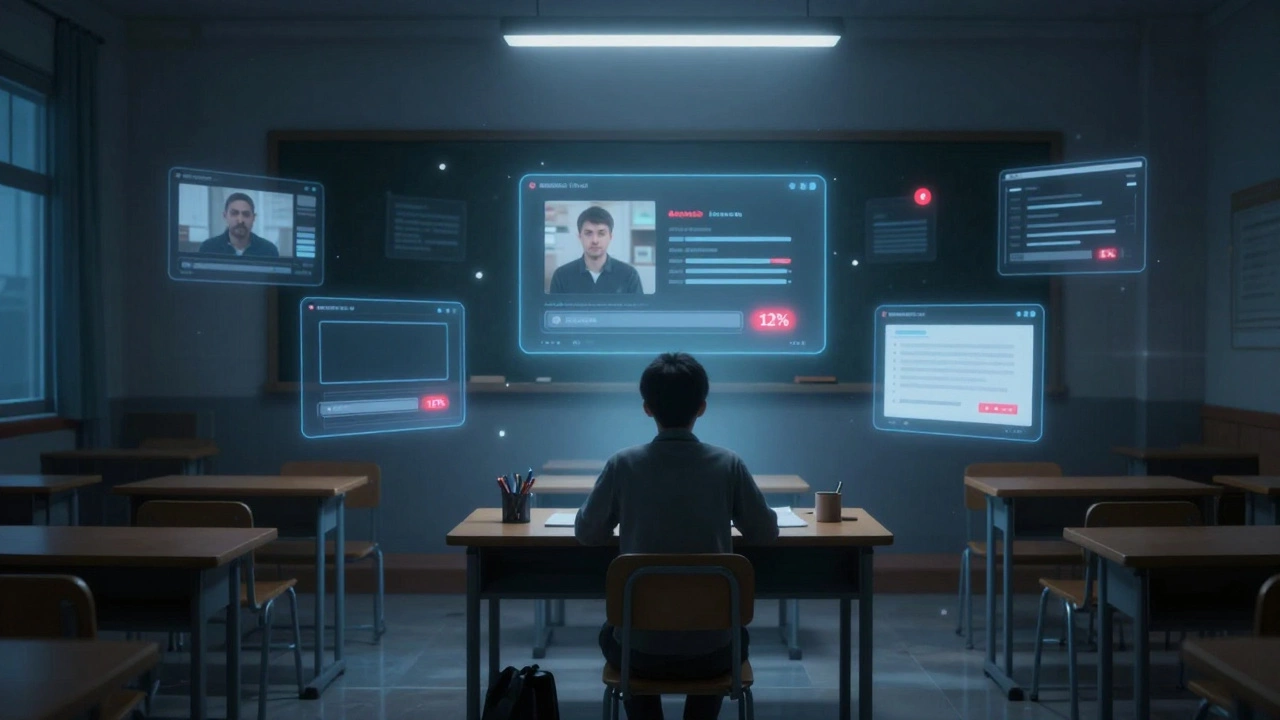
Online learning promised freedom-learn anytime, anywhere, at your own pace. But for millions of students and professionals, it’s become a source of stress, isolation, and wasted time. The tools are there. The courses are plentiful. So why do so many people quit? The problem isn’t the technology. It’s what we’ve ignored while building it.
Low Completion Rates Aren’t a Bug-They’re the System
Over 90% of people who sign up for an online course never finish it. That’s not because they’re lazy. It’s because most platforms treat learners like numbers, not people. A Udemy course with 100,000 enrollments might have fewer than 5,000 completions. Coursera’s own data shows completion rates hovering around 5-10%. Why? Because there’s no accountability. No one checks in. No one asks if you’re stuck. You start a course on a Tuesday, forget about it by Thursday, and by Monday, you’ve deleted the email reminder.
Compare that to a classroom. You show up because someone’s waiting. You raise your hand because you’re in a group. Online, you’re alone with a video and a timer. The structure is gone. And humans need structure-not just to learn, but to feel like they’re making progress.
Isolation Kills Motivation
Learning is social. We remember better when we talk about what we’ve learned. We stay engaged when someone else is learning alongside us. But most eLearning platforms don’t build community. They offer forums-dead ones. A discussion thread with three posts from two years ago isn’t a community. It’s a graveyard.
Think about it: when you’re stuck on a coding problem, you don’t want to read a 10-page article. You want someone to say, “I had that same error last week-here’s how I fixed it.” That’s missing. No real peer support. No mentors checking in. No study groups. Just a video and a quiz. That’s not learning. That’s watching TV with homework.
One-Size-Fits-All Content Doesn’t Work
Most courses are built for the average learner. But there’s no such thing. A 22-year-old college student learning Python has different needs than a 45-year-old accountant switching careers. Yet platforms serve them the same content, same pace, same assessments.
Imagine a fitness app that gives the same workout to someone training for a marathon and someone recovering from surgery. That’s what eLearning does. It assumes everyone starts at the same level, learns at the same speed, and needs the same depth. But learners have different goals, prior knowledge, and time. A course that’s too basic bores you. One that’s too advanced makes you quit. Neither helps.
Poor Design Makes Learning Harder Than It Should Be
Some platforms look like they were built in 2010. Cluttered dashboards. Buttons that don’t work. Videos that buffer. Quizzes that don’t save your answers. You spend more time fixing the platform than learning the content.
It’s not just aesthetics. It’s usability. If you can’t find your next lesson in under 10 seconds, you’ll give up. If you have to log in through three different portals, you’ll skip it. If your progress disappears after a browser update, you’ll lose trust. Technology should remove friction, not add it.
And don’t get me started on mobile apps that don’t sync. You watch a lecture on your phone during your commute, then log in on your laptop and it says you’re back at the beginning. That’s not a glitch. That’s negligence.

Assessments Don’t Measure Real Learning
Most online courses end with a multiple-choice quiz. Five questions. Guess the right answer. Pass. Certificate. Done.
But real skills-writing, coding, teaching, problem-solving-can’t be measured that way. You can’t tell if someone can actually build a website just because they picked the right answer on a quiz. Yet that’s how most platforms certify completion.
Employers know this. That’s why 73% of hiring managers say online certificates don’t impress them, according to a 2024 LinkedIn survey. They want portfolios, projects, demos. Not badges. But platforms still sell certificates like they mean something. That’s misleading. It creates false confidence-for learners and employers alike.
Lack of Personal Feedback Stalls Growth
When you write an essay in school, your teacher gives you feedback: “Your thesis is clear, but your examples need more detail.” That’s how you improve. In eLearning? You get a score. 87%. That’s it.
No one tells you why you missed a question. No one points out where your reasoning went wrong. No one says, “Try this approach next time.” Without feedback, you’re just repeating the same mistakes. You think you’re learning. You’re just spinning your wheels.
Some platforms offer AI feedback. But most of it is robotic. “Your answer is partially correct.” Great. Now what? That’s not guidance. That’s a dead end.
Content Gets Outdated Fast
Technology changes. So do laws, tools, and best practices. But course content? It stays the same for years. I’ve seen Python courses teaching version 2.7 in 2025. SQL courses still using outdated syntax. Marketing courses promoting Facebook ads as the main channel-when TikTok and Shorts dominate now.
Platforms don’t update content regularly because it’s expensive. Instructors move on. No one’s paying them to keep it fresh. So learners pay the price: they learn things that are already obsolete. That’s not just frustrating-it’s dangerous. You walk into a job interview thinking you know the latest tools, only to find out you’re three years behind.

Cost Doesn’t Match Value
Some courses cost $200. Others cost $2,000. But what are you really paying for? Access to a video library? A PDF? A certificate?
Compare that to a community college class: $500, with live instructors, office hours, peer collaboration, and real feedback. The online version often costs more and gives less. People are starting to notice. Enrollment in paid platforms is dropping in 2025, especially among working adults who’ve been burned before.
Free courses aren’t the answer either. They’re flooded with ads, upsells, and low-quality content. You’re not learning-you’re being sold to.
What’s the Fix?
The problems aren’t unsolvable. They’re just ignored.
Platforms need to stop treating learning like a product and start treating it like a relationship. That means:
- Human check-ins-real mentors or peer coaches who follow up
- Project-based assessments-not quizzes, but real work you can show
- Personalized learning paths-adaptive content that changes based on your progress
- Active communities-not forums, but live study groups, Q&A sessions, peer reviews
- Regular content updates-with clear version dates and changelogs
Some startups are trying. Platforms like Exponent and Outschool are building small-group, live learning. Bootcamps like Lambda School and General Assembly tie learning to job outcomes. They don’t just sell a course-they sell a path.
The future of eLearning isn’t more videos. It’s more humanity.
Why This Matters Now
In 2025, over 60% of workers say they’re learning new skills online. But if the system keeps failing them, they’ll stop trying. And that’s not just bad for learners-it’s bad for businesses, economies, and innovation.
We don’t need more platforms. We need better ones. Ones that remember learning is human. Not digital. Not transactional. Not a checkbox. It’s a process. And processes need care, connection, and consistency.
Until then, the problem of eLearning won’t disappear. It’ll just keep growing.
Why do most people quit online courses?
Most people quit because online courses lack structure, accountability, and human connection. Without deadlines, feedback, or peer interaction, learners lose motivation. The isolation and passive nature of watching videos make it easy to delay or forget. Studies show completion rates are often below 10%, not because learners aren’t motivated, but because the system doesn’t support sustained effort.
Are online certificates worth anything?
Most online certificates hold little weight with employers. A 2024 LinkedIn survey found that 73% of hiring managers don’t consider them a strong indicator of skill. Employers care more about portfolios, projects, and real-world results. A certificate without proof of ability is just a digital badge. Platforms that require hands-on projects or live demonstrations are starting to change that-but they’re still rare.
Is eLearning better than traditional classroom learning?
It’s not better or worse-it’s different. Classroom learning offers structure, immediate feedback, and social accountability, which help most learners stay on track. eLearning offers flexibility and access, which helps people with busy schedules or limited local options. The best outcomes happen when online learning includes live sessions, peer groups, and mentor feedback. Pure self-paced learning rarely works well for complex skills.
Why do eLearning platforms keep using outdated content?
Updating content is expensive and time-consuming. Instructors often aren’t paid to maintain courses after launch. Platforms prioritize new enrollments over keeping old ones accurate. As a result, courses on coding, marketing, or software tools often teach outdated versions. Learners end up learning skills that no longer apply in the job market, which undermines trust in the entire system.
Can AI solve the feedback problem in eLearning?
AI can help with basic grading and pattern recognition, but it can’t replace human feedback. AI might say, “Your code has an error,” but it can’t explain why your logic is flawed or suggest a better approach based on your goals. Real growth comes from personalized, contextual feedback-something only a skilled instructor or peer can provide. AI is a tool, not a replacement, for human guidance.
What should I look for in a good eLearning platform?
Look for platforms that offer live sessions, peer review, real projects, and instructor feedback-not just videos and quizzes. Check if course content is updated regularly (look for version dates). See if learners can join small groups or have access to mentors. Avoid platforms that push certificates as the main outcome. Focus on those that help you build something tangible you can show to employers or clients.