



Finding Your NEET Match
Choosing the right path for your NEET exam feels like navigating a maze blindfolded. Every parent and student wants the "best," but that word is tricky. One student thrives in a crowded classroom with high energy, while another crumbles under the same pressure. The reality is, the most effective course isn’t a single brand name you see on a billboard. It’s the specific program structure that aligns with your unique learning rhythm.
If you are reading this in early 2026, you might feel overwhelmed by the choices. New apps have launched since last year. Old giants are pivoting to online-only models. Before you spend money you’ll regret, let’s unpack what actually drives results.
The Anatomy of a High-Performing NEET Course
To determine if a course fits, you need to look past the marketing slogans. Real results come from three pillars: content quality, teaching methodology, and support systems.
Syllabus Alignment: The core of any successful NEET prep material must stick tightly to the NCERT textbooks. Questions in the exam often mirror these books directly. If a course offers obscure, complex problems that go beyond standard curriculum requirements, it might be chasing the wrong metrics. You need resources that prioritize conceptual clarity over rote memorization of obscure facts.
Doubt Resolution Mechanism: Here is where many programs fail. A recorded video lecture is great, but what happens when you get stuck on a question at 11 PM? The best courses offer live doubt-clearing sessions or guaranteed response times via mobile apps. If a student waits two days for an answer, that knowledge gap never gets filled.
Decoding Format: Online vs. Offline vs. Hybrid
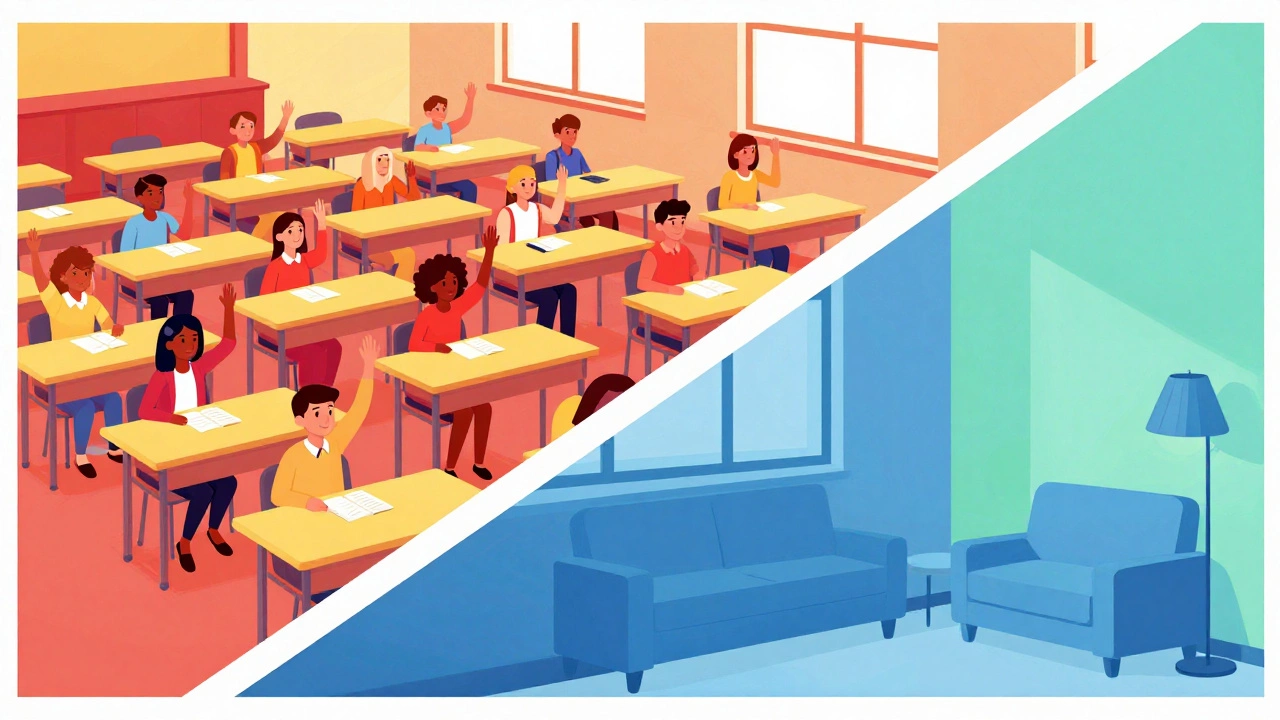
In 2026, the debate isn’t about which is superior, but which suits you. Let’s compare the physical realities of each model.
| Feature | Offline (Classroom) | Online (Digital) | Hybrid Model |
|---|---|---|---|
| Cost Efficiency | Higher (includes infrastructure fees) | Lower (accessible nationwide) | Moderate |
| Discipline Required | Low (routine enforced by schedule) | High (self-motivation needed) | Moderate |
| Flexibility | Rigid fixed timings | Pace control, pause/replay ability | Flexible timing with fixed tests |
| Peer Competition | Direct interaction, competitive atmosphere | Via leaderboard rankings and forums | Live classes + virtual leaderboards |
The Offline Advantage: Traditional centers like those found in Kota or Hyderabad provide immersion. You wake up, walk to class, study till night, and sleep early. There is no temptation to scroll social media when your friends are sitting around you solving papers. This environment forces discipline upon those who lack it naturally.
The Digital Edge: For students who are self-disciplined or living outside major education hubs, platforms like Unacademy or Physics Wallah offer top-tier faculty access regardless of geography. You can pause videos. You can speed up playback. However, the isolation is real. Without physical peers, motivation dips more frequently.
Evaluating the Faculty Quality
A brochure claiming "Ex-IITians" or "Rank Holders" tells you nothing about teaching skills. Being good at Physics does not mean you can explain it to a 17-year-old struggling with basic concepts.
Before signing up, ask for trial lectures. Do not just watch the first five minutes. Most teachers perform a flawless opening act. Skip to the middle. Does the teacher simplify complex derivations? Do they connect the theory to real-world examples? In Chemistry, especially Organic Chemistry, visualization is key. A poor instructor relies on rote memorization of reaction mechanisms, whereas a great one explains the electron flow logic. Look for instructors who can bridge the gap between textbook definitions and actual problem-solving.
The Role of Mock Tests and Feedback
You cannot gauge success until you simulate the real environment. Good coaching isn’t just about teaching; it’s about testing. A robust course includes full-length mock exams that mirror the latest National Testing Agency (NTA) format.
Analytical Depth: After a test, you shouldn’t just get a score. You need analytics. Which topic cost you marks? Was it time management or accuracy? The best platforms provide heat maps showing your weak areas. For example, if your accuracy in Electrostatics drops below 40%, the system should flag this immediately so you can revisit the topic before the next test.
Previous Years' Papers: Any credible institution provides solved papers from the last 10 years at minimum. Since pattern repetition is common in competitive exams, practicing these is non-negotiable. Ensure the solutions provided include reasoning, not just answers.

Critical Financial Considerations
Budget constraints are a major factor for families in India. Prices vary wildly. Top-tier offline residential programs in premium cities can range from $3,000 to $6,000 per year. In contrast, high-quality online subscriptions often fall between $300 and $800 annually. However, remember that hidden costs exist. Books, mock test series, and travel expenses for offline batches add up quickly.
Always inquire about refund policies. Some institutes lock your deposit once registration begins, while others offer partial refunds mid-stream if performance doesn’t improve after six months. Read the terms regarding cancellation strictly. In 2026, consumer protection laws in the education sector have tightened, ensuring more rights for the student, but legal battles drain resources you need for studying.
The Verdict on "Top" Institutes
While "best" is subjective, certain names consistently appear in top-performer analyses due to infrastructure consistency. Large scale organizations like Allen Career Institute or Aakash Institute are known for their standardized approach. They have a massive data bank of students, allowing them to predict question trends accurately. Their weakness can be impersonalization in larger batches.
Conversely, smaller boutique academies might offer more personal attention, sometimes guaranteeing 1-on-1 mentorship. If you need hand-holding through every chapter, these are viable options, provided you verify their track record with alumni testimonials.
Tailoring Choice to Your Profile
You need to categorize yourself honestly to pick the winner.
Scenario A: The Slow Learner. You find concepts difficult initially. A purely online mode might lead to frustration. An offline classroom where you can instantly ask a peer or teacher is safer. The repetition and immediate feedback loop help retention here.
Scenario B: The Fast Pacer. You understand concepts quickly and find standard speeds slow. Go for a rigorous crash course or a fast-paced online module where you can skip basics and focus on advanced problem sets (Advanced level).
Scenario C: The Board Exam Balancer. You also need to crack board exams alongside NEET. Look for courses that integrate CBSE/State board schedules. Some coaching centers run parallel tracks, ensuring you don’t miss school deadlines.
Is a one-year or two-year NEET course better?
It depends on your starting point. A two-year course (starting after Class 10) builds a stronger foundational understanding, which is beneficial for grasping difficult topics in Physics and Chemistry. A one-year drop year course is ideal if you have completed 11th and 12th grades but need focused revision and advanced practice to secure a higher rank.
Can online coaching replace offline classes completely?
For highly disciplined students, yes. Modern platforms offer interactive labs and live interactions that mimic classrooms. However, if you struggle with time management or need external accountability, a fully remote setup requires significant parental supervision or self-regulation tools.
What is the typical fee structure for 2026 NEET courses?
Fees depend heavily on the facility tier. Premium offline residential batches range from $3,000 to $5,000 annually. Standard classroom batches cost roughly $1,000 to $2,000. Comprehensive online subscription packages generally stay under $800 per year, often offering discounts for annual renewals.
Do weekend batches work for working students?
Weekend intensives are generally insufficient for serious candidates. Consistency is key in science subjects. If you cannot attend daily classes, you should opt for recorded video modules that allow you to study daily during school hours rather than cramming on weekends.
Should I join a coaching center before Class 11 starts?
Ideally, yes. Starting during the summer break before the academic year ensures you do not lag behind with the initial chapters. This head start reduces the stress of balancing board exams and competitive prep simultaneously later on.