

English Learning Path Finder
Not sure which free tool is right for you? Answer these questions to build your personalized "Gym Routine" for English.
Pro Tip for Your Profile
You want to speak fluent English without burning a hole in your wallet. That is the dream, right? But here is the harsh truth: most "free" programs are either too shallow to make you conversational or so complex you quit after three days. You don't need another app that just teaches you how to say "the apple is red." You need a system that actually moves the needle on your fluency.
As someone who has tested dozens of these platforms from my home in Auckland, I can tell you there is no single magic button. The "best" program depends entirely on where you are stuck. Are you terrified of speaking? Do you understand movies but can't write an email? Or do you just need vocabulary drills? This guide breaks down the top contenders based on real utility, not just marketing hype.
The Reality Check: What "Free" Actually Means
Before we pick winners, let's define the battlefield. In 2026, the landscape of language tech has shifted. Purely free, high-quality instruction is rare. Most platforms use a freemium model. They give you a taste and then hit you with a paywall. When I say "free," I mean tools that offer enough substantive content to create a genuine study routine without forcing a credit card entry immediately.
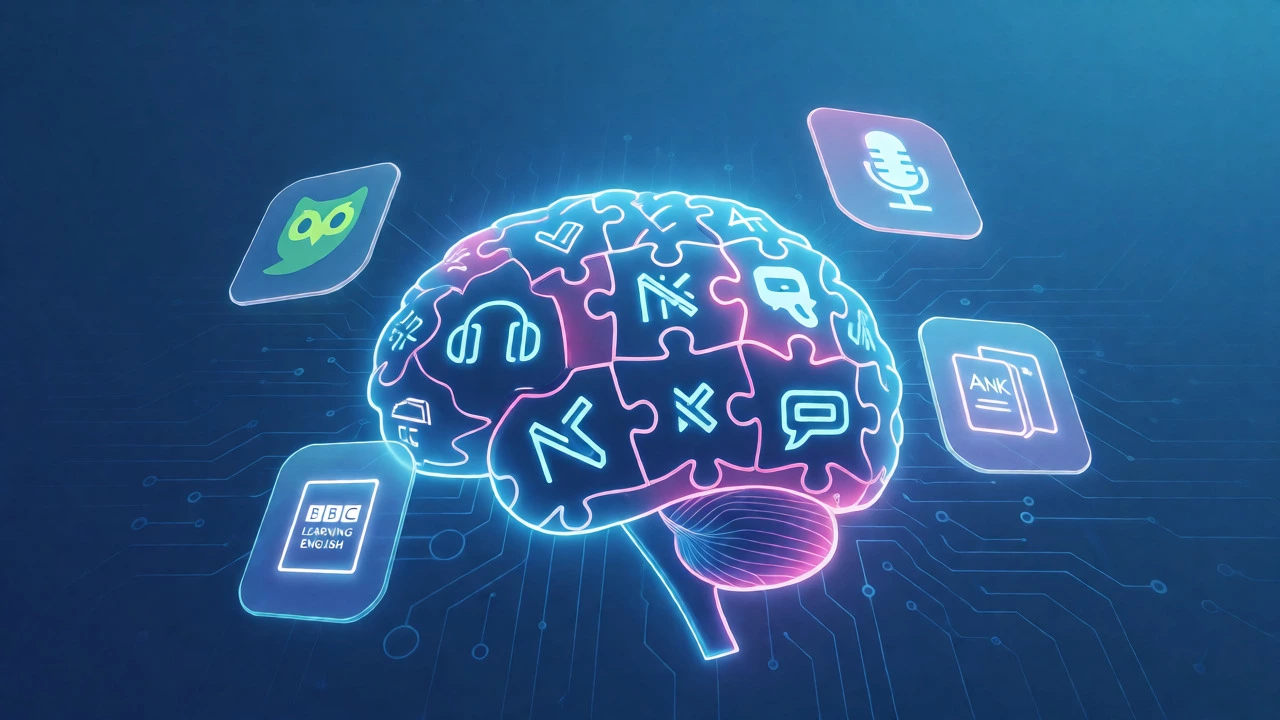
Your goal isn't to find one app that does everything. It is to build a stack. Think of it like building a gym routine. You need cardio (listening), strength training (grammar/vocab), and flexibility (speaking). No single free tool covers all three perfectly. The best strategy is combining two or three specialized tools. This approach costs zero dollars but requires more discipline than opening one app and clicking through gamified lessons.
Duolingo: The Habit Builder, Not the Fluency Maker
Duolingo is likely the first name that pops into your head. It is a gamified language-learning platform designed to build daily habits through short, bite-sized lessons. With over 500 million registered users globally, it dominates the market for beginners.
Here is why it works: it removes friction. You can do a lesson while waiting for your coffee. The streak mechanic exploits your fear of losing progress, which is psychologically powerful. If you haven't touched English in years, Duolingo gets you moving again. It rebuilds the muscle memory of studying.
But be careful. Duolingo is terrible at teaching nuance. It won't teach you why a native speaker uses "could have" instead of "could've" in a specific context. It treats language like math problems-right or wrong. Real conversation is messy. Use Duolingo for vocabulary retention and grammar basics, but do not expect to order dinner confidently in London by only using this app. It is a supplement, not the main meal.
BBC Learning English: The Gold Standard for Structure
If you want serious improvement without paying, BBC Learning English is arguably the most comprehensive free resource provided by the British Broadcasting Corporation, offering structured courses, news-based lessons, and audio programs. Unlike app-based solutions, this feels like a traditional classroom but updated for the digital age.
Their "6 Minute English" podcast is legendary for a reason. It takes a topical issue-like climate change or remote work-and breaks down the vocabulary used in that context. This is crucial because memorizing isolated words is inefficient. You learn words in chunks. When you hear "carbon footprint" in a discussion about travel, it sticks better than seeing it flash on a screen.
The platform also offers leveled courses from lower-intermediate to advanced. The audio quality is professional, exposing you to various British accents. For learners targeting business English or academic writing, this is far superior to gamified apps. The downside? It lacks interactivity. You listen and read. You don't get instant feedback on your pronunciation unless you record yourself and compare. It requires self-discipline, but the depth of content is unmatched in the free tier.
Tandem and HelloTalk: Bridging the Speaking Gap
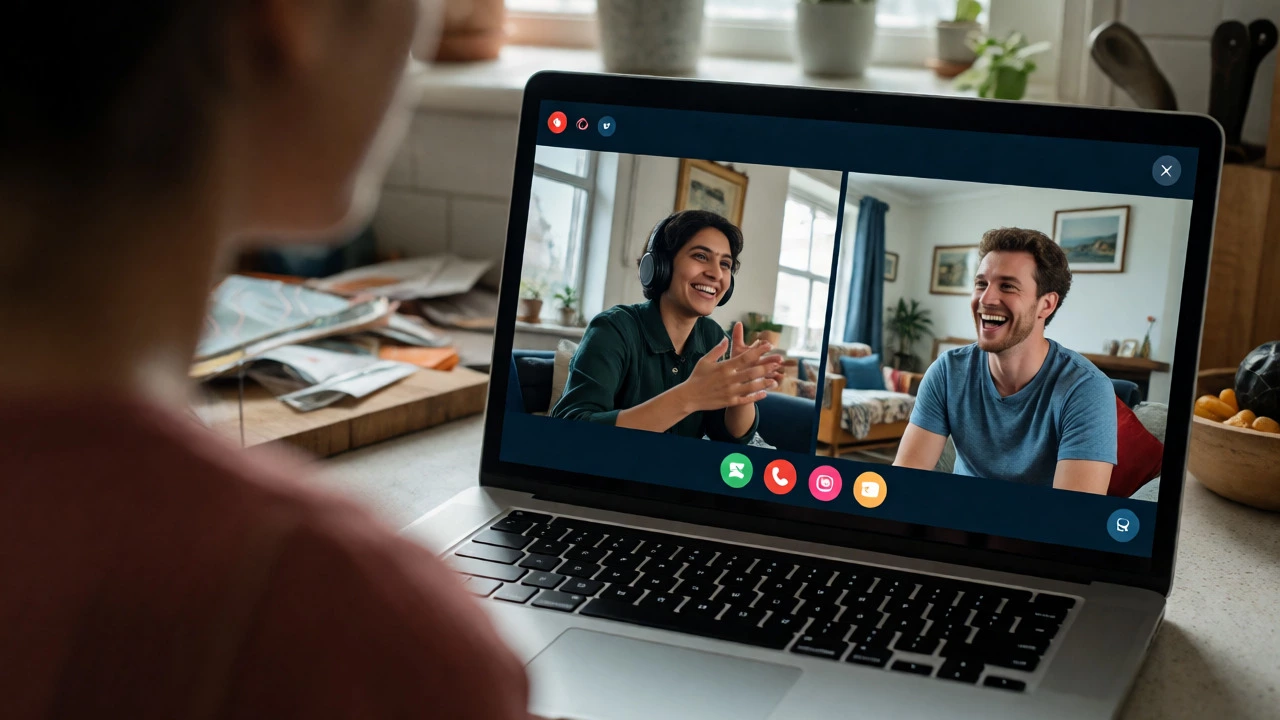
You can know every grammar rule in the book and still freeze when a human looks at you. That is the speaking gap. To fix this, you need humans. Enter Tandem, a language exchange application that connects learners with native speakers for text, voice, and video chats.
This isn't a course; it's a community. You find a partner who wants to learn your language, and you help each other. The beauty here is authenticity. You learn slang, filler words, and the rhythm of real speech. Textbooks teach you "How do you do?" Tandem teaches you "Hey, what's up?"
HelloTalk is similar but functions more like a social media feed. You post a status update in English, and native speakers correct it publicly. This public correction aspect can be intimidating, but it accelerates learning because you see common mistakes made by others. Both apps have free tiers that allow limited interactions. Pro tip: Don't just chat. Prepare topics. Ask your partner to correct your voice notes specifically on intonation. Without structure, these chats devolve into boring small talk about weather and food.
Anki: The Memory Engine for Vocabulary
Vocabulary is the fuel for your engine. If you run out of words, you stall. Anki is a flashcard software that utilizes spaced repetition algorithms to optimize long-term memory retention. It looks ugly. It feels dated. But it is brutally effective.
Unlike Duolingo, Anki doesn't spoon-feed you. You create your own decks. When you encounter a new word in a movie or article, you add it to Anki. The algorithm shows you that word just before you are about to forget it. Over time, you retain thousands of words with minimal effort. Many polyglots swear by Anki because it adapts to your personal learning curve. If you keep forgetting the word "ubiquitous," Anki will show it to you more often until it sticks.
The initial setup is steep. You need to download shared decks or create your own. But once it clicks, it becomes second nature. Pair Anki with BBC Learning English. When you hear a new phrase on the podcast, put it in Anki. This combination turns passive listening into active recall.
Comparison: Which Tool Fits Your Needs?
Choosing the right mix depends on your current level and goals. Here is a breakdown of how these major players stack up against each other in key areas.
| Feature | Duolingo | BBC Learning English | Tandem/HelloTalk | Anki |
|---|---|---|---|---|
| Primary Focus | Habit formation & Basics | Listening & Structured Grammar | Speaking & Cultural Exchange | Vocabulary Retention |
| Best For | Absolute Beginners | Intermediate Learners | Overcoming Speaking Fear | All Levels (Self-Directed) |
| Interactivity | High (Gamified) | Low (Passive Consumption) | Very High (Human Interaction) | Medium (Self-Testing) |
| Accent Exposure | Limited/American-centric | British & Global Varieties | Real-world/Native Speakers | None (Text/Audio user-defined) |
| Time Commitment | 10-15 mins/day | 30-60 mins/day | Variable (Chat duration) | 10 mins/day (Review) |
Building Your Free Curriculum
So, how do you combine these? Don't try to use all four equally. Pick a primary and a secondary. Here is a proven routine for intermediate learners aiming for fluency within six months:
- Morning (15 mins): Open Anki. Review your flashcards. Clear the backlog. This primes your brain for language input.
- Commute (20 mins): Listen to BBC Learning English's "News Review" or "6 Minute English." Take mental notes of any phrases you didn't understand.
- Evening (15 mins): Add those new phrases to Anki. Then, spend 10 minutes on Duolingo if you need a low-energy grammar refresher, or skip it if you're tired.
- Weekends (30-60 mins): Schedule a call on Tandem. Discuss something you learned during the week. Force yourself to use the new vocabulary from Anki in the conversation.
This loop creates a complete feedback cycle. Input (BBC) -> Processing (Anki) -> Output (Tandem). Duolingo acts as the glue to keep you consistent on days you lack motivation.
Pitfalls to Avoid
Most people fail not because the tools are bad, but because their expectations are wrong. First, stop looking for perfection. Native speakers make grammar mistakes constantly. If you wait until you speak perfectly to start talking, you will never speak.
Second, beware of "tutorial hell." Watching endless YouTube videos about English tips feels productive, but it is passive. You aren't producing language. You are consuming it. Balance consumption with production. For every hour of listening, aim for 15 minutes of speaking or writing.
Third, ignore the leaderboard. Duolingo leagues can become toxic distractions. If maintaining a streak causes stress rather than joy, take a break. Consistency over months beats intensity over weeks.
Frequently Asked Questions
Can I really learn English for free?
Yes, you can reach an upper-intermediate level for free. However, achieving near-native fluency usually requires paid tutoring or immersion eventually. Free resources provide the foundation, vocabulary, and practice partners needed to get you to a point where paid coaching becomes highly efficient.
Which app is better: Duolingo or Babbel?
Babbel is generally considered better for practical conversation skills because it focuses on dialogue and cultural context. However, Babbel is not fully free; it operates on a subscription model. Duolingo is completely free for basic access. If budget is zero, stick with Duolingo combined with BBC Learning English for better contextual learning.
How long does it take to become fluent using free tools?
For a beginner starting from scratch, reaching conversational fluency typically takes 600-750 hours of study. At 1 hour per day, that is roughly 2 years. Using a structured stack of free tools can accelerate this by ensuring you focus on high-frequency vocabulary and active speaking early on.
Is BBC Learning English suitable for American English learners?
Yes. While BBC focuses on British English, the grammar structures, idioms, and core vocabulary are universal. Additionally, BBC provides sections dedicated to American English. The difference between US and UK English is largely accent and minor spelling variations, which are easy to adjust for once you have a strong grammatical base.
Do I need a tutor if I use these free apps?
Not necessarily, especially in the beginning. Apps and exchanges provide ample practice. A tutor becomes valuable when you plateau or need specific corrections for professional contexts (like job interviews). Start with the free stack for 3-6 months. If you feel stuck, consider hiring a tutor for occasional sessions to refine your output.
Next Steps
Don't overthink it. Pick one tool from the list above today. If you are a total beginner, install Duolingo. If you can already hold a basic conversation, go to BBC Learning English and listen to one episode. If you are shy, message one person on Tandem. Action beats analysis. Start small, stay consistent, and watch your confidence grow.