
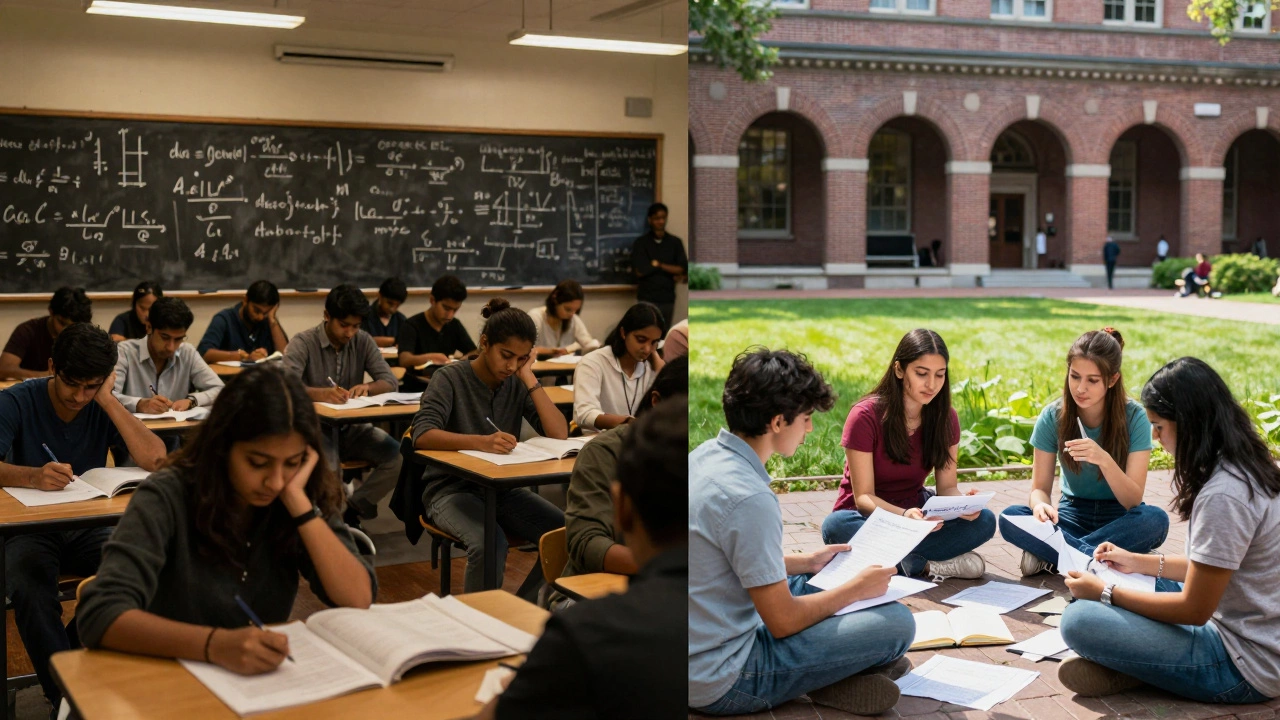
IIT vs. Harvard: Admission Difficulty Comparison
IIT (India)
Effective Acceptance Rate (Top Branches)
0.1% - 0.5%
~1 in 1,000+Harvard (USA)
General Acceptance Rate
3% - 5%
~1 in 20 - 33Detailed Breakdown
You’ve probably heard the debate in hallways or online forums: Is getting into an IIT (Indian Institute of Technology) harder than getting into Harvard University? It’s a question that pits two giants of global education against each other. On one side, you have the Indian Institutes of Technology, known for their brutal entrance exam and rigorous engineering curriculum. On the other, Harvard, the most prestigious university in the United States, famous for its holistic admissions process and elite status.
The short answer is yes, statistically speaking, it is significantly harder to get into an IIT than it is to get into Harvard. But "hard" means different things in each context. For IIT, hardness comes from the sheer volume of competition and the narrowness of the path. For Harvard, hardness comes from the depth of your profile and the subjectivity of the selection committee. Let’s break down exactly why this comparison exists and what it really means for students aiming for top-tier education.
The Numbers Game: Acceptance Rates Don’t Lie
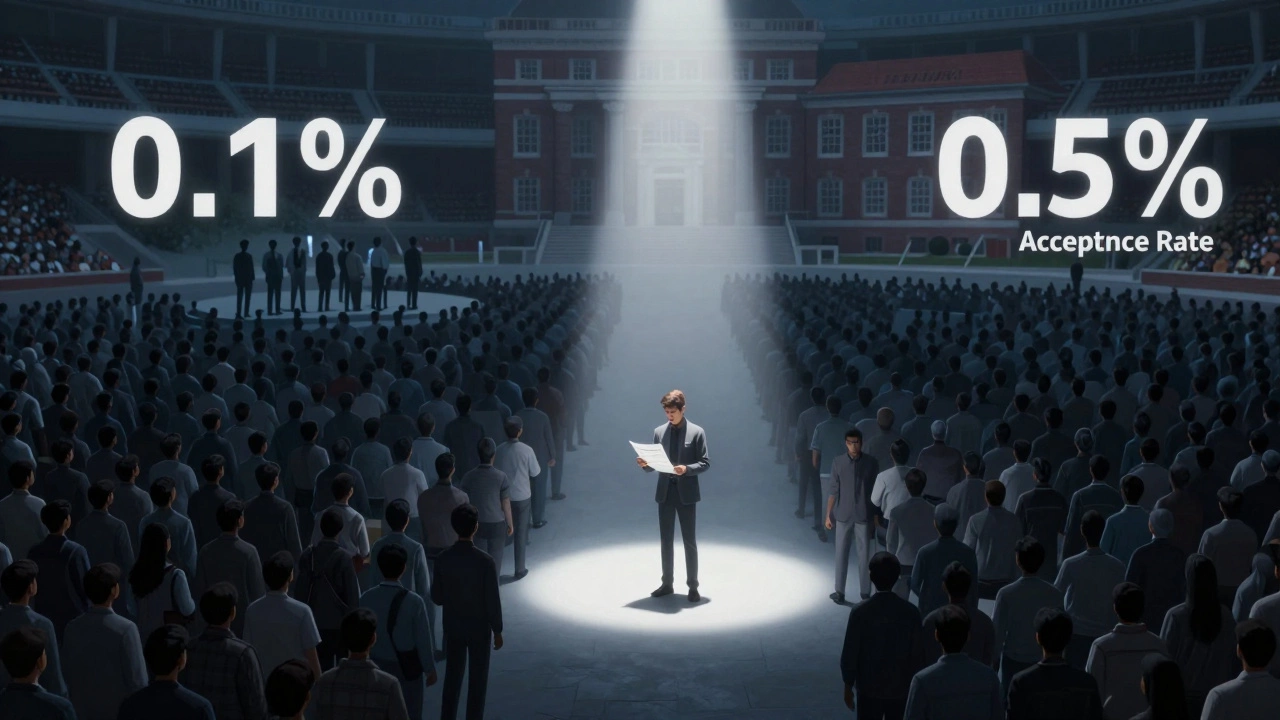
If we look purely at statistics, the gap is staggering. The acceptance rate for Harvard University is typically around 3% to 5%. That sounds incredibly low, and it is. However, when you look at the JEE Advanced (Joint Entrance Examination Advanced), the gateway to the IITs, the effective acceptance rate for the top branches in the top institutes hovers around 0.1% to 0.5%.
To put that in perspective, imagine a stadium filled with 100,000 people. At Harvard, about 3,000 to 5,000 of them would get in. At IIT, only 100 to 500 would secure a seat in a coveted branch like Computer Science at IIT Bombay or IIT Delhi. The pool for JEE Advanced is massive-over 1 million students take the preliminary exam (JEE Main), and only the top ~250,000 qualify for JEE Advanced. From those 250,000, only about 17,000 seats are available across all IITs combined.
This numerical disparity creates a different kind of pressure. In the US system, if you don’t get into Harvard, you might still get into Yale, Princeton, or Stanford. These are all world-class institutions. In India, while there are other good engineering colleges (like NITs or BITS Pilani), the cultural and professional weight of the "IIT tag" is so dominant that many students view anything else as a compromise. This all-or-nothing mentality intensifies the competition beyond what the raw numbers suggest.
The Selection Criteria: One Score vs. Holistic Review
The biggest difference lies in *how* you are selected. The IIT admission process is meritocratic in its purest, most ruthless form. Your rank in the JEE Advanced exam is almost the sole determinant of your fate. If you score higher than the student next to you, you get the better college or branch. There is no interview, no essay, and no consideration of your extracurricular activities during the initial selection phase. It is a high-stakes test where physics, chemistry, and mathematics knowledge is tested under extreme time pressure.
Harvard, on the other hand, uses a holistic admissions process. They look at your GPA, standardized test scores (SAT/ACT, though increasingly optional), essays, letters of recommendation, leadership roles, community service, and personal background. You can have a perfect SAT score and still be rejected if the admissions committee feels your application lacks "fit" or uniqueness. Conversely, a student with slightly lower scores but an extraordinary story or talent might be accepted.
This makes the Harvard process unpredictable. You can do everything right and still not get in because another applicant had a more compelling narrative. The IIT process is predictable but unforgiving. If you know the material and can solve problems quickly, you will get in. If you make a few careless mistakes, you could drop thousands of ranks. For many students, the clarity of the IIT system is less stressful than the ambiguity of the Ivy League application.
The Nature of the Exams: JEE Advanced vs. SAT/ACT
Let’s talk about the tests themselves. The JEE Advanced is widely considered one of the toughest academic examinations in the world. It doesn’t just test whether you know a concept; it tests whether you can apply multiple concepts simultaneously in novel ways. Questions often require deep conceptual understanding, creative problem-solving, and rapid calculation skills. The syllabus covers Class 11 and 12 physics, chemistry, and math, but the depth goes far beyond standard textbooks.
In contrast, the SAT or ACT, which are part of the Harvard application, are designed to measure readiness for college-level work in general. They test reading comprehension, writing, and basic math. While a high score is necessary to be competitive for Harvard, the cognitive load required to ace the SAT is nowhere near the level required to crack JEE Advanced. An American student preparing for Harvard spends months crafting essays and building a portfolio. An Indian student preparing for IIT spends years mastering complex calculus, thermodynamics, and organic chemistry mechanisms.
Consider this: A typical JEE Advanced physics problem might involve rotating frames of reference coupled with electromagnetic induction, requiring five distinct steps to solve within two minutes. A typical SAT math problem asks you to solve a quadratic equation or interpret a graph. The intellectual rigor demanded by JEE Advanced is objectively higher than that of any standardized test used in US college admissions.
Preparation Culture: Coaching vs. Extracurriculars
The way students prepare for these institutions reflects the differences in their educational systems. In India, IIT JEE preparation often involves enrolling in specialized coaching institutes like Allen, FIITJEE, or Resonance. Students may spend 12-14 hours a day studying, sacrificing weekends, holidays, and social lives. The culture is intense, with regular mock tests, rank analyses, and peer pressure. Many students repeat the exam year after year (known as "droppers") until they achieve their desired rank.
In the US, preparation for Harvard looks very different. Students focus on maintaining a high GPA in challenging courses (AP or IB classes). They also invest heavily in extracurriculars-playing varsity sports, leading student government, volunteering, conducting research, or starting businesses. The goal is to build a well-rounded profile that stands out among thousands of similarly high-achieving applicants. There is no single "coaching factory" for Harvard admissions, although consulting firms exist to help polish applications.
This difference in preparation highlights another aspect of "toughness." The IIT path requires immense discipline, stamina, and the ability to handle monotony and stress over a long period. The Harvard path requires versatility, creativity, and the ability to demonstrate leadership and impact. Both are demanding, but they demand different types of effort.
Academic Rigor After Admission
Getting in is only half the battle. What happens once you’re enrolled? Both IITs and Harvard are known for their rigorous academics, but the nature of the challenge differs.
At IITs, the workload is heavy and fast-paced. The first year is particularly tough, with core subjects like engineering mechanics, mathematics, and programming. The grading system is often curved, meaning your performance is relative to your peers. Since everyone who made it in is highly intelligent, the competition continues inside the classroom. Dropouts and failures do happen, especially in the early years, as students adjust to the intensity.
At Harvard University, the rigor comes from the expectation of critical thinking, original research, and broad engagement. Harvard’s "General Education" requirements ensure students explore fields outside their major. The pressure is less about memorizing formulas and more about producing high-quality papers, participating in seminars, and engaging in intellectual discourse. The support system at Harvard is generally more robust, with extensive tutoring, counseling, and faculty mentorship available to struggling students.
Neither experience is easy. IIT demands technical precision and endurance. Harvard demands intellectual curiosity and breadth. Both shape leaders in their respective fields.
Global Recognition and Career Outcomes
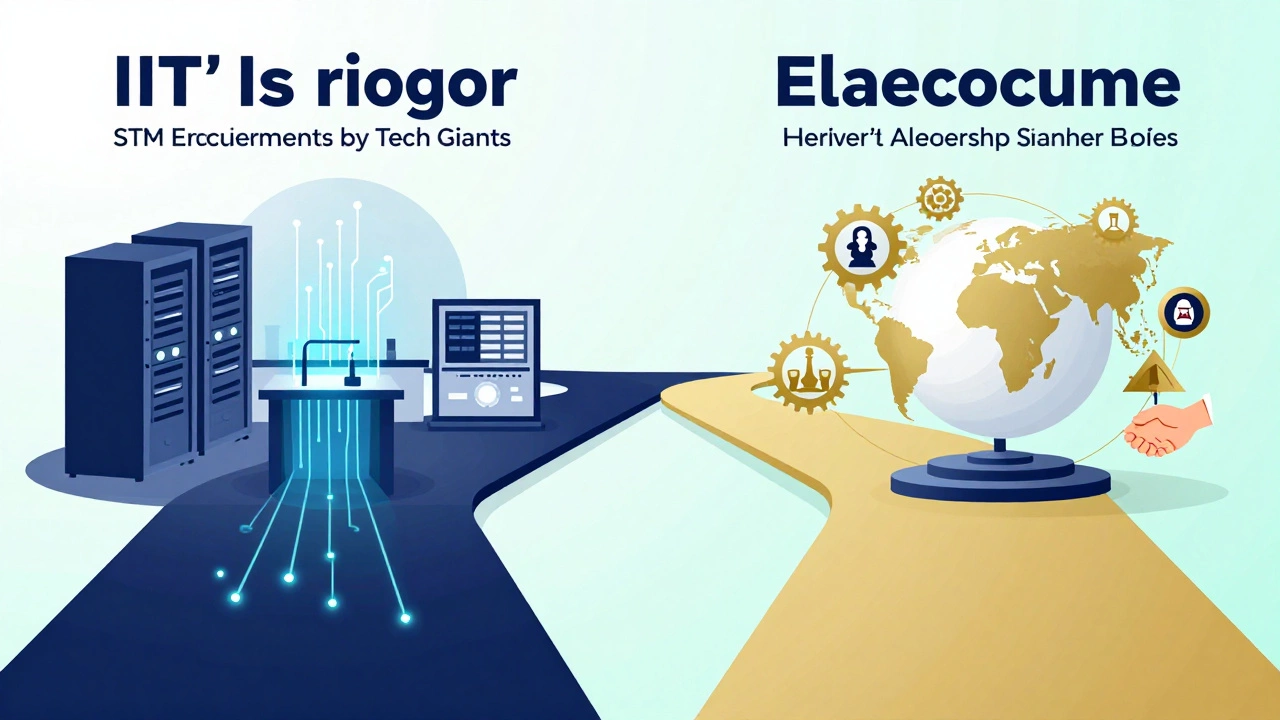
Why does this comparison matter? Because both degrees open doors. An IIT degree is highly respected globally, particularly in STEM fields. Top tech companies like Google, Microsoft, and Amazon actively recruit from IITs. Many IIT alumni go on to found successful startups or pursue PhDs at top global universities. The "IIT brand" carries significant weight in Asia and among Indian diaspora communities worldwide.
A Harvard degree offers unparalleled global prestige and networking opportunities. Harvard alumni hold positions in politics, business, law, and academia across the globe. The Harvard network is arguably the most powerful in the world. Graduates often enter investment banking, consulting, law, or leadership roles in multinational corporations. The brand recognition is instant and universal.
If your goal is to become an engineer or scientist, an IIT degree might offer more specialized technical training initially. If your goal is to enter leadership, policy, or interdisciplinary fields, Harvard provides a broader platform. However, many IIT graduates eventually move abroad for MS or MBA programs, leveraging their strong foundation to access global opportunities.
| Criteria | IIT (via JEE Advanced) | Harvard University |
|---|---|---|
| Acceptance Rate | ~0.1% - 0.5% (for top branches) | ~3% - 5% |
| Primary Selection Factor | Exam Rank (Merit-based) | Holistic Profile (Essays, Activities, Grades) |
| Key Exam | JEE Advanced (Physics, Chem, Math) | SAT/ACT (Optional), GPA |
| Preparation Focus | Problem-solving, Technical Depth | Leadership, Essays, Extracurriculars |
| Competition Pool | ~250,000 candidates for ~17,000 seats | ~60,000 applicants for ~2,000 seats |
| Geographic Scope | Primarily India | Global |
Which Path is Right for You?
Asking whether IIT is tougher than Harvard isn’t just about trivia; it’s about understanding what kind of challenge you want to undertake. If you thrive in structured, high-pressure academic environments and excel in quantitative reasoning, the IIT path might suit you. The clarity of the goal-score high, get in-is motivating for many.
If you enjoy exploring diverse interests, expressing yourself through writing, and building a unique personal brand, the Harvard path might be more appealing. The uncertainty can be daunting, but the freedom to define your own narrative is liberating.
Ultimately, both institutions represent the pinnacle of educational achievement in their respective contexts. Getting into either requires exceptional talent, hard work, and dedication. The "difficulty" is subjective, shaped by your strengths, background, and aspirations. Whether you aim for IIT or Harvard, the journey itself will transform you, equipping you with skills and resilience that last a lifetime.
Is JEE Advanced harder than the SAT?
Yes, significantly. JEE Advanced tests deep conceptual understanding and complex problem-solving in physics, chemistry, and mathematics. The SAT measures general readiness for college with basic math and reading/writing sections. The cognitive load and depth of JEE Advanced are much higher.
Can I apply to Harvard if I am an Indian student?
Yes, Harvard accepts international applicants, including Indians. However, the acceptance rate for international students is even lower than for domestic US students. You need a stellar academic record, strong SAT/ACT scores (if submitted), compelling essays, and significant extracurricular achievements.
Do I need coaching to get into IIT?
While not mandatory, most successful IIT aspirants join coaching institutes due to the competitive nature of the exam. Coaching provides structured study material, regular tests, and expert guidance. Self-study is possible but requires extreme discipline and access to high-quality resources.
Is the IIT degree recognized globally?
Yes, IIT degrees are highly respected worldwide, especially in engineering and technology sectors. Many top global universities and companies recognize the rigor of IIT education. IIT alumni hold prominent positions in tech giants, research institutions, and startups across the globe.
What is the dropout rate at IIT compared to Harvard?
Dropout rates vary by institute and year, but IITs generally have a higher attrition rate in the first year due to the intense academic pressure. Harvard has a very low dropout rate, supported by extensive academic and mental health resources. However, both institutions expect high levels of commitment from their students.