


Board Selection Assistant
Ready to decide?
Fill out your profile on the left and click "Find My Best Board Match" to see our recommendation.
Quick Summary
- CBSE is the top choice for students aiming at engineering (JEE) or medical (NEET) careers due to its standardized curriculum and widespread availability.
- ICSE/CBSE Hybrid approaches work best if you want strong English communication skills alongside competitive exam readiness.
- State Boards are excellent for local university admissions but may require extra coaching for national-level competitive exams.
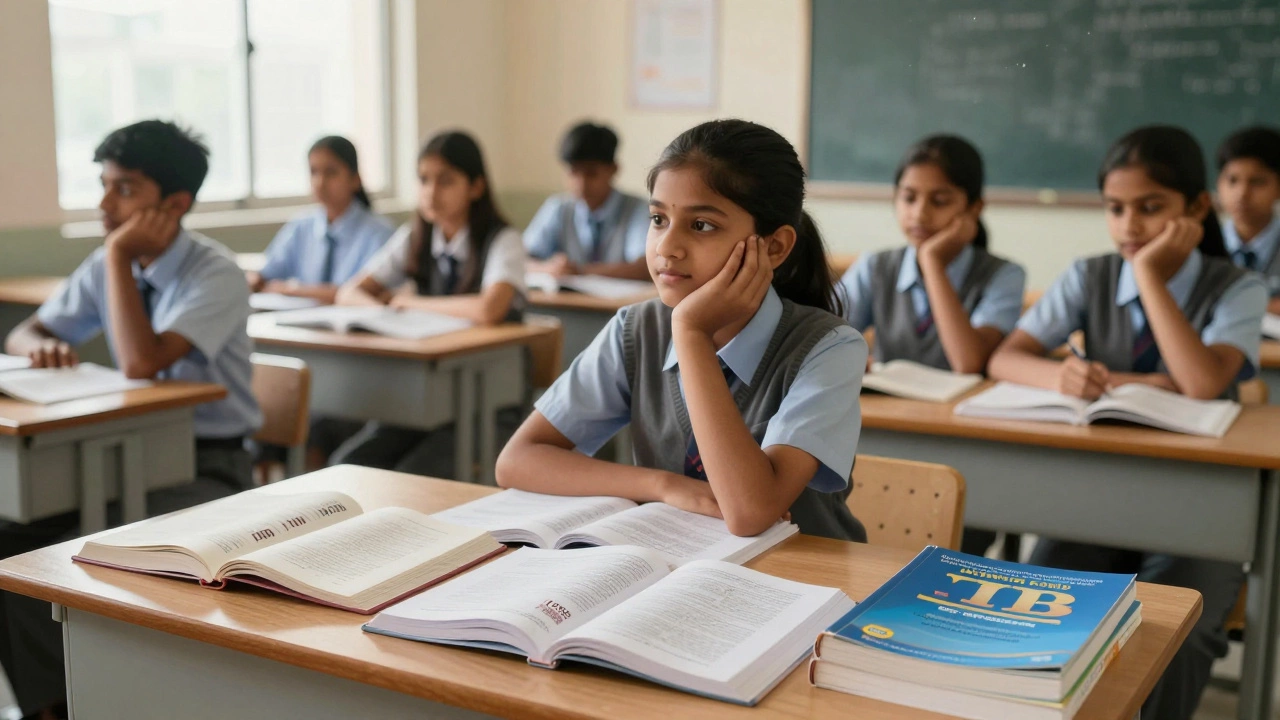
- IB (International Baccalaureate) offers global recognition and critical thinking development, ideal for studying abroad, but comes with a high cost.
- The "best" board depends entirely on your specific career goal: domestic competitive exams favor CBSE, while global mobility favors IB or Cambridge.
You’ve probably heard the question a thousand times from parents, teachers, and even relatives at family gatherings: Which board is best for the future? It’s one of those questions that triggers immediate anxiety because the answer feels like it dictates your entire life trajectory. The truth is, there is no single "best" board for everyone. What works perfectly for an aspiring IIT engineer might be a nightmare for a student planning to study liberal arts in the UK. By May 2026, the landscape of Indian education has shifted significantly, with a clearer distinction between boards designed for domestic competitive success and those built for global adaptability.
To make this decision without regret, you need to look beyond the brand name of the board and examine how each system shapes your learning style, assessment method, and future opportunities. Let’s break down the major players-CBSE, ICSE, State Boards, and IB-and see which one actually aligns with where you want to be in ten years.
CBSE: The Gateway to Competitive Exams
If your primary goal is to crack JEE Main, JEE Advanced, or NEET, CBSE (Central Board of Secondary Education) remains the undisputed king. Why? Because the syllabus alignment is nearly perfect. The NCERT textbooks prescribed by CBSE form the foundational base for these national entrance exams. When you study physics from an NCERT book in Class 11, you’re essentially prepping for JEE simultaneously.
This synchronization saves you time. Students from other boards often have to learn the same concepts twice: once for their board exams and again for competitive coaching. With CBSE, you streamline that process. The board itself is known for its straightforward, direct-to-the-point questioning pattern. There’s less ambiguity in answers, which means if you know the concept, you get the marks. This predictability reduces stress during final exams.
However, CBSE isn’t just about rote memorization anymore. Recent updates have emphasized application-based questions. You still need to understand the 'why' behind the formula, not just the formula itself. But compared to other boards, CBSE strikes a balance between depth and breadth that serves the majority of Indian students aiming for premier institutes like IITs, NITs, and AIIMS.
| Feature | CBSE | ICSE | State Board | IB |
|---|---|---|---|---|
| Primary Focus | Competitive Exams (JEE/NEET) | Conceptual Depth & Language | Local Curriculum & Regional Relevance | Critical Thinking & Global Citizenship |
| Exam Pattern | Standardized, Direct Questions | Detailed, Descriptive Answers | Varies by State, Often Rote-Based | Internal Assessments + External Exams |
| English Proficiency | Moderate | High | Variable | Very High |
| Cost of Education | Affordable to Mid-Range | Mid to High Range | Lowest | Very High |
| Global Recognition | Growing | Moderate | Limited | Excellent |
ICSE: Building Strong Foundations and Communication Skills
While CBSE focuses on speed and standardization, ICSE (Indian Certificate of Secondary Education), conducted by the Council for the Indian School Certificate Examinations (CISCE), focuses on depth and detail. If you plan to pursue fields like law, journalism, literature, or humanities, ICSE gives you a distinct advantage. The syllabus is broader, covering more topics in science and math than CBSE, but the real differentiator is the emphasis on language and expression.
ICSE students are generally better at articulating their thoughts. The exam papers require long, descriptive answers. You can’t just write a formula; you have to explain the derivation, the context, and the application. This builds a habit of thoroughness. In interviews for MBA programs or foreign universities, this ability to speak clearly and think deeply often sets ICSE graduates apart.
The downside? It’s harder. Scoring 95% in ICSE is significantly more difficult than scoring 95% in CBSE. The grading curve is steeper, and the expectations for presentation are higher. If you’re someone who struggles with writing lengthy essays or detailed explanations, ICSE might feel overwhelming. Also, while ICSE is respected, it doesn’t have the same seamless alignment with JEE/NEET as CBSE does. You’ll likely need additional coaching if you switch tracks later.
State Boards: Local Strengths and National Challenges
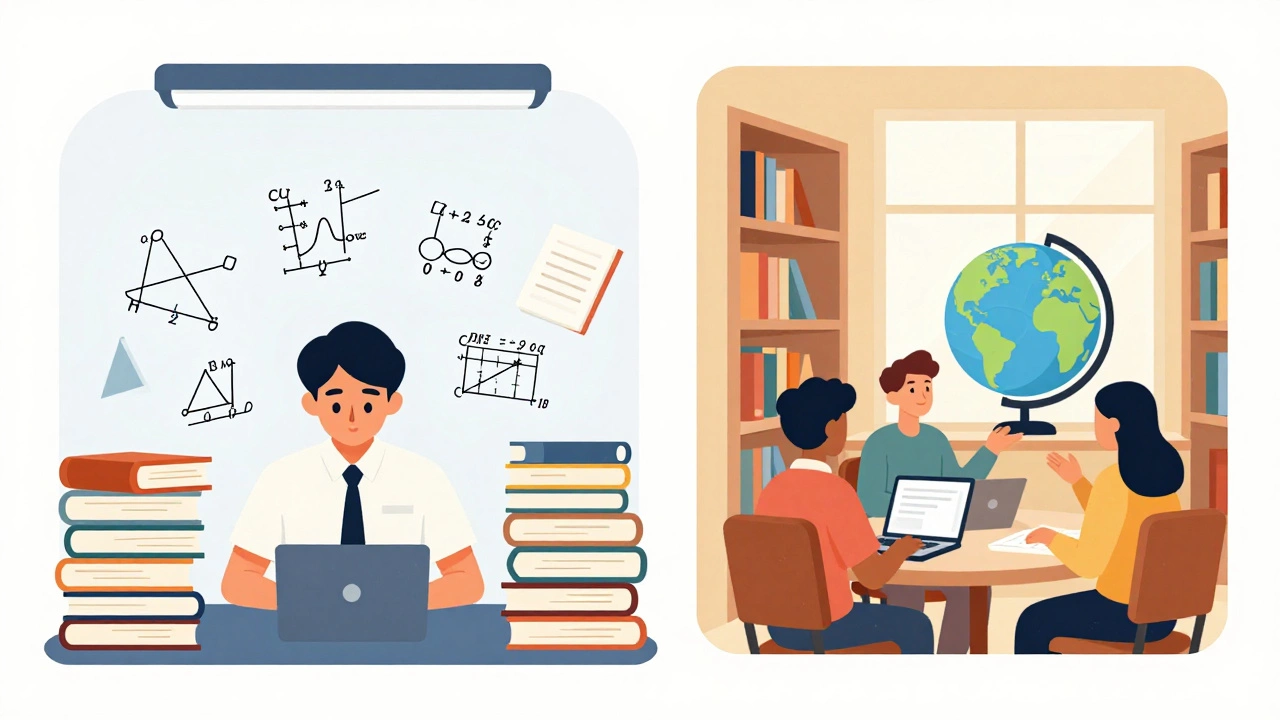
State boards are the most common option in India, simply because they are accessible and affordable. They follow the curriculum set by individual state education departments. For students planning to stay within their home state for college, particularly in state-run universities, this is a perfectly valid path. Many state boards have improved their quality significantly over the last decade, especially in states like Maharashtra, Tamil Nadu, and Kerala.
The biggest challenge with state boards is the disparity in standards. A textbook from one state might be vastly different in difficulty and content from another. More importantly, if you aim for national competitive exams, you’ll face a gap. The NCERT-centric approach of JEE/NEET means state board students often have to bridge a conceptual gap through private coaching. This adds financial pressure and time constraints.
That said, state boards often include regional languages and cultural studies, which fosters a stronger connection to local heritage. If your goal is to enter government services within your state or pursue local professional courses, a state board education is sufficient and efficient. Just be aware that you may need to invest in supplementary materials if you decide to aim for national-level opportunities later.
IB: The Global Passport
If money is not a constraint and your eyes are set on universities in Europe, North America, or Australia, the International Baccalaureate (IB) Diploma Programme is arguably the best preparation you can get. IB isn’t just a curriculum; it’s a philosophy. It emphasizes inquiry-based learning, critical thinking, and international-mindedness. You don’t just memorize facts; you analyze them, debate them, and apply them to real-world scenarios.
Universities worldwide recognize the rigor of the IB diploma. Admissions officers at Oxford, MIT, and Harvard know exactly what an IB score represents. The internal assessments (IAs) teach you research skills early on, giving you a head start in undergraduate academic writing. Plus, the IB learner profile encourages attributes like open-mindedness and integrity, which are valuable soft skills in any career.
But let’s be realistic: IB is expensive. Tuition fees at IB schools are among the highest in the country. The workload is also intense. You juggle six subjects plus the Theory of Knowledge (TOK) course, an Extended Essay, and Creativity, Activity, Service (CAS) requirements. It’s not for everyone. If you thrive under pressure and enjoy intellectual exploration, IB is transformative. If you prefer structured, clear-cut instructions, you might find it chaotic.

Cambridge International (IGCSE/A-Levels): The British Alternative
Often overlooked in favor of IB, Cambridge International (formerly CIE) offers IGCSE and A-Level qualifications. These are highly respected globally, particularly in the UK, Commonwealth countries, and increasingly in the US. The structure is linear and focused. You choose specific subjects at A-Level, allowing for deep specialization rather than the broad generalist approach of IB.
For students interested in STEM fields, Cambridge A-Levels provide rigorous training comparable to first-year university courses. The exams are challenging but fair, with a focus on problem-solving. Like IB, Cambridge schools are typically private and costly, but they offer a slightly more predictable path than IB’s holistic assessment model. If you’re aiming for UK universities, A-Levels are the gold standard.
How to Choose: Your Personal Decision Matrix
So, which board is best for *your* future? Here’s a simple framework to decide:
- Define Your Career Goal First: Are you targeting IIT/JEE? Go CBSE. Want to study Law or Literature in India? Consider ICSE. Planning to study abroad? Look at IB or Cambridge. Staying local for government jobs? State Board is fine.
- Assess Your Learning Style: Do you prefer clear rules and direct answers? CBSE suits you. Do you enjoy debating, writing, and exploring nuances? ICSE or IB will keep you engaged.
- Budget Reality Check: IB and Cambridge schools charge premium fees. Can your family sustain this for two years without financial strain? If not, stick to CBSE or ICSE, which offer high-quality education at lower costs.
- School Quality Matters More Than Board: A great teacher in a State Board school can outperform a mediocre teacher in an IB school. Visit campuses, talk to current students, and check alumni outcomes. The board provides the syllabus, but the school provides the experience.
Remember, the board you choose in Class 9 or 10 doesn’t lock you into a lifelong destiny. Many students switch boards between Class 10 and 11 to better align with their career goals. The key is to pick a foundation that supports your next step, not necessarily your final destination.
Is CBSE easier than ICSE?
Generally, yes. CBSE exams tend to have more direct, factual questions, making it easier to score high marks if you follow the NCERT textbook closely. ICSE requires detailed, descriptive answers and covers a broader range of topics, making it more challenging to achieve top percentiles.
Can I take JEE after completing ICSE or State Board?
Absolutely. JEE eligibility is based on passing Class 12 with Physics, Chemistry, and Math, regardless of the board. However, since JEE syllabus aligns closely with NCERT, ICSE and State Board students often need additional coaching to bridge conceptual gaps and practice the specific exam pattern.
Is IB recognized in India for engineering colleges?
Yes, IB is recognized by the University Grants Commission (UGC) and most Indian universities. However, for IITs and NITs, you still need to qualify through JEE. Some private universities accept IB scores directly for admission, so check specific institute criteria.
Which board is best for studying abroad?
IB and Cambridge A-Levels are the most widely recognized and preferred by Western universities due to their emphasis on critical thinking and independent research. CBSE is also accepted, but you may need to take additional tests like SAT or AP courses to strengthen your application.
Can I switch boards between Class 10 and 11?
Yes, many students do this. Switching from CBSE to ICSE or vice versa is manageable if you join a school that offers the new board’s curriculum. However, switching to IB or Cambridge usually requires starting earlier, as their pedagogical approach differs significantly from traditional Indian boards.