




Secret Government Job Skill Assessment
How well do your skills match secret government roles?
Answer 5 questions to see which classified position aligns with your abilities.
When people think of government jobs, they usually picture clerks, teachers, or postal workers. But there’s a whole other side of government work that never shows up on job boards, LinkedIn, or even public job fairs. These aren’t just obscure roles-they’re positions built around secrecy, high-stakes trust, and skills you won’t find in any textbook. And yes, they’re real. Not conspiracy theories. Not movies. Actual jobs with real paychecks, security clearances, and zero public recognition.
What Makes a Government Job "Secret"?
A secret government job isn’t just one where you wear a suit and work behind a locked door. It’s a role where your very existence in the system is classified. You don’t tell your family what you do. You can’t post about it online. Even your tax records might not reveal your true employer. These jobs exist because the government needs people to handle things that, if made public, could compromise national security, diplomatic relations, or ongoing operations.
The key difference between a regular government job and a secret one? Clearance level. Not everyone can get a top secret clearance. It takes years of background checks, interviews with hundreds of people who know you, and even psychological evaluations. If you’ve ever wondered why some jobs seem to appear out of nowhere-no posting, no application portal-that’s why.
Job #1: Cryptologic Linguist
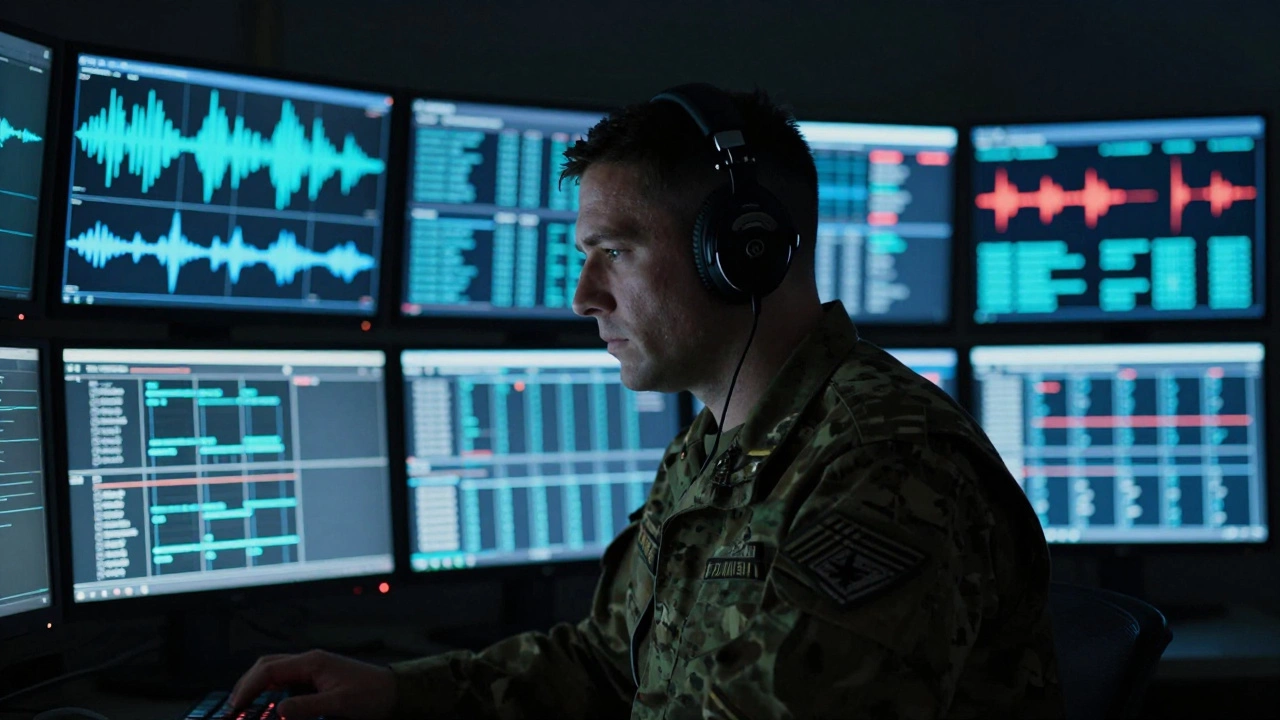
Imagine being paid to listen to encrypted radio transmissions from hostile territories, decode messages in languages no one else in your country speaks, and send back actionable intelligence-all without a single word of it ever appearing in a news report.
Cryptologic linguists are hired by agencies like the NSA and the Defense Intelligence Agency. They don’t just know Mandarin or Arabic. They need fluency in dialects, slang, and even dead languages used in covert communications. The U.S. military alone has trained linguists in over 100 languages, many of which aren’t taught in any university. Some linguists are recruited from immigrant communities because they grew up speaking the exact dialects needed.
These roles require not just language skills, but pattern recognition. You’re not translating a conversation-you’re spotting anomalies. A pause in a sentence. A word used out of context. That’s how you find hidden messages.
Job #2: Nuclear Weapons Transport Officer
There are over 3,700 active nuclear warheads in the U.S. arsenal alone. Someone has to move them. And no, they don’t use trucks with flashing lights.
Nuclear weapons transport officers are military personnel with top secret clearance who coordinate the movement of warheads between storage sites, testing facilities, and submarines. They don’t drive the convoys. They plan them. Routes are changed weekly. GPS is disabled. Communication is encrypted through analog systems. These officers work with the Department of Energy, the Air Force, and the Navy. They’re trained in emergency protocols for accidents, sabotage, or natural disasters-like what happens if a convoy gets caught in a flood or a bridge collapses.
They don’t carry weapons. But they carry the weight of knowing what’s in those armored containers. And if something goes wrong? No press release. No public statement. Just silence.

Job #3: Undercover Diplomatic Liaison
You might think diplomats wear suits and attend UN meetings. But some work in disguise.
Undercover diplomatic liaisons operate under non-official cover. That means they pose as businesspeople, journalists, or even aid workers in hostile countries. Their mission? To build relationships with insiders who can provide intelligence on military movements, political instability, or biological threats. These people aren’t spies in the James Bond sense. They’re trained diplomats who’ve learned to live double lives for years at a time.
The CIA and State Department run joint programs to train these officers. They learn how to fake documents, handle surveillance detection, and manage emotional burnout. Many work in places like North Korea, Iran, or Venezuela-not as ambassadors, but as invisible observers. Their identities are so tightly guarded that even other U.S. embassies don’t know they’re there.
Job #4: Cyber Weapon Developer
Not all secret jobs involve guns or spies. Some involve code.
Cyber weapon developers work inside units like U.S. Cyber Command or the UK’s GCHQ. They don’t write apps or fix websites. They build digital tools designed to disable enemy infrastructure-power grids, communication networks, missile defense systems. These aren’t theoretical projects. They’ve been used in real operations. Stuxnet, the malware that damaged Iran’s uranium centrifuges, was developed by a joint U.S.-Israeli team. No one claimed it. No one was credited.
These developers need advanced degrees in computer science, cryptography, or network engineering. But they also need to think like hackers. Not the kind who steal credit cards-the kind who can find a vulnerability in a system no one else knows exists. They work in isolated labs. No internet access. No outside communication. Their code is never published. Their names are never listed.
Job #5: Deep Space Surveillance Analyst
Yes, the government tracks satellites. But not just the ones you can see from Earth.
A small team of analysts works out of a classified facility in Colorado, monitoring objects in low Earth orbit that aren’t supposed to be there. These include experimental satellites, debris from anti-satellite tests, and possibly even foreign surveillance platforms. They use ground-based radar, infrared sensors, and space-based telescopes to track movements that could signal a threat.
Some of these analysts are former aerospace engineers. Others came from the military. They don’t work for NASA. They work for the Space Force and the National Reconnaissance Office. Their reports go directly to the President’s intelligence briefings. If a satellite suddenly changes course near a U.S. military asset? They’re the ones who flag it. And they’re the only ones who know what happened.

How Do You Get Into These Jobs?
You won’t find them on USAJobs.gov. You won’t get a job posting. You won’t even know they exist until you’re approached-or until you’ve built the right skill set and someone notices you.
Here’s what actually works:
- Get a degree in a high-demand field: linguistics, cybersecurity, nuclear engineering, aerospace, or international relations.
- Join the military or a federal internship program. Many secret roles are filled by people who started as enlisted personnel or interns.
- Build a track record of reliability. These jobs aren’t about who you know-they’re about who you’ve proven you are.
- Be prepared for years of background checks. If you’ve ever traveled to certain countries, used a VPN, or had foreign family members, that doesn’t automatically disqualify you-but it will trigger extra scrutiny.
- Don’t apply. Wait. If you’re qualified, they’ll find you.
There’s no entrance exam. No study guide. No prep course. The government doesn’t advertise these jobs because they can’t. But they’re always looking.
What Happens If You Talk About It?
These jobs come with legal obligations. If you disclose classified information-even accidentally-you can be charged under the Espionage Act. That’s not a threat. That’s the law. People have gone to prison for telling friends what they did on the job.
That’s why secrecy isn’t just policy. It’s culture. Employees sign non-disclosure agreements that last for life. Even after retirement, you can’t write a memoir. You can’t give interviews. You can’t even mention your former employer on social media.
It’s not about control. It’s about survival. One leaked detail can compromise a mission. One careless comment can put lives at risk.
Why This Matters for Job Seekers
If you’re preparing for government exams, don’t just study for civil service tests. Look at the hidden paths. The most powerful government roles aren’t the ones with the most applicants. They’re the ones with the least visibility.
Skills like language fluency, cybersecurity expertise, and crisis response aren’t just useful-they’re gateways. The government doesn’t need more accountants. It needs people who can operate in silence, under pressure, and with zero room for error.
So if you’re wondering how to stand out in a crowded field of applicants, ask yourself: Are you preparing for the job everyone sees? Or are you building the skills that will make you invisible-until you’re needed the most?