


Teacher Training Terminology Finder
Select the characteristics of the institution you are thinking of to find its professional name.
Quick Takeaways
- Normal Schools were the original professional training centers for teachers.
- Teachers Colleges are the modern evolution of these schools.
- Many people now refer to these as Colleges of Education or Schools of Pedagogy.
- The term "Normal" comes from the French word normale, meaning to establish a standard or norm.
The Mystery of the Normal School
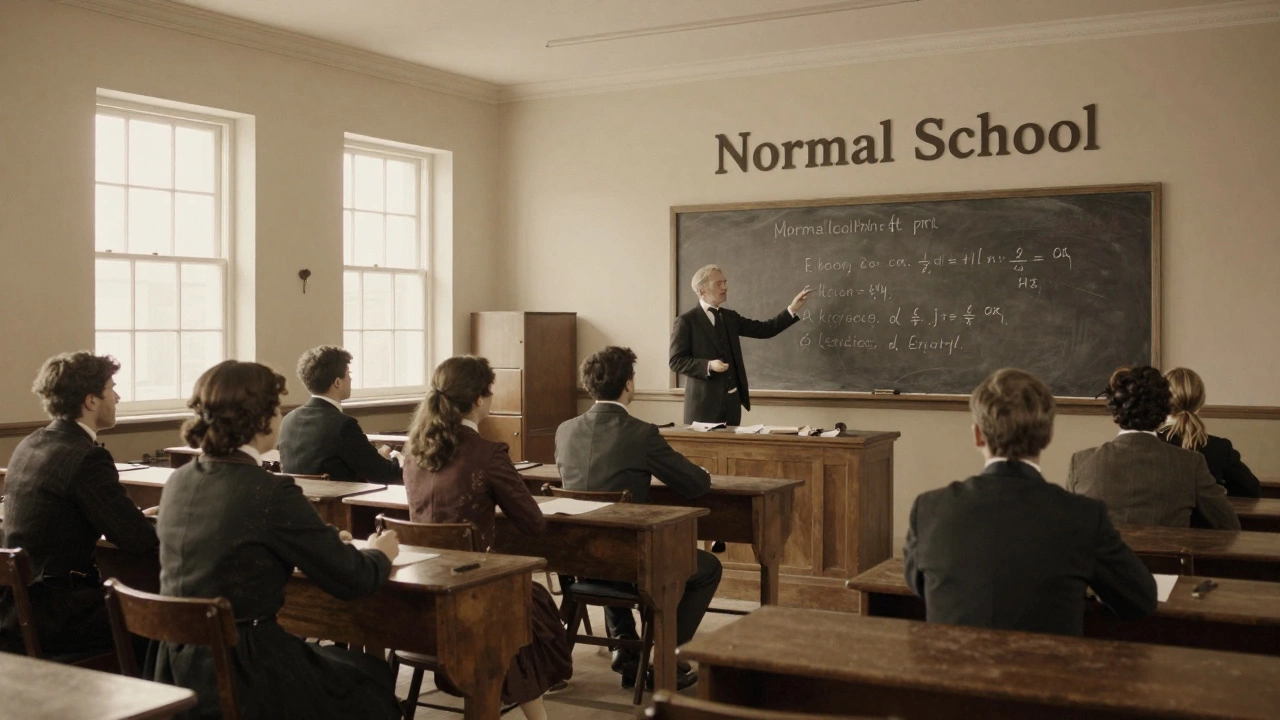
If you dig into the history of education, you'll keep hitting a wall with the term Normal School. To a modern ear, it sounds like a school for people who are ordinary. In reality, a Normal School is a specialized institution designed to train high school graduates to become teachers by establishing a "norm" or a standard of teaching practices.
This concept started in France during the 17th century with the École Normale. The idea was simple: if every teacher is trained using the same proven methods, the quality of education across a whole country remains consistent. During the 19th century, this model exploded in the United States and Europe. Imagine a world where teaching was just something you did because you knew the subject, not because you knew how to teach. Normal Schools changed that by introducing Pedagogy, which is basically the science and art of teaching. Instead of just learning math or history, students learned how to manage a classroom and how to explain complex ideas to a child.
The Transition to Teachers Colleges
As the world changed, the basic "Normal School" wasn't enough. By the mid-20th century, these institutions started offering degrees rather than just certificates. This is when they rebranded as Teachers Colleges. This shift wasn't just about a name change; it was about professionalizing the career. Teaching moved from being a vocational trade to a scholarly profession.
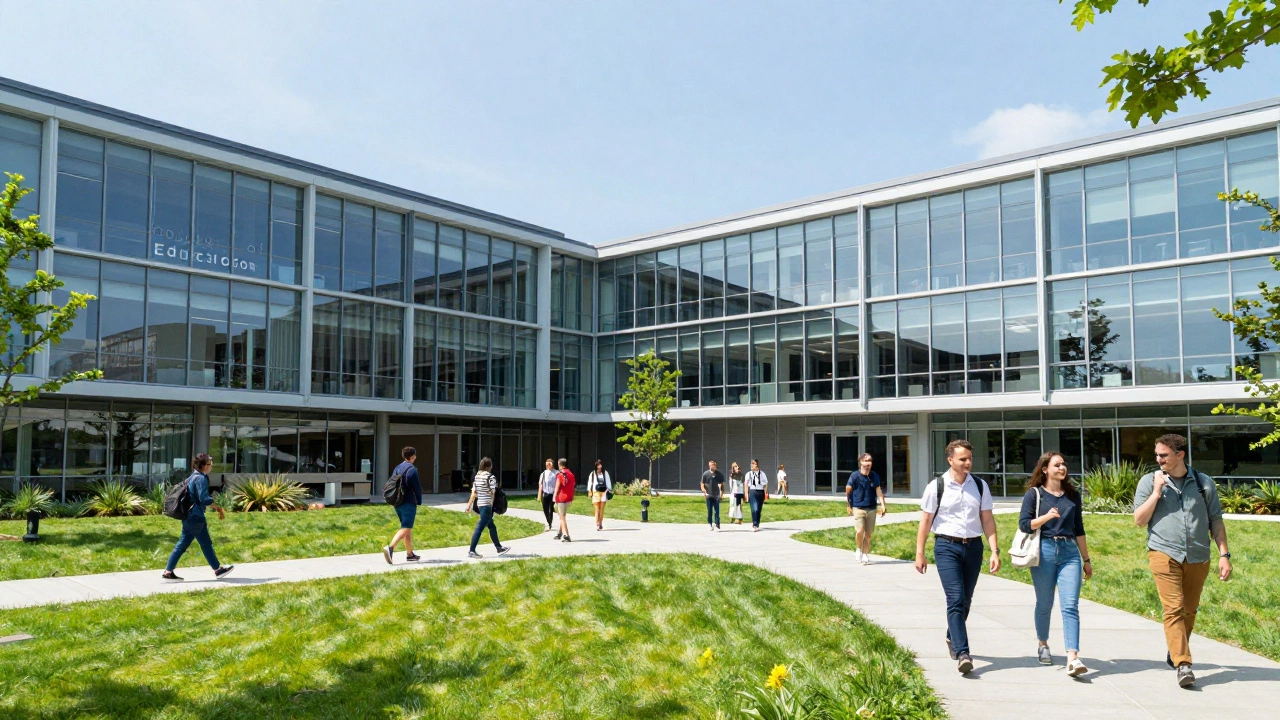
In many regions, these colleges eventually merged with larger universities. If you look at a massive state university today, you'll often find a "College of Education" or a "Faculty of Education." These are the direct descendants of those original Normal Schools. They've grown from small, local hubs into research-heavy institutions that study things like cognitive science and educational psychology to figure out how students actually learn.
Global Variations: What Do Other Countries Call Them?
Depending on where you land on a map, the terminology shifts. In the UK and many Commonwealth countries, you might hear them called Training Colleges or simply the university's education department. In some parts of Asia and Africa, the term "Teachers Training Institute" is still the standard.
In more academic circles, you'll see the term School of Pedagogy. While "teacher training" sounds like a mechanical process (like training a dog), "pedagogy" suggests a deeper intellectual pursuit. It's the difference between learning how to use a chalkboard and understanding the psychological development of a ten-year-old.
| Term | Era of Popularity | Primary Focus | Typical Certification |
|---|---|---|---|
| Normal School | 18th - Early 20th Century | Standardizing basic methods | Teaching Certificate |
| Teachers College | Mid 20th Century | Academic specialization | Bachelor of Education |
| College of Education | Late 20th - Present | Research and Theory | Masters / PhD in Education |
| Pedagogical Institute | Varies (Global) | Science of Learning | Professional Degree |
The Role of Student Teaching and Practicums
No matter what you call the school, the core of the experience is the Practicum. You can't learn to teach by reading a book in a lecture hall; you have to actually stand in front of thirty energetic kids. This is why every teacher training school partners with local K-12 schools.
During a practicum, a student teacher works under a mentor-a veteran educator who has seen it all. This is where the "norm" from the Normal School days meets the reality of the classroom. The student learns that a lesson plan that looks perfect on paper often falls apart the moment a student asks a question that takes the class in a completely different direction. This hands-on phase is the bridge between academic theory and professional competence.

Modern Evolutions: Alternative Certification
Today, we're seeing a shift away from the traditional "school" model toward Alternative Certification Programs. Because of teacher shortages, some people enter the classroom first and get their training while they work. Programs like Teach For America or various state-led residency models allow professionals from other fields to transition into teaching without spending four years in a dedicated Teachers College.
These paths are less about a physical building (a school) and more about a professional journey. However, the underlying goal remains the same as it was in the original French École Normale: ensuring that the person at the front of the room knows the best way to transfer knowledge to the students.
Professional Development: The School That Never Ends
Training doesn't stop once you get your degree. Most teachers enter a lifelong cycle of Professional Development (PD). This is essentially a continuous version of teacher training. Whether it's a weekend workshop on integrating AI in the classroom or a certification in special education, teachers are constantly "re-training."
In the past, this was done through district-led seminars. Now, many teachers use online platforms to earn micro-credentials. This decentralization means that the "teacher training school" is no longer just a campus-it's a digital ecosystem of peer-to-peer learning and expert-led webinars.
Why was the term "Normal School" used?
The term comes from the French word "normale," which refers to establishing a norm or a standard. The goal was to create a standardized set of teaching rules and methods so that all students, regardless of where they lived, received the same quality of education.
Is a Teachers College the same as a University?
Not necessarily. A Teachers College is a specialized institution focusing solely on educator preparation. However, most have either evolved into full universities or have become specific colleges within a larger university system (like a College of Education).
What is the difference between pedagogy and teacher training?
Teacher training is the practical process of learning how to teach (lesson planning, grading, classroom management). Pedagogy is the theoretical study of the process of learning. One is the "how," while the other is the "why."
Can I become a teacher without going to a training school?
Yes, through alternative certification routes. These programs allow individuals with a degree in a specific subject to earn their teaching credentials while gaining on-the-job experience in a real classroom.
What are the most common names for these schools today?
The most common modern terms are College of Education, Faculty of Education, School of Pedagogy, or Teacher Education Program.
Next Steps for Aspiring Educators
If you're looking to enter the field, your first step is to decide between a traditional degree path and an alternative route. If you love the theory and want a broad academic foundation, look for a university with a strong College of Education. If you have a degree in a subject like Physics or History and want to get into the classroom as quickly as possible, research your local government's alternative certification requirements.
Regardless of the path, remember that the "schooling" part is just the beginning. The real training happens during your first three years in the classroom, where you'll move from following the "norm" to developing your own unique teaching style.