

Distance Education Readiness Quiz
Test your understanding of what distance education really is and whether you're prepared for its unique challenges.
Your Results
Detailed Feedback
You’ve probably heard the term thrown around in job interviews or seen it on a LinkedIn profile. But if you stop to think about it, what actually is distance education? It’s not just "school over the internet." That’s a lazy shortcut that misses half the picture. For decades, people learned via mail-order courses long before Wi-Fi existed. Today, the definition has evolved into something far more nuanced, blending technology, self-discipline, and institutional structure.
If you’re considering this path-whether to upskill, switch careers, or finish a degree you started years ago-you need to understand exactly what you’re signing up for. This isn’t about passive video watching. It’s a specific mode of delivery with its own rules, benefits, and pitfalls. Let’s break down the real definition, how it works, and why it matters in 2026.
The core definition: Separation as a feature, not a bug
At its simplest, Distance Education is a method of instruction where teachers and students are physically separated by time and space, using technology and printed materials to bridge the gap. The key word here is separation. In traditional schooling, proximity is required. You sit in a room; the teacher stands at the front. In distance education, that physical link is severed intentionally.
This separation allows for flexibility. You don’t need to live near a campus. You don’t need to attend lectures at 9 AM sharp. However, this freedom comes with a trade-off: you must manage your own schedule and motivation. The institution provides the framework, but you provide the drive. This distinction separates true distance education from simple self-study. In self-study, you might buy a textbook and read it alone. In distance education, there is an accredited institution, a curriculum, assessments, and usually some form of instructor interaction, even if it’s asynchronous.
How it differs from online learning and e-learning
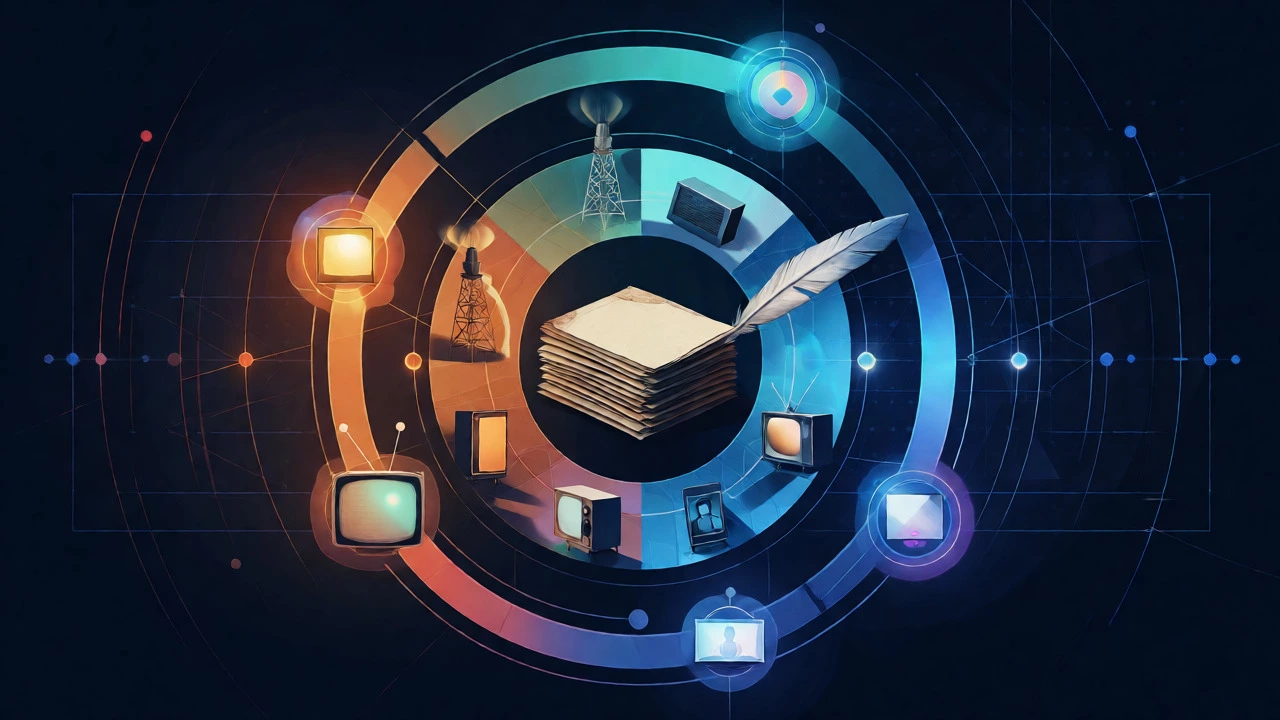
People often use "distance education," "online learning," and "e-learning" interchangeably. They aren’t synonyms. Think of them as concentric circles.
- Distance Education: The broad umbrella term. It includes correspondence courses (mail), radio broadcasts, TV lessons, and modern digital platforms. It focuses on the pedagogical model of separated teaching.
- Online Learning: A subset of distance education that specifically uses the internet. If you’re taking a course on Coursera or through a university’s LMS (Learning Management System), you’re doing online learning.
- E-learning: Often refers to corporate training or specific modules delivered electronically. It can be synchronous (live) or asynchronous (recorded).
Why does this matter? Because accreditation bodies treat these differently. A degree from a Open University, which specializes in distance education methods designed for adult learners who cannot attend traditional classes, carries different weight than a certificate from a random YouTube playlist. When you define your education, you need to know if it’s accredited distance education or just informal online content.
The evolution: From postal mail to Zoom rooms
To understand the definition, you have to look at the history. In the late 19th century, Isaac Pitman taught shorthand via postal mail in England. Students would write exercises, mail them to him, and he’d correct them and mail them back. This was slow, expensive, and lonely, but it worked. It proved that learning could happen without physical presence.
By the mid-20th century, universities like the Open University (founded in 1969) revolutionized the field by combining print materials with television and radio broadcasts. This was Generation 2. Then came the internet. Generation 3 brought us email and basic web pages. Today, we are in Generation 4 and 5, characterized by interactive platforms, mobile apps, AI tutors, and massive open online courses (MOOCs).
The definition hasn’t changed fundamentally-teachers and students are still separated-but the tools have transformed the experience. Modern distance education isn’t just about reading PDFs; it’s about virtual labs, peer forums, and instant feedback loops.
Key components of effective distance education
Not all remote programs are created equal. If you’re evaluating a program, check for these four pillars. If one is missing, the quality likely suffers.
| Component | Description | Why It Matters |
|---|---|---|
| Curriculum Design | Structured modules with clear learning objectives. | Prevents aimless browsing. Ensures logical progression. |
| Instructor Interaction | Access to professors via email, forums, or live chats. | Provides clarification and mentorship. Reduces isolation. |
| Assessment Rigor | Quizzes, assignments, proctored exams. | Validates learning. Essential for credential value. |
| Support Services | Tech help, library access, career counseling. | Mimics campus resources. Helps students persist. |
Notice that "technology" isn’t listed as a pillar. Technology is the vehicle, not the destination. A well-designed course on paper can be better than a poorly designed VR experience. Look for the substance behind the screen.
Who is distance education for?
It’s not for everyone. If you thrive on external pressure, strict schedules, and social accountability, you might struggle. But for many, it’s the only viable option.
- Working Professionals: You can’t quit your job to attend full-time classes. Distance education lets you study after work or on weekends.
- Parents and Caregivers: Flexible hours allow you to fit studying around childcare duties.
- Rural Residents: If the nearest university is three hours away, remote study saves commute time and costs.
- Lifelong Learners: Retirees or hobbyists who want to learn without the pressure of grades or degrees.
Conversely, if you need hands-on lab work, clinical rotations, or intense peer collaboration, pure distance education might not suffice. Hybrid models (blended learning) are often a better fit for these fields.
The pros and cons: A realistic view
Let’s strip away the marketing fluff. Here is what you actually gain and lose.
The Pros:
- Flexibility: Study when you’re most alert, not when the bell rings.
- Cost Savings: No housing, no commuting, often lower tuition fees.
- Pacing: Many programs let you speed through familiar topics and slow down on difficult ones.
- Digital Literacy: You become proficient with collaboration tools, which is a huge resume booster.
The Cons:
- Isolation: Lack of casual networking can feel lonely. You miss out on the "water cooler" moments.
- Self-Discipline Demand: Procrastination is your biggest enemy. Without attendance checks, it’s easy to fall behind.
- Perception Bias: Some employers still harbor outdated views about online degrees, though this is fading rapidly.
- Technical Barriers: Internet outages or software glitches can disrupt your flow.
How to verify credibility in 2026
The market is flooded with low-quality providers. How do you spot a legit distance education provider?
- Check Accreditation: Ensure the institution is recognized by a national or regional accrediting body. In New Zealand, for example, look for NZQA approval. In the US, look for CHEA recognition.
- Review Faculty Credentials: Are the instructors actual academics or industry experts? Or are they anonymous content creators?
- Look for Student Support: Test their support channels. Send an email before you enroll. Do they reply within 24 hours? Slow support is a red flag.
- Examine Outcomes: What is the completion rate? High dropout rates suggest poor design or lack of support.
Remember, a prestigious university offering an online version of its degree is generally safer than a startup promising "revolutionary" learning. Pedigree still counts in hiring.
Common misconceptions about distance education
"It’s easier than regular school." False. Studies consistently show that online courses require more time management and effort because you have to teach yourself the material without immediate lecturer reinforcement.
"You never talk to anyone." Not true. Good programs have discussion boards, group projects, and virtual office hours. You just have to initiate contact.
"Employers don’t respect it." This is changing fast. Since the pandemic normalized remote work, remote credentials are gaining legitimacy. Focus on skills and portfolios rather than just the delivery method.
Next steps: Is it right for you?
If you’re leaning toward distance education, start small. Take a short MOOC on a platform like edX or Coursera. Treat it like a real course: set deadlines, take notes, submit assignments. See how you handle the autonomy. If you enjoy the control and find ways to stay engaged, you’re likely a good candidate.
Distance education isn’t a lesser alternative to traditional schooling. It’s a different tool for a different problem. It solves the problem of access and flexibility. If those are your barriers, it’s the most powerful solution available today.
Is distance education considered "real" college?
Yes, provided it is offered by an accredited institution. A degree earned through distance education holds the same legal and academic weight as one earned in a classroom, assuming the accreditation is recognized by relevant educational authorities.
Can I get financial aid for distance education?
In many countries, including the US and UK, eligible students can apply for government loans and grants for distance education programs. However, eligibility rules vary by country and institution, so always check with the financial aid office of the specific university you are applying to.
Do I need to be tech-savvy for distance education?
You need basic computer literacy, such as navigating websites, sending emails, and using word processors. You do not need to be a programmer. Most platforms are user-friendly, and institutions typically offer orientation sessions to help you learn their specific systems.
How much time should I budget per week?
As a rule of thumb, expect to spend 6-10 hours per week per standard credit-hour course. This includes reading, watching lectures, completing assignments, and participating in discussions. Underestimating this workload is the most common reason students fail distance courses.
Is distance education cheaper than traditional education?
Often, yes. While tuition fees may be similar, you save significantly on indirect costs like housing, transportation, meal plans, and campus facility fees. Over the duration of a degree, these savings can amount to thousands of dollars.