


Global Exam Difficulty & Preparation Estimator
IIT JEE Advanced
India • Engineering
- Pass Rate: ~1-2%
- Focus: STEM Logic
- Intensity:
UPSC CSE
India • Civil Services
- Pass Rate: ~0.2-0.4%
- Focus: General Knowledge
- Intensity:
Gaokao
China • University Entrance
- Scale: 10M+ Students
- Focus: Academic Mastery
- Intensity:
California Bar
USA • Legal Profession
- Pass Rate: ~50%
- Focus: Legal Reasoning
- Intensity:
Preparation Time Estimator
Estimated Preparation Plan
Recommended Total Duration
--
Total Estimated Study Hours
--
There is no single answer to the question of which exam is the hardest. Difficulty is subjective, shaped by your background, location, and career goals. However, a few tests consistently top global lists due to their brutal pass rates, immense syllabus breadth, or sheer psychological pressure.
If you are asking this because you are preparing for a high-stakes test, you likely want to know what separates these giants from regular academic assessments. The difference lies not just in intelligence, but in endurance, strategy, and the ability to perform under extreme stress.
The Indian Gatekeepers: IIT JEE Advanced
In India, the IIT JEE Advanced is the entrance examination for admission to undergraduate engineering programs at the Indian Institutes of Technology (IITs). It is widely considered one of the most difficult academic tests on the planet. Why? Because it filters millions of students down to a few thousand seats.
The exam doesn't just test if you know physics, chemistry, and mathematics. It tests if you can apply those concepts in ways that are often counter-intuitive. You aren't solving textbook problems; you are solving puzzles designed to break your confidence.
- Pass Rate: Typically between 1% and 2% of candidates who qualify for the advanced stage get selected.
- Syllabus Depth: Covers Class 11 and 12 curriculum but with problem-solving complexity equivalent to early college-level university courses.
- Format: Computer-based test with multiple-choice questions, numerical value questions, and matrix-match types that penalize partial correctness.
Students often spend two years dropping out of school solely to prepare for this. The competition is fierce because the reward is access to some of the world's best engineering education at a fraction of the cost of Western universities.
The Civil Service Challenge: UPSC CSE
While JEE tests technical brilliance, the UPSC Civil Services Examination (CSE) is the premier recruitment exam for civil services in India, conducted by the Union Public Service Commission. This is not an exam you study for in six months. It is a marathon that takes three to five years of dedicated preparation for most aspirants.
The difficulty here comes from the vastness of the syllabus. You need to understand history, geography, economics, polity, science, and current affairs simultaneously. But the real killer is the subjective nature of the mains exam and the personality interview.
| Exam Name | Country | Primary Focus | Avg. Success Rate | Key Difficulty Factor |
|---|---|---|---|---|
| IIT JEE Advanced | India | STEM Problem Solving | ~1-2% | Complexity & Speed |
| UPSC CSE | India | General Knowledge & Ethics | ~0.2-0.4% | Breadth & Subjectivity |
| Gaokao | China | Academic Mastery | Varies by Province | Volume & Pressure |
| Bar Exam (California) | USA | Legal Reasoning | ~50% | High Volume of Law |
The UPSC exam has a success rate of less than 0.5%. Thousands of graduates fail repeatedly. The mental toll is significant. It requires you to write essays on ethical dilemmas, analyze geopolitical trends, and manage time strictly during three-day written exams.
The Chinese Crucible: Gaokao
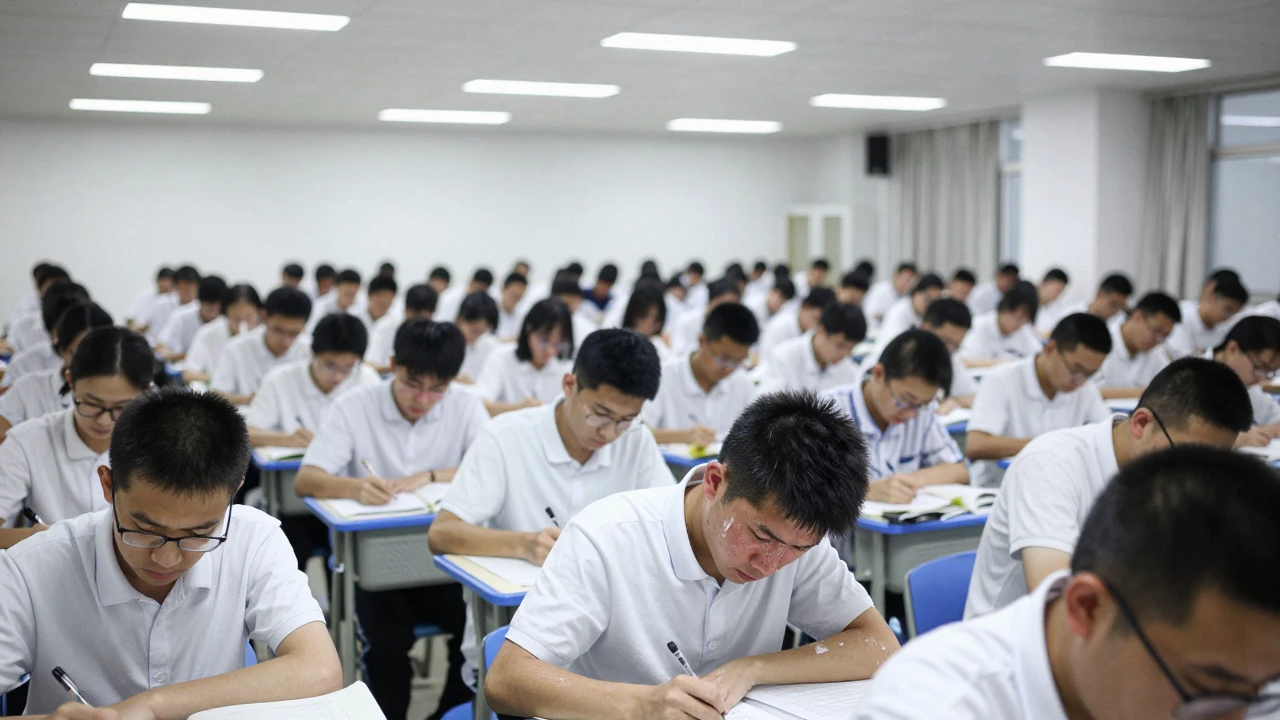
In China, the Gaokao is the National College Entrance Examination, which determines university admissions for millions of students. Unlike the elite selection of JEE or UPSC, Gaokao is a mass-scale event involving over 10 million students annually.
The difficulty isn't just intellectual; it is cultural and systemic. For many families, this one exam defines the child's future social standing. The pressure leads to intense study schedules starting years in advance. Students often live in boarding schools with minimal sleep and constant testing.
The exam covers Chinese language, mathematics, foreign languages (usually English), and either sciences or humanities. The grading is precise, with points determining whether you enter a top-tier university like Tsinghua or Peking University, or a local college. The societal weight makes it psychologically heavier than many Western equivalents.
Professional Barriers: Medical and Legal Exams
Not all tough exams are for undergraduates. Professional licensing exams serve as gatekeepers to critical industries.
The USMLE Step 1 is the first step of the United States Medical Licensing Examination, assessing foundational medical knowledge. Medical students spend months memorizing thousands of facts about anatomy, pharmacology, and pathology. The stakes are high because failure delays entry into residency programs, costing time and money.
Similarly, the California Bar Exam is a two-day standardized test for aspiring lawyers in California, known for its low pass rates. It consistently has one of the lowest pass rates among US states, often hovering around 50%. Candidates must demonstrate mastery of contract law, torts, evidence, and professional responsibility. The volume of material is staggering, requiring rote memorization combined with complex legal reasoning.
Why Do These Exams Exist?
You might wonder why societies create such painful hurdles. The answer is resource scarcity. Top universities, government positions, and professional licenses have limited slots. When demand far exceeds supply, exams become the primary filtering mechanism.
These exams aim to ensure meritocracy. In theory, they give every candidate a fair chance regardless of background. In practice, they favor those with access to quality coaching, resources, and stable environments. This creates a cycle where wealthier students often have an advantage, despite the exams being designed to be objective.
How to Prepare for High-Stakes Exams
If you are facing any of these challenges, here is how successful candidates approach them:
- Analyze Past Papers: Patterns repeat. Understanding previous questions helps you predict the style and depth of future ones.
- Simulate Exam Conditions: Practice under timed conditions. Build stamina so you don't burn out in the last hour of a long test.
- Focus on Weaknesses: Don't just practice what you're good at. Identify gaps in your knowledge and fill them systematically.
- Mental Health Management: Sleep, exercise, and mindfulness are not luxuries. They are performance enhancers. Burnout is a common reason for failure.
Is There a Single "Toughest" Exam?
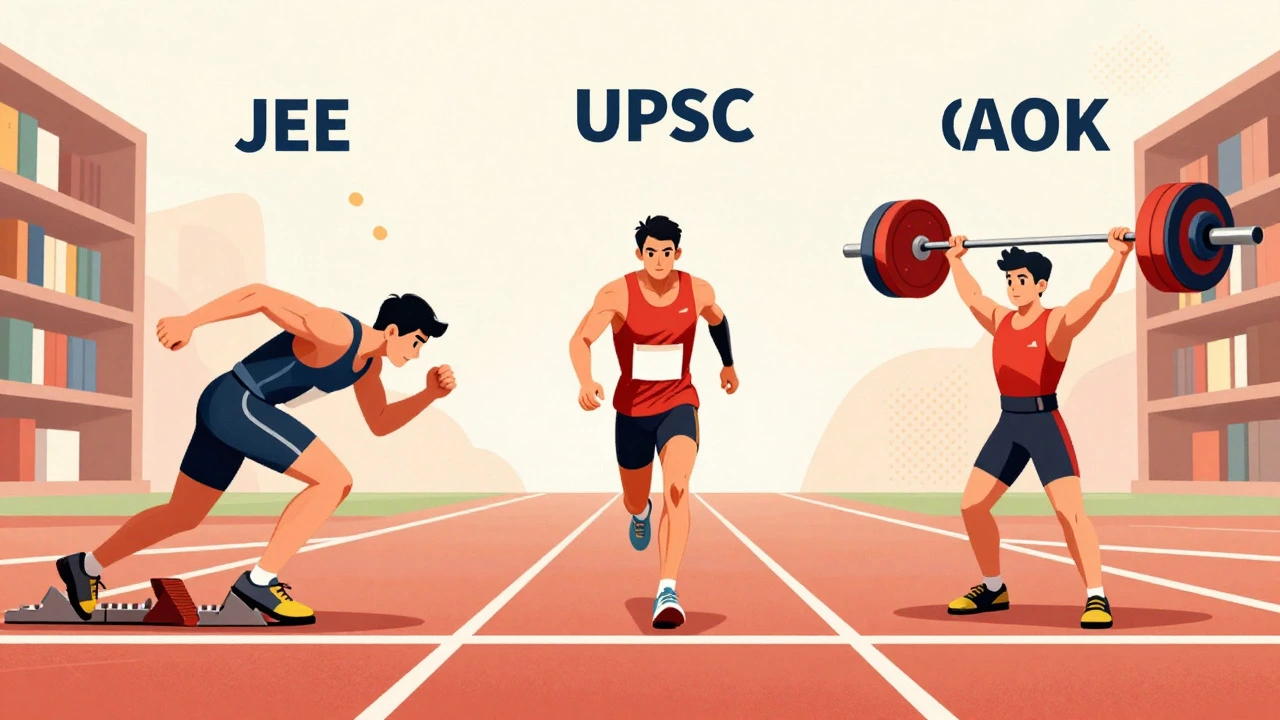
No. Comparing IIT JEE to UPSC is like comparing a sprint to a marathon. JEE requires peak analytical speed and precision. UPSC requires broad knowledge retention and articulate expression. Gaokao requires endurance and discipline under societal pressure.
Your perception of difficulty will depend on your strengths. A math prodigy might find JEE challenging but manageable, while struggling with the essay-writing demands of UPSC. A humanities student might ace the general studies portion of UPSC but find the quantitative aptitude sections daunting.
Ultimately, the toughest exam is the one that aligns least with your natural abilities and interests. If you love logic and numbers, JEE feels easier. If you enjoy reading and debating, UPSC feels more natural. Recognizing this fit is crucial before you commit years of your life to preparation.
What is the pass rate for IIT JEE Advanced?
The pass rate for IIT JEE Advanced is typically between 1% and 2% of the candidates who qualify for the advanced stage. Out of hundreds of thousands of applicants, only around 15,000 to 17,000 secure seats in the IITs each year.
Why is UPSC CSE considered harder than JEE?
UPSC CSE is considered harder due to its vast syllabus covering diverse subjects like history, polity, and ethics, combined with a very low success rate of less than 0.5%. Unlike JEE, which has objective answers, UPSC includes subjective essays and interviews where scoring can be ambiguous.
How does Gaokao differ from other exams?
Gaokao differs in scale and cultural impact. It involves over 10 million students annually in China. The societal pressure is immense, as the score largely determines a student's future career and social status, leading to years of intense, structured preparation.
Which US state has the hardest bar exam?
California consistently has one of the hardest bar exams in the United States, with pass rates often around 50%. It requires extensive knowledge of state-specific laws and rigorous legal reasoning skills tested over two days.
Can anyone crack these tough exams without coaching?
Yes, it is possible to crack these exams without formal coaching. Many successful candidates rely on self-study using standard textbooks, online resources, and past papers. However, it requires exceptional discipline, self-assessment skills, and access to quality study materials.