



Coding Math Intensity Calculator
Not all coding requires calculus. Select your field of interest to see the realistic math level required and key concepts you'll encounter.
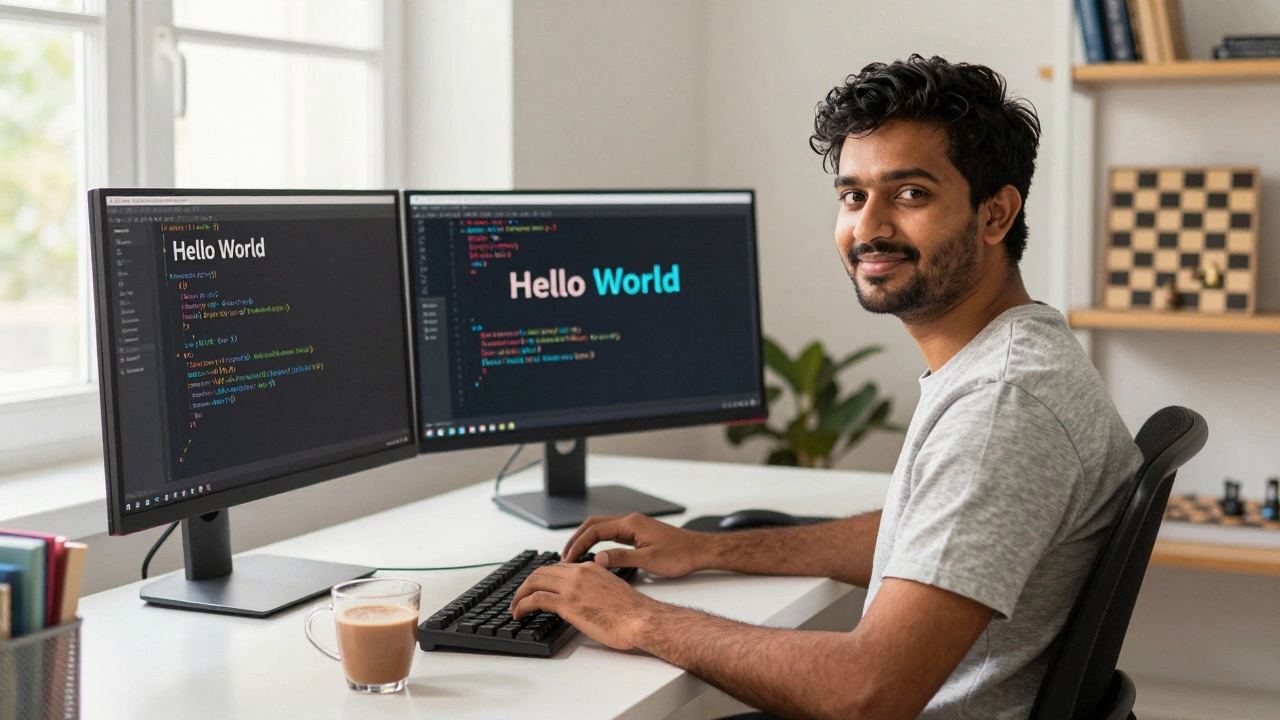
Here is the honest truth that most coding bootcamps won't tell you upfront: you can become a highly successful programmer without being able to integrate a function in your head. If you are sitting there, staring at a blank screen, convinced that your inability to solve quadratic equations disqualifies you from writing code, take a deep breath. That fear is normal, but it is also largely misplaced.
The relationship between Coding and mathematics is not a simple yes or no. It depends entirely on what kind of software you want to build. For the vast majority of jobs-building websites, creating mobile apps, or managing databases-the math involved is basic arithmetic and logical reasoning. You don't need calculus. You need common sense.
The Myth of the "Math Genius" Programmer
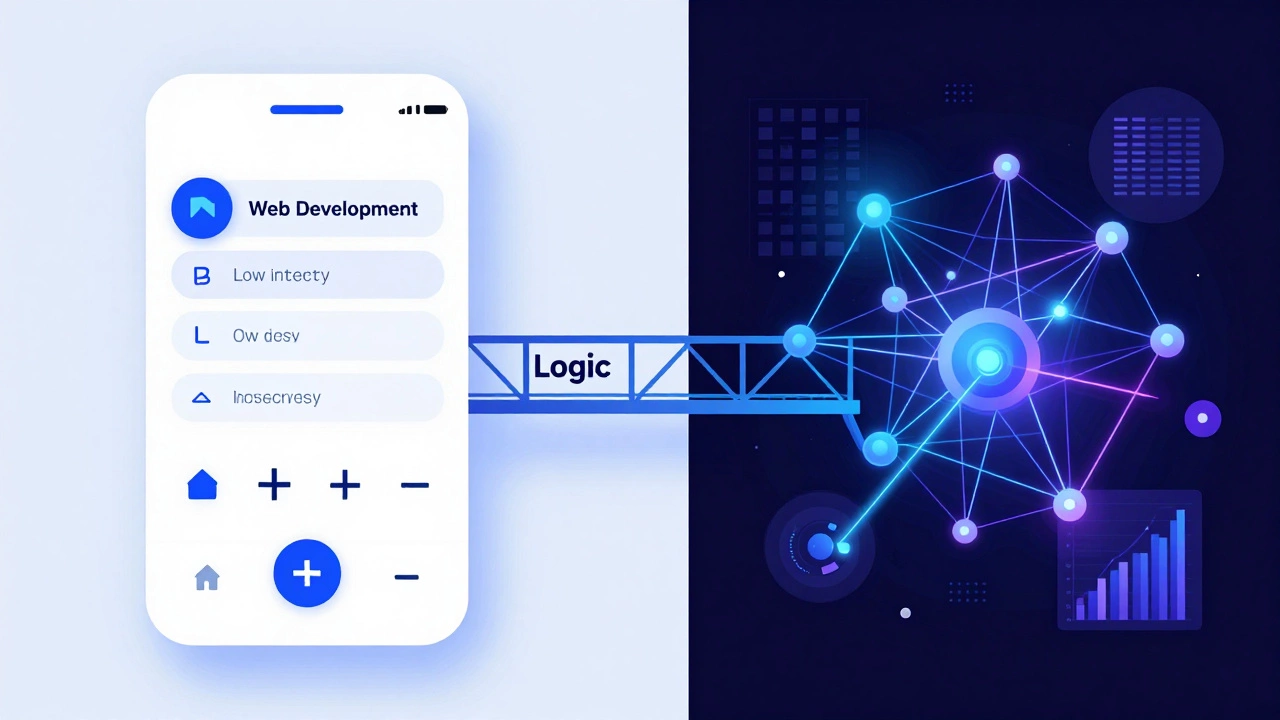
There is a persistent stereotype in tech that every developer is a math whiz who spends their weekends solving complex algorithms. This image comes from the early days of computing and fields like aerospace engineering, where math was indeed central. But the industry has changed. Today, coding is less about pure mathematics and more about Logic and problem-solving structures.
Think of coding like cooking. Do you need advanced chemistry to bake a cake? No. You need to know that if you mix flour, sugar, and eggs, and apply heat, you get a cake. You need to understand measurements (arithmetic) and sequences (logic). If you forget the baking powder, the cake won't rise. In coding, if you forget a semicolon or misspell a variable name, the program crashes. These are syntax errors, not mathematical failures.
Most beginner-friendly languages, such as Python and a high-level programming language known for readability, abstract away the heavy math. They handle memory management and complex data structures behind the scenes. Your job is to tell the computer what to do, not necessarily how to calculate the underlying physics of that action.
Where Math Actually Shows Up in Coding
While you don't need a degree in mathematics, you will encounter specific types of thinking that feel like math. Understanding these helps demystify the process.
- Boolean Logic: This is the foundation of all programming. It involves True/False statements. Is the user logged in? Yes or No. Is the password correct? Yes or No. This isn't algebra; it's decision-making. If condition A is true AND condition B is false, then do X. This is pure logic, which you use every day when making choices.
- Arithmetic Operations: You will add, subtract, multiply, and divide numbers constantly. Calculating a total price in an e-commerce app requires basic multiplication. Displaying a progress bar requires percentages. This is primary school math, nothing more.
- Coordinate Geometry: If you are building games or visual interfaces, you need to understand X and Y axes. Where does this button go? How far down should this image slide? This involves spatial reasoning, similar to reading a map or playing chess.
- Algebraic Thinking: Variables in coding act like variables in algebra. If `x = 5` and `y = x + 2`, then `y = 7`. You are storing values and manipulating them. This is conceptual math, not calculation-heavy math.
Fields Where Math Is Non-Negotiable
It is important to be realistic. There are areas of technology where math is the star of the show. If you are interested in these paths, you will need to brush up on your skills.
| Field | Math Level Required | Key Concepts |
|---|---|---|
| Web Development | Low | Basic arithmetic, logic |
| Mobile App Development | Low to Medium | Geometry (UI), basic algebra |
| Data Science / AI | High | Statistics, linear algebra, calculus |
| Game Development (Physics) | Medium to High | Vectors, trigonometry, physics engines |
| Cryptography | Very High | Number theory, discrete math |
If you want to build the next Instagram or a local bakery website, you fall into the "Low" category. You will rarely touch calculus. However, if you aim to work in Machine Learning and AI systems that learn from data, statistics becomes your best friend. You need to understand probability distributions, mean, median, and standard deviation to make sense of data sets. Linear algebra is crucial for understanding how neural networks process information.
Why Logic Matters More Than Calculation
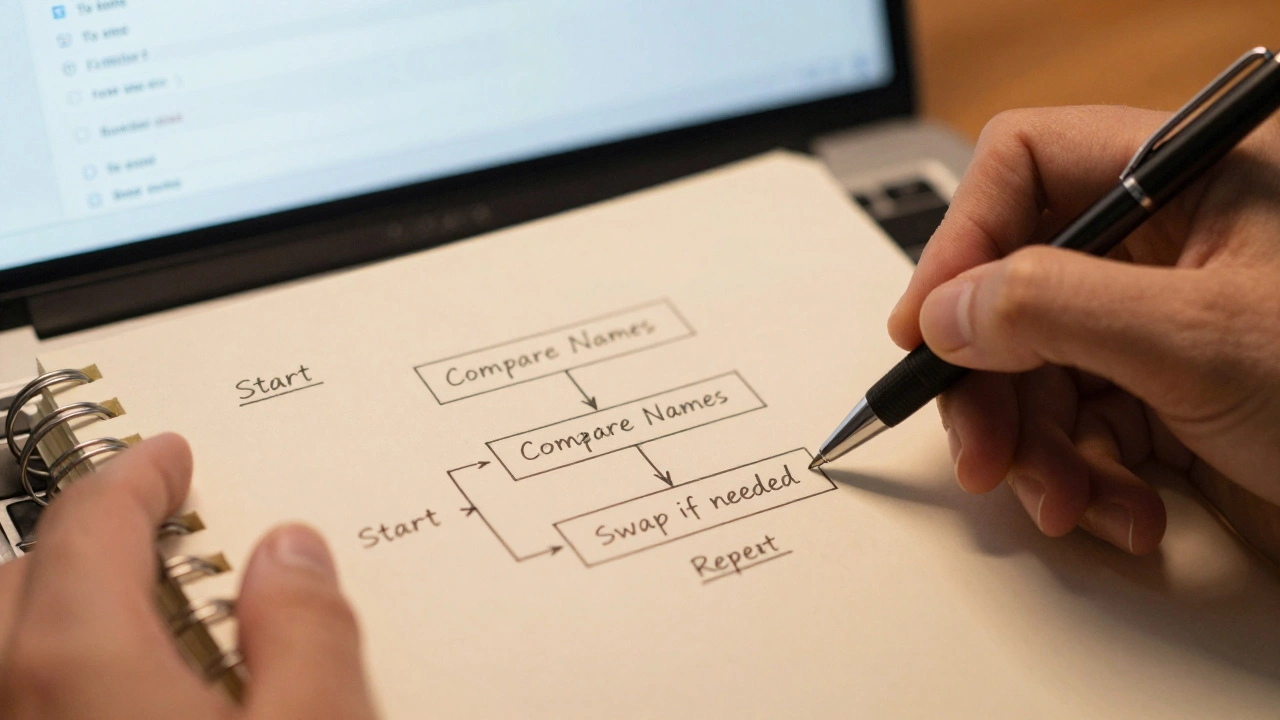
The biggest hurdle for new coders isn't math; it's breaking big problems into small steps. This skill is called decomposition. Imagine you want to write a program that sorts a list of names alphabetically. You don't need advanced math. You need a clear plan:
- Take the first name.
- Compare it to the second name.
- If the first name comes later in the alphabet, swap them.
- Repeat until the end of the list.
This is an algorithm. An algorithm is just a recipe. The math here is minimal; the logic is everything. Many people struggle with coding not because they can't do math, but because they haven't practiced structured thinking. This is why Coding Classes and structured learning environments are so valuable. They teach you how to think like a programmer, focusing on flow control, loops, and functions rather than integrals.
Getting Started Without the Fear
If you are in Auckland, New Zealand, or anywhere else, looking to start coding, do not let math anxiety stop you. Start with projects that have immediate visual feedback. Building a personal portfolio website or a simple To-Do list app allows you to see the results of your logic instantly. When the button doesn't click, you fix the logic, not the equation.
Focus on languages that are forgiving and readable. Python is excellent for beginners because it reads like English. JavaScript is essential for web development and runs directly in your browser. Both require very little formal math to get started. As you grow, you will naturally pick up the specific math concepts you need for your niche. If you never need calculus, you never need to learn it.
Frequently Asked Questions
Do I need to be good at math to learn Python?
No. Python is designed to be readable and accessible. While Python is used in scientific computing, learning the basics of the language only requires basic arithmetic and logical thinking. You can build web scrapers, automate tasks, and create websites without advanced math.
What level of math is needed for web development?
Web development typically requires only basic arithmetic and perhaps some geometry for layout design. You will use addition and subtraction for calculations, and percentages for styling elements. Algebra is occasionally useful for dynamic pricing or complex interactions, but calculus is almost never needed.
Is coding harder than math?
They are different challenges. Math often has one correct answer derived through established rules. Coding involves debugging, understanding requirements, and managing complexity. Many people find coding easier because it is creative and practical, whereas others find math easier because it is purely logical. It depends on your personal strengths.
Can I become a software engineer without knowing calculus?
Yes, absolutely. Most software engineering roles, especially in web and mobile development, do not require calculus. You will rely more on data structures, algorithms, and system design. Calculus is primarily relevant for roles in graphics, physics simulation, or machine learning research.
How can I improve my logical thinking for coding?
Practice breaking down everyday tasks into step-by-step instructions. Play strategy games like chess or Sudoku. Solve puzzles on platforms like LeetCode or HackerRank, starting with easy problems. Taking structured coding classes can also help by teaching you standard patterns for solving common problems.