

Find Your Ideal eLearning Platform
What is your primary goal?
Your ideal platform type is...
You want to learn something new. Maybe it’s coding, maybe it’s a new language, or maybe you just need to pass a compliance course for work. The internet is full of places to do this, but not all of them are the same. Some are free, some cost a fortune, and some are built for schools while others are for businesses. Knowing which one fits your needs saves time and money.
When we talk about eLearning platforms, we mean software that helps people teach and learn online. These tools can be as simple as a video host or as complex as a full school system with grades, tests, and chats. In 2026, the market is crowded. You have giants like Coursera and niche tools for specific jobs. Picking the right one depends on what you are trying to achieve. Are you looking for a career change? A hobby? Or a way to train your team?
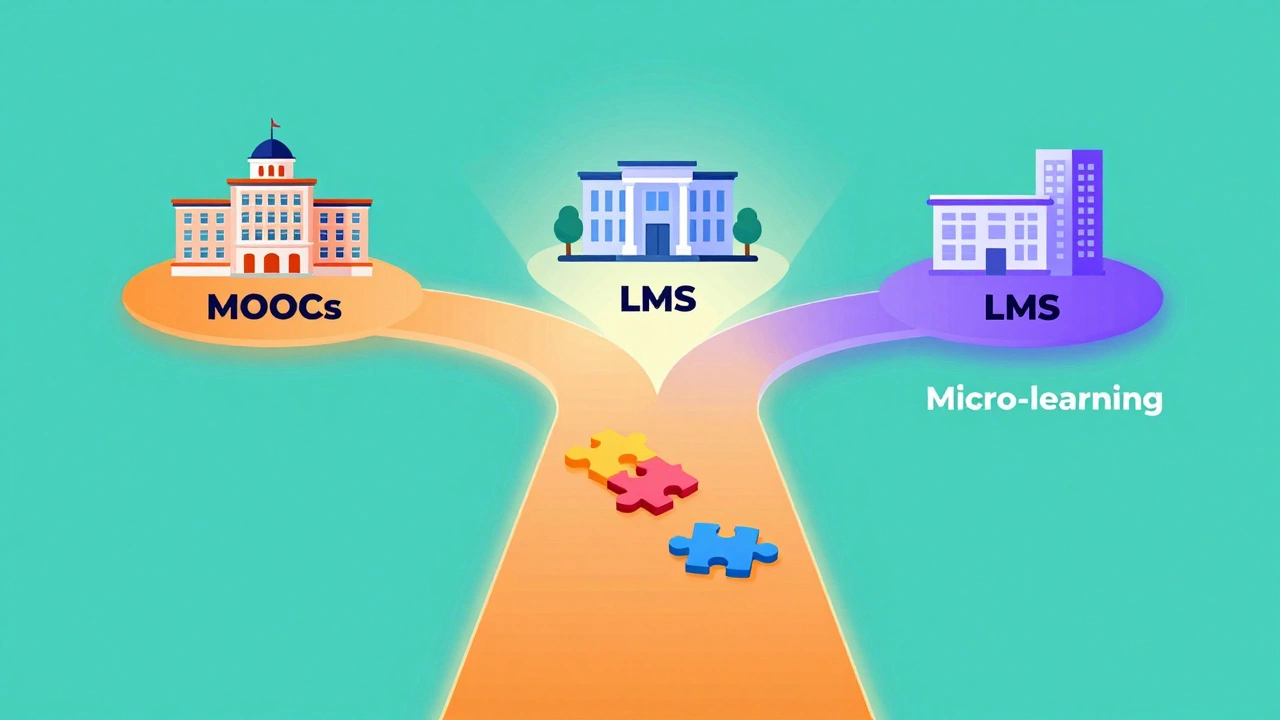
Before we look at specific names, it helps to understand the landscape. There are three main types of platforms you will encounter. First, there are Massive Open Online Course (MOOC) providers. These are for anyone who wants to take a class from a university or company. Second, there are Learning Management Systems (LMS). These are used by schools and companies to manage their own courses. Third, there are skill-based micro-learning apps. These focus on quick lessons for specific tasks. Each type serves a different purpose.
MOOCs: University-Level Education Online
If you want credentials that matter, MOOCs are usually the best place to start. These platforms partner with top universities and companies to offer real courses. You get access to lectures, readings, and assignments just like in a physical classroom. The big difference is flexibility. You can watch videos when you want and submit work on your own schedule.
Coursera is one of the largest MOOC platforms in the world, offering degrees and certificates from institutions like Stanford and Yale. It is known for its high-quality content and professional certificates. If you want to boost your resume, Coursera is a strong choice. They also offer financial aid if you cannot afford the fees.
edX is another major player founded by Harvard and MIT, focusing on academic rigor and open educational resources. It feels more like a traditional university experience. The courses are often harder than those on other platforms. If you are serious about deep learning in subjects like computer science or biology, edX is worth checking out.
Then there is Udemy, which is a marketplace where anyone can create and sell courses, covering everything from Excel to yoga. Unlike Coursera or edX, Udemy does not vet instructors as strictly. This means quality varies. However, you can often find courses for very low prices during sales. It is great for learning specific skills quickly without worrying about academic credit.
LMS Tools: For Schools and Businesses
Sometimes you are not taking a public course. Maybe you are a teacher running a class, or a manager training employees. In this case, you need an LMS. An LMS allows you to upload your own content, track progress, and communicate with learners. It is the engine behind many corporate training programs and online schools.
Moodle is an open-source LMS widely used by universities and organizations globally due to its flexibility and no licensing costs. Because it is open-source, you can customize it heavily. However, setting it up requires technical knowledge. You need a server and someone to maintain it. It is powerful but has a steep learning curve.
For those who want something easier, Canvas is a cloud-based LMS popular in K-12 and higher education for its clean interface and ease of use. It handles quizzes, discussions, and gradebooks smoothly. Many schools switch to Canvas because it works well on mobile devices. Students do not need to install anything; they just log in via a browser.
In the corporate world, Docebo is an AI-driven LMS designed for enterprise learning, featuring automated translation and social learning capabilities. It uses artificial intelligence to recommend courses based on employee roles. This makes training more efficient for large companies. It is expensive, so it is mostly used by big businesses rather than small startups.
Micro-Learning and Skill Apps
Not everyone has hours to spend on a lecture. Some people prefer short bursts of learning. Micro-learning platforms break down topics into tiny pieces. You might spend five minutes learning a new word or a coding trick. This approach fits into busy schedules and keeps engagement high.
Duolingo is the most famous language learning app, using gamification to make practice addictive and accessible. It turns grammar rules into games. You earn points and keep streaks. It is not perfect for becoming fluent, but it is excellent for building a habit. Millions of people use it daily to pick up Spanish, French, or Japanese.
For tech skills, Codecademy offers interactive coding lessons where users write code directly in the browser and get instant feedback. Instead of watching a video, you type commands and see if they work. This hands-on method helps beginners grasp programming logic faster. It covers languages like Python, JavaScript, and SQL.
Another option is Khan Academy, which provides free, comprehensive educational content focused on math, science, and humanities for all ages. It is non-profit and completely free. Teachers love it because it aligns with school curricula. Parents use it to help kids with homework. It is a reliable resource for foundational knowledge.
Choosing the Right Platform
With so many options, how do you decide? Start by asking yourself what you need. Do you need a certificate? If yes, look at Coursera or edX. Do you need to train staff? Look at Moodle or Docebo. Do you just want to learn for fun? Try Duolingo or Khan Academy.
Budget matters too. Free platforms like Khan Academy are great, but they may lack advanced features. Paid platforms often provide better support and structured paths. Check if the platform offers a free trial before committing. Also, consider the community. Platforms with active forums help you stay motivated. Being able to ask questions and discuss ideas with peers adds value to the learning experience.
Technology plays a role as well. Ensure the platform works on your device. If you commute on a phone, you need a good mobile app. If you only have a desktop, a web-based tool is fine. Compatibility with other tools you use, like Zoom or Slack, can also be important for collaborative learning.
While exploring various digital directories and resources online, such as this directory, it becomes clear that organization and verification matter in any online listing, whether for companions or courses. Similarly, choosing a verified and well-reviewed eLearning platform ensures you get quality content and support.
Trends in eLearning for 2026
The industry is changing fast. Artificial intelligence is being integrated into almost every platform. AI tutors can answer your questions instantly. Adaptive learning adjusts the difficulty of lessons based on your performance. This personalization makes learning more effective. You no longer follow a one-size-fits-all path.
Virtual reality (VR) and augmented reality (AR) are also growing. Imagine practicing surgery in VR or repairing an engine with AR overlays. These immersive experiences are still emerging but offer powerful ways to learn practical skills safely. Companies investing in VR training see better retention rates among employees.
Mobile-first design is now standard. Most learners access content on smartphones. Platforms that ignore mobile usability lose users. Responsive design and offline capabilities are key features to look for. You should be able to download lessons for later if you have spotty internet.

Comparison of Popular Platforms
| Platform | Type | Best For | Cost Model |
|---|---|---|---|
| Coursera | MOOC | Career advancement, degrees | Subscription/Audit |
| edX | MOOC | Academic study, certifications | Per-course fee |
| Udemy | Marketplace | Specific skills, hobbies | Pay-per-course |
| Moodle | LMS | Customizable institutional use | Free (hosting costs) |
| Canvas | LMS | Schools, easy management | Subscription |
| Duolingo | Micro-learning | Language basics, habits | Freemium |
| Codecademy | Interactive | Coding beginners | Freemium |
Common Pitfalls to Avoid
Buying a course is not enough. Many people start with enthusiasm but quit after a week. To succeed, set clear goals. Why are you learning? What do you want to achieve? Write it down. Break big goals into small steps. Celebrate small wins to stay motivated.
Avoid hoarding courses. Signing up for ten courses at once leads to burnout. Focus on one or two topics at a time. Depth is better than breadth. Finish one course before starting another. This builds discipline and ensures you actually retain the information.
Check reviews carefully. Especially on marketplaces like Udemy, read recent reviews. Instructors update content, but sometimes they stop maintaining older courses. Outdated material can waste your time. Look for courses updated within the last year.
Next Steps for Your Learning Journey
Start by auditing your current skills. What do you know? What do you lack? Identify the gap. Then search for platforms that fill that gap. Use the comparison table above to narrow down choices. Sign up for free trials or audit modes. Test the interface. See if it feels right.
If you are an educator, try creating a small module first. Upload a few lessons and share them with a test group. Get feedback. Iterate. Building a course takes time. Start small and scale up as you gain confidence.
Remember, the tool is only as good as the effort you put in. No platform will teach you unless you engage. Participate in discussions. Complete assignments. Apply what you learn. Real growth happens outside the screen, in the application of knowledge.
What is the best free eLearning platform?
Khan Academy is widely considered the best free platform for foundational subjects like math and science. It offers comprehensive, ad-free content aligned with school curricula. For professional skills, Coursera and edX allow you to audit courses for free, though you won’t get a certificate.
Are online certificates worth it?
Yes, if they come from reputable institutions. Certificates from Coursera, edX, or recognized universities can boost your resume and demonstrate commitment. However, employers value practical skills more. Combine certificates with projects or portfolios to show real ability.
How do I choose between an LMS and a MOOC?
Choose a MOOC like Coursera if you want to take pre-made courses from experts. Choose an LMS like Moodle or Canvas if you are creating your own courses for students or employees. MOOCs are for learners; LMSs are for educators and administrators.
Can I learn coding effectively online?
Absolutely. Platforms like Codecademy and freeCodeCamp offer interactive coding environments. You write code and get immediate feedback. Many successful developers started with online tutorials. Consistency and building projects are key to mastering coding skills.
Is Moodle difficult to set up?
Moodle is powerful but technically demanding. It requires server setup and maintenance. If you lack IT resources, consider hosted alternatives like Canvas or Docebo. Moodle is best for organizations with dedicated technical staff who need full control over their learning environment.